
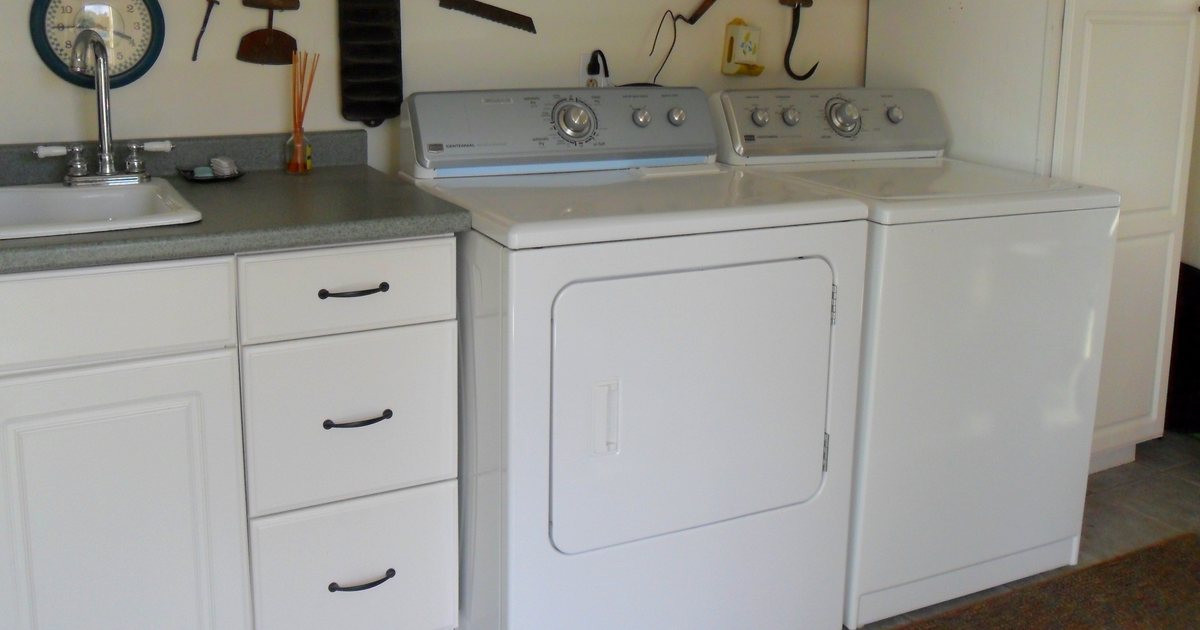
Dryer maintenance comes down to three jobs: clear the lint screen every load, wash the screen every six months and wipe the drum as needed, and clean the dryer vent at least once a year. Together they help keep drying times short and deal with the most common cause of dryer fires. When a check turns up a worn or failed part, our Calgary dryer repair technicians can fix it.
According to the National Fire Protection Association (NFPA), "The leading cause of home clothes dryer and washer fires is failure to clean them." The schedule below comes from that NFPA tip sheet and from Maytag and Samsung care instructions.
Key Takeaways
- NFPA says failure to clean is the leading cause of home dryer fires. Clean the lint filter before or after every load.
- Maytag says to scrub the filter with a nylon brush, hot water and liquid detergent every 6 months, because detergent and softener residue builds up on it.
- NFPA says to clean lint out of the vent pipe once a year, or sooner if clothes start taking longer to dry.
- NFPA says to use rigid or flexible metal duct. Maytag's manual says not to use plastic or foil vent.
- A clean lint screen and vent also cut running costs. NRCan lists both among its dryer energy tips.
What kind of maintenance does a dryer need?
A dryer needs regular lint removal, an occasional cleaning inside the drum and around the lint filter, and a clear vent system from the back of the machine to the hood outside. The table shows how often each dryer maintenance job comes up.
| How often | Task | Source |
|---|---|---|
| Every load | Clear the lint filter | NFPA, Maytag |
| As needed | Vacuum the filter housing; wipe the drum | Maytag |
| Every 6 months | Wash the filter with a brush and detergent | Maytag |
| Once a year | Clean or inspect the dryer vent | NFPA, Samsung |
| Every 2 years | Professional removal of lint inside the cabinet | Maytag |
Heavy users should shorten those intervals. Maytag says cabinet lint "should be removed every 2 years, or more often, depending on dryer usage." It gives the same interval for the vent, but NFPA says once a year, so the table follows NFPA.
Every load: clean the lint screen
Pull the screen out, roll the lint off with your fingers and push it firmly back in. The Maytag owner's manual warns not to rinse it for this quick clean, since wet lint is harder to remove. It also says never to run the dryer with the screen "loose, damaged, blocked, or missing," because that can overheat the machine and damage your clothes.
Our lint trap cleaning guide covers the screen, the housing and the six-monthly wash step by step.
Is there a way to deep clean a dryer?
Yes. A deep clean covers the lint filter itself, the drum, the moisture sensors and the space the filter slides into. Unplug the dryer first.
Wash the lint filter every six months
Detergent and fabric softener residue can coat the mesh. Maytag says this adds drying time or makes the dryer stop before the load is dry. The filter is probably clogged if lint falls off it while it's still in the dryer.
- Roll off the loose lint.
- Wet both sides of the screen with hot water.
- Scrub it with a nylon brush dipped in hot water and liquid detergent.
- Rinse with hot water, dry it completely with a towel and put it back.
Clean the inside of the drum
Should the inside of a dryer be cleaned? Yes, now and then. Maytag suggests a mild hand dish detergent in very warm water, rubbed on with a soft cloth, then a rinse with a wet sponge. Tumble a load of clean towels to dry the drum afterward.
Blue stains from new jeans aren't harmful, according to Maytag, and won't transfer to later loads. For a musty smell, Samsung says to wipe the drum thoroughly and leave the door open so moisture can escape.
Wipe the moisture sensors and vacuum the filter housing
Many dryers have metal sensor bars inside the drum that tell the machine when clothes are dry. Samsung recommends a soft cloth with warm water and mild soap, then a dry cloth.
Then use a vacuum to remove lint from the slot the filter sits in.
Dryer vent cleaning and the duct system
The lint screen doesn't catch everything. The rest travels into the duct, where a blocked or crushed vent reduces airflow. Less airflow means every cycle runs longer and hotter. NFPA recommends dryer vent cleaning once a year, done by you or by a dryer lint removal service. For a long or hard-to-reach run, we offer dryer vent cleaning in Calgary.
On Calgary service calls, the most common cause of a dryer that takes two cycles or shuts off mid-cycle is a blocked or overly long vent run. Our technicians see it often in newer homes with long, winding ducts, and clearing or shortening the run restored normal drying.
How to tell if a dryer vent is clogged
Samsung lists three warning signs:
- clothes take longer than usual to dry
- the dryer feels hotter than normal
- there's a musty smell
You can also check outside while the dryer runs. The vent hood is the cover on the outside wall where the duct ends, and NFPA says its flap should open when the dryer is operating. If it stays shut, or you feel very little air, something is restricting the dryer vent: lint, debris, a crushed duct or a stuck flap. If the vent is clear and clothes still come out damp, the problem is likely inside the machine. Our post on a Midea dryer not drying clothes walks through causes that apply to most brands.
Keep the outside vent hood clear in winter
NFPA also says to make sure the outdoor vent flap isn't covered by snow. In Calgary, check the hood after every big snowfall, and clear lint and debris from it while you're there, as Maytag advises.
Check the duct material and length
Maytag's manual says to replace plastic or foil vent with 4-inch (102 mm) heavy rigid metal, use the shortest run you can, and use no more than four 90° elbows, since "each bend and curve reduces airflow." Pull the dryer out and look at the transition duct behind it, the short connector between the back of the dryer and the wall. If it's crushed, kinked or white vinyl, replace it.
Dryer maintenance and energy use
Clean airflow also makes a dryer cheaper to run, because every cycle ends sooner. A Canada Energy Regulator market snapshot says major appliances account for about 40% of the energy used in a typical Canadian home, and calls electric clothes dryers "the largest energy consumers among appliances."
How much electricity does a dryer use?
The same report says the average annual use of electric dryers rose from 910 kWh in 2000 to 924 kWh in 2014, mainly because drums got bigger. Your own model's yearly figure is on its EnerGuide label, the Canadian energy rating label that shows a model's estimated yearly electricity use in kWh. Its wattage is on the rating plate or in the owner's manual.
In Calgary, ENMAX's Rate of Last Resort is 12.06¢ per kWh, and ENMAX expects it to stay there until December 31, 2026. It applies to customers not on a retail contract, and "all other fees and charges will still apply." At that rate, 924 kWh works out to about $111 a year in energy charges alone, before delivery and other fees.
Habits that cut drying time and cost
Natural Resources Canada (NRCan) lists the lint and vent jobs above among its energy tips: clean the lint trap after every load, wash the filter regularly if you use dryer sheets, and clean the vent to increase airflow and reduce strain on the motor. Its ENERGY STAR clothes dryer page and laundry day guide add these:
- Use a high-speed or extended spin in the washer, so less water goes into the dryer.
- Dry light, quick-drying items together and put towels and jeans in their own load.
- Run full loads, but don't overfill. NRCan warns an overfilled drum may need more than one cycle, which also strains the motor.
- Use sensor dry so the cycle stops when clothes are dry. With a timed cycle, find the shortest time that works.
- Pick the lowest heat that works. NRCan says drying longer at a low temperature saves energy.
- Hang some of the laundry on a line or rack.
- When you buy, compare EnerGuide ratings. NRCan says ENERGY STAR dryers use 20% less energy on average than standard models.
If your electricity plan has time-of-use pricing, ENERGY STAR notes that a delayed start can move the load to cheaper hours. A flat rate like ENMAX's Rate of Last Resort charges the same per kWh at any hour.
On newer Electrolux dryers, our technicians get calls about clothes still damp after a normal cycle, and the dryer is usually on its Eco setting, which saves energy by leaving clothes slightly damp. A timed cycle or dry boost finishes the load.
Heat pump, vented and condenser dryers
A heat pump dryer uses the least electricity. NRCan says heat pump models save 20-60% more than standard models. ENERGY STAR explains that a heat pump dryer heats the air in a closed loop and reuses it, so it needs no outside vent. The water it pulls out of your clothes goes down a drain or into a tank you empty after each load. The trade-off is time: Yale Appliance says to expect 15 to 40 minutes longer per load.
Between vented and condenser dryers, our sources don't rank one above the other on running cost. A vented dryer sends its hot, moist air outdoors, while a condenser dryer, Yale says, doesn't reuse its heat and releases it into the room. Yale rates heat pump dryers "far more efficient" than either.
When to book professional dryer service
Some dryer maintenance is a job for a technician. Maytag says lint inside the dryer cabinet should be removed every two years, and that "cleaning should be done by a qualified appliance service or ventilation system cleaner." NFPA adds that gas dryers should be inspected by a professional to check the gas line and connection for leaks.
Call for dryer repair in Calgary if the drum won't turn, the dryer won't heat, it trips a breaker, or you smell burning. If you smell burning, turn the machine off and don't use it again until it's checked.
Dryer maintenance FAQs
How many years do dryers usually last? About 13 years, according to a 2007 study. The National Association of Home Builders' Study of Life Expectancy of Home Components lists dryers at 13 years. The study notes that appliance life "depends to a great extent on the use it receives."
What should I use to lubricate my dryer? Nothing, as a rule. The care sections in the Maytag manual and Samsung's cleaning guide don't include any lubrication step. A squeak or thump usually means a worn part rather than a dry one. On Calgary noise calls, our technicians most often replace the idler pulley and drum rollers. See dryer making loud noise for what each sound means.
Does a dryer need maintenance if it only dries one load of laundry a week? Yes. Light use means less lint, but the dryer maintenance schedule stays the same: clear the lint screen after every load and clean the vent once a year, as NFPA advises.
Is it safe to run the dryer overnight? NFPA says not to leave a dryer running when you leave home or go to bed. It also says to keep the area around the dryer clear of boxes, clothing and anything else that can burn. Our appliance safety checklist covers cords, kitchen fires and carbon monoxide too.
What is the best dryer setting for clothes? For energy use, the sensor or automatic cycle at the lowest heat the fabric needs. NRCan says low heat for longer saves energy, and the sensor stops the cycle once clothes are dry so they don't over-dry.
Is 20 minutes in the dryer enough? Sometimes. A small load of thin shirts that came out of a high-speed spin may be dry, while towels and jeans won't be. Use sensor dry rather than guessing, or check the load at 20 minutes and add time only if it needs it.
Sources: NFPA dryer safety tip sheet; Maytag YMED6200KW manual (Canada); Samsung Canada dryer cleaning guide; NAHB life expectancy study (2007); Canada Energy Regulator appliance market snapshot (2016); NRCan ENERGY STAR clothes dryer guidance; ENMAX Rate of Last Resort.
Photo: 16-laundry by Kristen Wheatley, CC BY 2.0. Cropped.