
Your dryer just started making a noise that sounds like it’s trying to grind through a bag of gravel, and now every load of laundry feels like a gamble. This guide breaks down the most common causes of a noisy dryer, what each sound usually means, and how to figure out whether this is a quick fix or time to call in a pro.
Dryers are workhorses. Most Calgary households run them nearly every day, especially during the long winters when hanging clothes outside just isn’t happening. So when yours starts making an unusual racket, it’s worth paying attention fast – a small problem that gets ignored has a way of becoming a much more expensive one. At Calgary Appliance Service Pros, we hear from homeowners dealing with noisy dryers regularly, and the good news is that most cases come down to a handful of well-understood causes.
[IMAGE PLACEHOLDER FOR IMAGE1]
Calgary’s climate plays a role too. Cold, dry winters mean dryers work harder and longer than they might in milder regions, and that extra wear adds up on internal components over time. Whether you’re in a newer build or an older home, understanding what your dryer is trying to tell you can save you time, money, and a lot of frustration.
Key takeaways
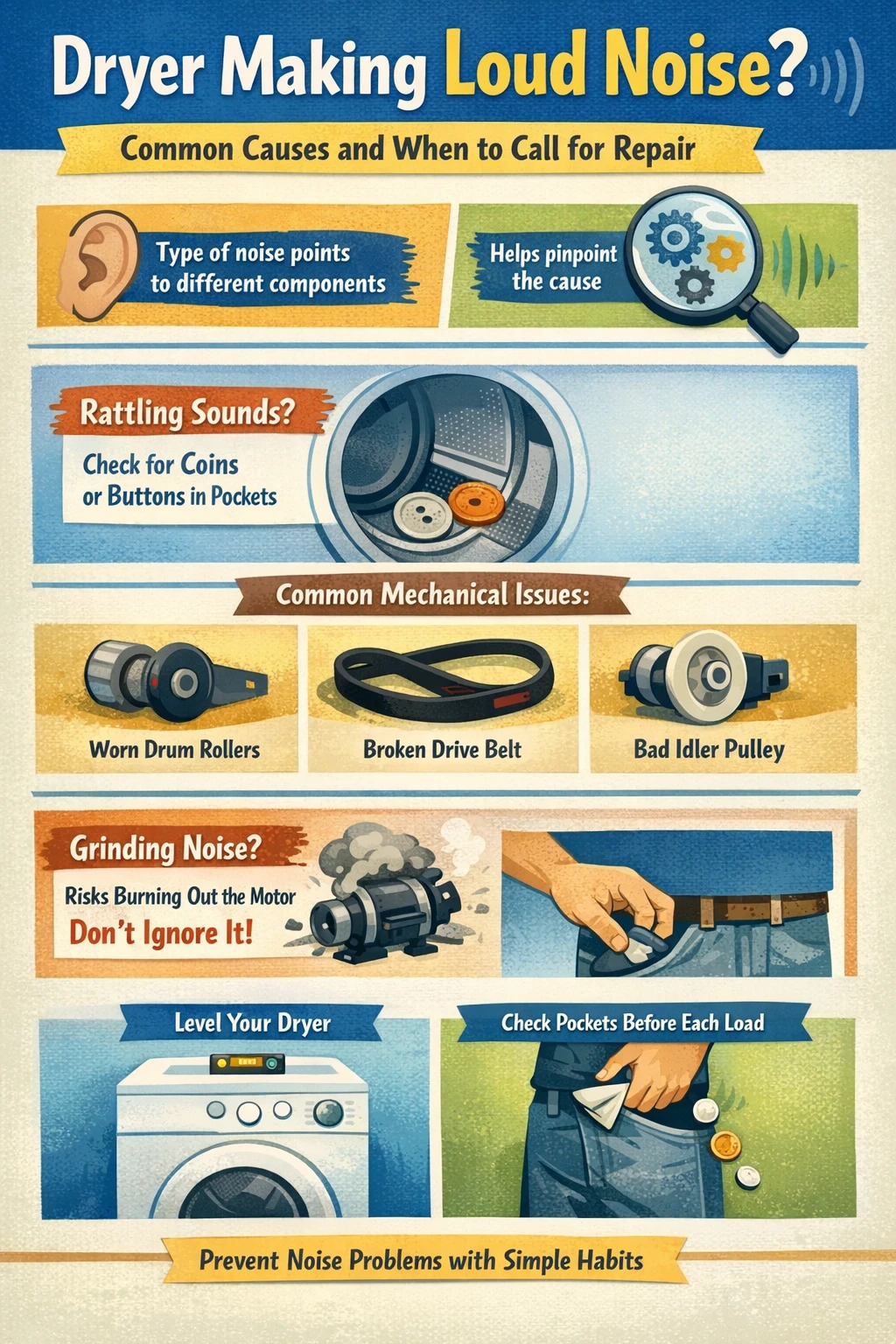
- The type of noise your dryer makes grinding, squeaking, thumping, rattling, or rumbling points to different components and helps narrow down the cause quickly.
- Many rattling noises come from something as simple as a coin or button left in a pocket, not a mechanical failure.
- Worn drum rollers, a failing idler pulley, and a damaged drive belt are among the most common mechanical causes of a noisy dryer.
- Most dryer repair costs fall in the $100 to $200 range for parts issues; if repair estimates climb well beyond that, replacement may be worth considering.
- Ignoring a grinding noise in particular can burn out the motor, turning a straightforward repair into a much bigger expense.
- Leveling the dryer and checking pockets before each load are two easy habits that prevent several common noise problems entirely.
What a noisy dryer is actually telling you

A dryer making loud noise is almost always trying to communicate something specific. The sound itself where it comes from, what it resembles, whether it happens from the start of a cycle or only partway through gives you real diagnostic information. Most dryers run at under 60 decibels when healthy. If yours sounds noticeably louder than it used to, something has changed mechanically or a foreign object has found its way inside.
The place to start is simple: listen carefully and try to locate the sound. Front of the machine? Back? Inside the drum itself? Running the dryer empty for a few minutes can help you isolate whether the noise is load-related or mechanical. In our experience, that one step alone rules out a third of calls before anyone has to open up the machine.
It’s also worth checking whether the dryer is sitting level. Moving a dryer even a short distance say, shifting it out to clean behind it or during a flooring project can throw it off-balance enough to cause vibration and noise. A quick check with a level and a few turns of the adjustable feet costs nothing and takes two minutes.
Grinding noise: the one you shouldn’t ignore
 [IMAGE PLACEHOLDER FOR IMAGE2]
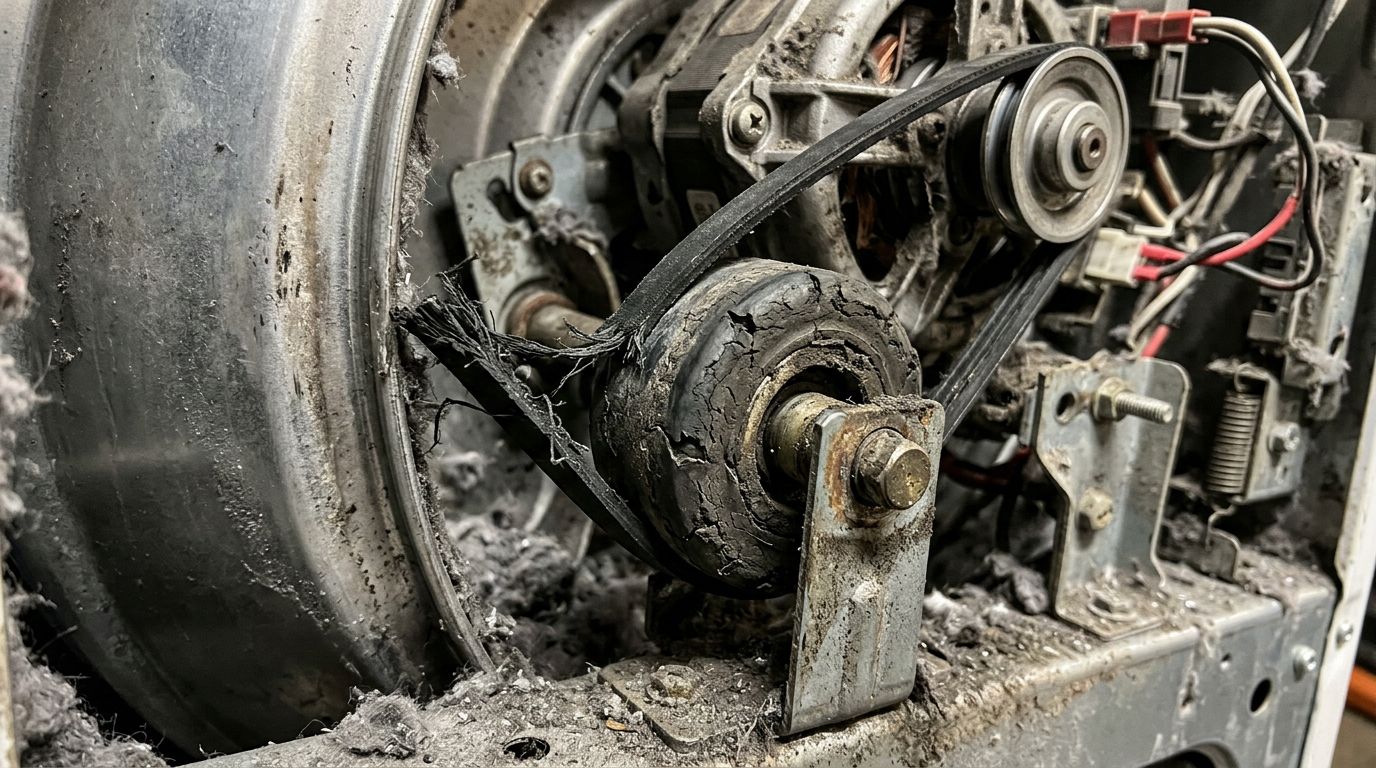
A grinding sound is probably the most concerning noise your dryer can make, and it’s the one we’d push you hardest to address quickly. That metal-on-metal grinding almost always points to a worn drum bearing. The drum bearing sits at the rear of the appliance and supports the drum as it spins. When it wears down, the drum starts rubbing against the back casing and that friction is what you’re hearing.
Sometimes the grinding comes with a high-pitched squeal layered on top. That combination is a fairly reliable indicator that the bearing is the problem. The drive belt needs to be removed to get a proper look at the bearing, which means you’re into a disassembly job that most homeowners are better off leaving to a technician.
Here’s why this one matters more than it might seem: if you keep running the dryer with a failed drum bearing, you risk burning out the motor. A bearing replacement is a straightforward repair. A motor replacement is a significantly more expensive one. Nobody wants to come home to that. The U.S. Department of Energy’s laundry efficiency guidelines note that maintaining your dryer properly extends its lifespan considerably and catching bearing wear early is a good example of that in practice.
Squeaking and screeching: usually the idler pulley or drum rollers
A squeaky dryer is one of the more common calls we get, and the location of the squeak gives you most of the diagnosis right there. Squeaking from the front of the machine typically points to a worn idler pulley, sometimes called a tensioner. This is the small wheel that keeps tension on the drive belt. When it starts to fail, the belt doesn’t run smoothly, and you get a high-pitched squeal or screech especially when the dryer first starts up.
Squeaking from the back of the dryer usually means something else: worn drum rollers, damaged roller shafts, worn drum glides, or a faulty drive belt. Most dryers have two drum support rollers at the rear, and some have two more at the front. These rollers carry the weight of the drum as it spins. When they wear down and they do wear down over years of use they produce a squeaking or rumbling as the drum rotates.
One practical note from working on these: if one roller is worn, the others are usually not far behind. It’s generally worth replacing all of them at the same time rather than doing the job twice. The roller shafts can often be reused if they’re still in good condition, but they should be cleaned thoroughly before new rollers go on. If you’re in an older neighbourhood like Ramsay or Inglewood where homes have been running the same appliances for a decade or more, drum roller wear is one of the more common things we find.
What about squeaking from the bottom?
If the squeak seems to come from low on the machine, check the legs first. Dryer legs that are loose or sitting on an uneven surface can cause vibration that sounds deceptively like a mechanical problem. Tighten them with a wrench and make sure the machine is sitting flat. It’s a five-minute fix that occasionally turns out to be the whole story.
Thumping and banging: loads, rollers, and belts
A thumping dryer doesn’t always mean something is broken. The first thing to check is the load itself. Heavy items like comforters, curtains, and sheets have a tendency to ball up inside the drum, and that uneven mass thumping against the drum wall is exactly what it sounds like. Untangle large items before putting them in and load them loosely. Tumbling shoes are another culprit tennis shoes in particular create a satisfying thump every time they hit the drum. A drying rack handles those better anyway.
If the load checks out and the thumping continues, look at the drum support rollers. A roller that has developed a flat spot which happens when a dryer sits unused for a long stretch will produce a rhythmic thump as the drum rotates over it. Running an empty cycle sometimes gives the roller time to return to its round shape. If it doesn’t, the roller needs replacing.
A damaged or frayed drive belt can also produce a thumping sound, almost like something slapping against the drum interior as it turns. The belt wraps all the way around the drum, through a tension pulley, and around the drive motor. Over time it can fray, crack, or start to invert on itself, and any of those conditions creates noise. If your dryer is also making the noise but not spinning, the belt may have broken entirely.
Rattling sounds: usually the simplest fix
Rattling is the most benign noise category, and in a lot of cases you can solve it without touching a single component. Coins, buttons, keys, hair clips anything small and hard that gets left in a pocket will rattle loudly as it bounces around the drum. Run a magnet over the drum interior to catch anything metallic you can’t spot visually. Check the lint trap chute too, since small items can fall in there and end up hitting the blower wheel.
Objects resting against the outside of the dryer cause rattling as well. Items stored on top of the machine, things leaning against the sides, or objects in a pedestal drawer can all vibrate during a cycle. And if your washer and dryer are sitting right next to each other, the washer’s spin vibrations can rock the dryer enough to produce a rattling sound. A few inches of separation between them usually fixes it.
One less obvious cause: the exhaust duct pushed too far into the back of the unit. If it’s pushed in past where it should be, it can contact the blower wheel and rattle. Pull it back to the correct position and the noise goes away.
Rumbling noise: look at the blower wheel
A low, persistent rumbling that doesn’t match the rhythm of the drum rotation often points to the blower wheel. The blower wheel circulates air through the drum and pushes it out through the exhaust vent. It’s driven by the motor and sits inside a housing at the back of the machine. When the blower wheel is loose, out of balance, or partially blocked by lint or a stray dryer sheet, it creates a rumbling or vibrating sound that can be hard to place.
This is one of the repairs that’s harder to DIY, because accessing the blower wheel usually means removing the drum entirely. We’d recommend calling a technician for this one. The National Fire Protection Association notes that failure to clean dryers is the leading cause of dryer fires, and a lint-clogged blower wheel contributes to both noise and fire risk two good reasons to get it looked at properly.
We see blower wheel issues fairly often in homes around McKenzie Towne and similar newer developments where the laundry area is tucked into a tight closet space. Poor ventilation leads to faster lint accumulation, which eventually reaches the wheel itself.
Clicking noise: probably fine if you have a gas dryer
If you own a gas dryer and hear a clicking sound throughout the cycle, relax. That’s the gas valve clicking on and off to maintain the temperature for the selected cycle. It’s completely normal and not a sign of any problem. Electric dryers don’t make this sound, so if an electric dryer starts clicking, that’s worth investigating it may point to a relay or control board issue.
Frequently asked questions
Here are the questions we hear most often from homeowners dealing with dryer noise repair. Some of these have easy answers; a few are more nuanced than people expect.
Can I keep using my dryer if it’s making a loud noise?
It depends on the noise. A rattling from coins in the drum? Fine to keep using it once you’ve removed them. A grinding noise? Stop using it. Grinding from a worn drum bearing can lead to motor failure if you keep running the machine, and that turns a moderate repair into a much more expensive one. Squeaking and thumping fall somewhere in the middle they usually won’t cause immediate damage, but they will get worse over time.
The general rule is: if you can identify the cause and it’s clearly harmless (an unbalanced load, a loose item), keep going. If you can’t identify the cause, or if it sounds mechanical and is getting louder, get it looked at before the next load.
How much does it typically cost to fix a noisy dryer?
Most common dryer repairs replacing drum rollers, an idler pulley, drum glides, or a drive belt fall in the $100 to $200 range including parts and labour. Drum bearing replacement is similar. Motor replacement costs more and is worth comparing against the cost of a new unit, especially if the dryer is already older. If a technician can’t give you a diagnosis before asking you to approve the work, that’s a red flag.
Is noisy dryer troubleshooting something I can do myself?
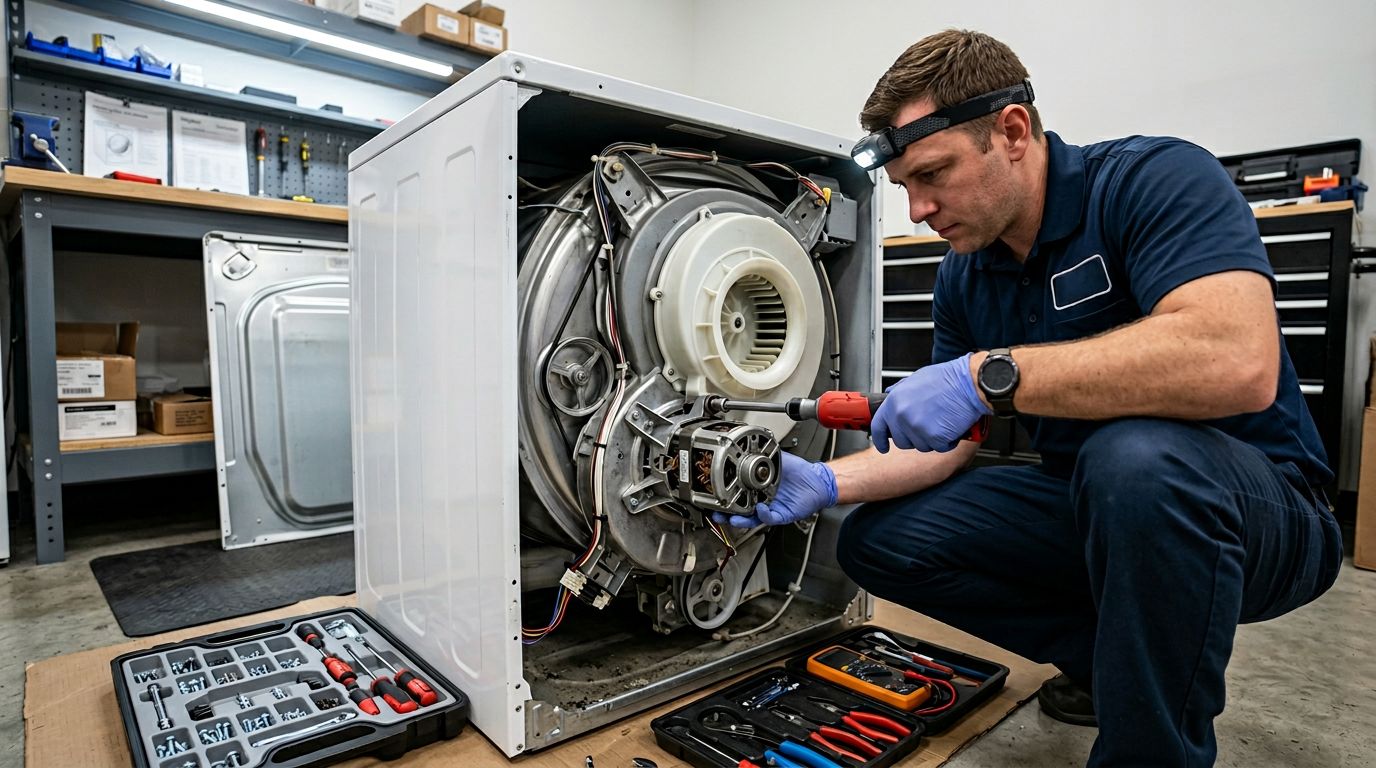
Some of it, yes. Checking that the machine is level, removing foreign objects, separating the appliances, and confirming the load isn’t bunched up all of that is easy and safe. Inspecting the drive belt visually once the back panel is off is manageable for a confident DIYer. But replacing drum rollers, bearings, or the blower wheel requires removing the drum, and that’s where most people without appliance repair experience run into trouble. Disassembly is straightforward once you know the sequence, but getting it wrong can create new problems.
Why did my dryer suddenly get loud after I moved it?
Moving a dryer around even without any drops or hard impacts can shift the drum off its normal position, throw off the leveling, or jostle internal components just enough to cause friction. The drum may be rubbing on the casing in one spot, a roller may have shifted, or the machine may simply need to be re-leveled. Start with the level check, then run an empty cycle and listen for where the noise is coming from. In many cases, re-leveling and letting the machine run for a cycle or two settles things down.
[IMAGE PLACEHOLDER FOR IMAGE3]
How do I know if it’s the drum rollers or the idler pulley making the noise?
Location is your best clue. Idler pulley noise typically comes from the front-center of the machine and often sounds like a screech or squeal that’s loudest when the dryer first starts. Drum roller noise tends to come from the back and often has a rhythmic quality tied to the drum’s rotation speed. To get a clearer read, unplug the dryer, open the cabinet, and try spinning the drum by hand. If you feel resistance or roughness in spots, that usually points to a roller issue. If the drum spins freely but the idler pulley is stiff or doesn’t turn easily when you test it manually, that’s your answer. This repair walkthrough on YouTube shows the process clearly if you want a visual guide before deciding whether to attempt it yourself.
Wrapping up
A dryer making loud noise is almost always diagnosable once you pay attention to the type of sound and where it’s coming from. Grinding means stop and call someone. Squeaking and thumping usually mean worn rollers or a failing pulley. Rattling often means a quarter in the drum. Catching these things early keeps a small repair from becoming a large one. If you’ve worked through the basics checked the load, leveled the machine, cleared out any foreign objects and the noise is still there, it’s time to get a proper look at the internal components. At Calgary Appliance Service Pros, we handle dryer noise repair across Calgary and the surrounding area, along with washer repair, fridge repair, stove repair, oven repair, dishwasher repair, and more. Give us a call and we’ll help you figure out what’s going on and the most practical way to fix it.
