
Your microwave hums, the turntable spins, the light comes on but the food comes out stone cold. This guide walks you through the most common reasons a microwave stops heating, what you can check yourself, and when it’s time to call in a professional. Calgary winters are hard on appliances. Between the dry air, the temperature swings, and homes that run their kitchens hard through long cold months, we see appliances pushed to their limits year-round. At Calgary Appliance Service Pros, microwave not heating calls are among the more frequent ones we get and in most cases, the fix is either a simple settings issue or a part that a qualified technician can diagnose quickly. What matters is knowing which situation you’re in before you start pulling things apart. The good news? A lot of these problems have straightforward explanations. The not-so-good news is that microwaves are one of the few kitchen appliances where DIY internal repairs carry real risk. We’ll explain both sides honestly.
Key takeaways
- A microwave that runs but won’t heat is almost always caused by either a settings problem or a failure in the high-voltage heating circuit and those two categories require very different responses.
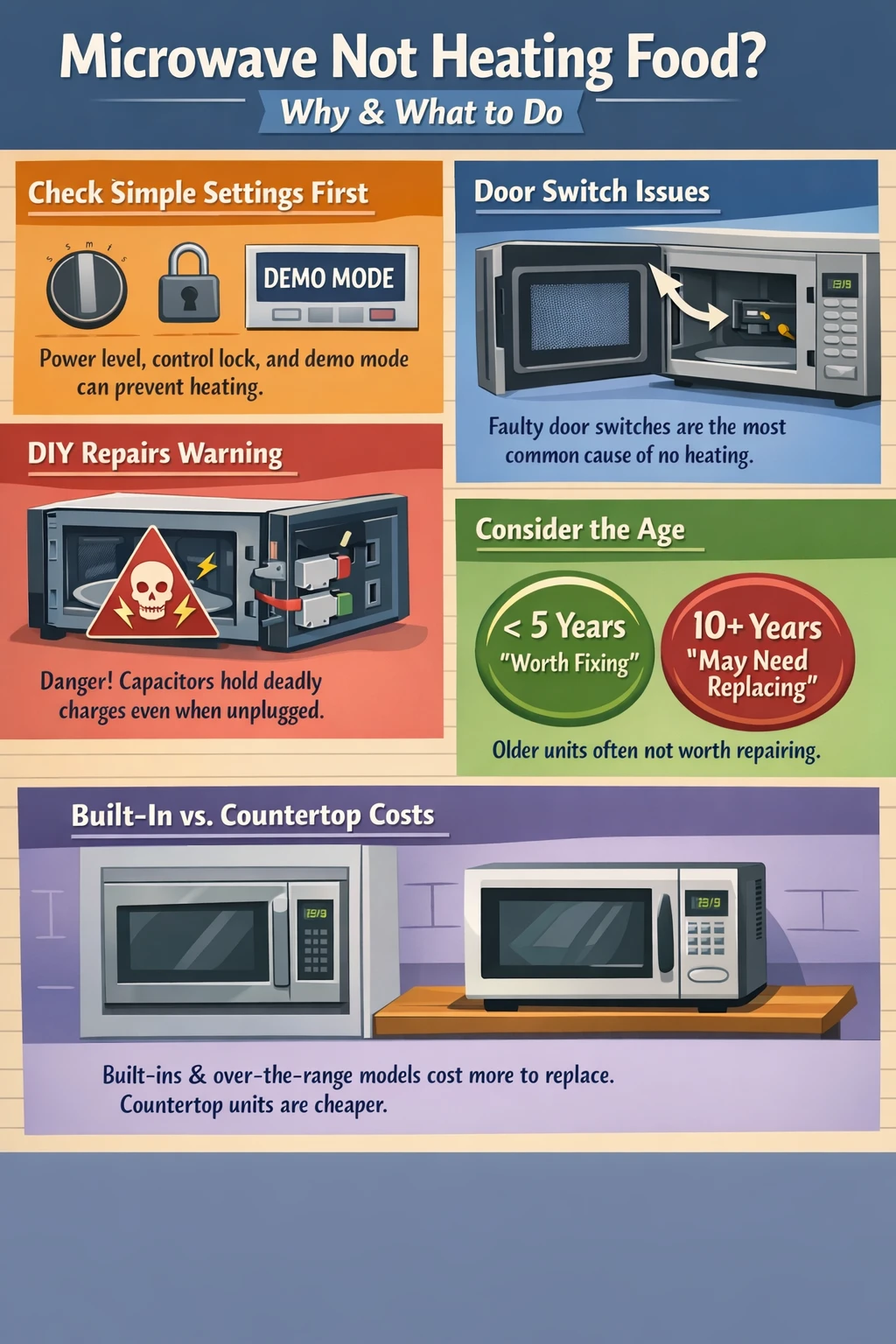
- Check the simple stuff first: power level, control lock mode, and demo mode can all make a microwave appear to work normally while producing zero heat.
- Door switches are one of the most common mechanical causes of a microwave stops heating there are usually two or three of them, and even one failed switch can cut power to the magnetron.
- Microwaves store dangerous electrical charges in their capacitors even after being unplugged this is not like replacing a dryer belt or a dishwasher heating element.
- If your microwave is more than 8-10 years old and the magnetron has failed, a repair estimate versus replacement cost conversation is worth having before committing to parts.
- Compact countertop models can be replaced for $100-$200; built-in and over-the-range units cost significantly more, which often makes repair the smarter call.
Why your microwave isn’t heating: the direct answer
When a microwave runs but doesn’t heat, something in the high-voltage circuit that powers the magnetron has either been interrupted or failed. The magnetron is the component that actually generates the microwave energy that heats food everything else (the light, the turntable, the fan, the display) runs on a completely separate low-voltage circuit. So the machine can look perfectly fine while producing zero heat.The interruption can be as simple as the wrong setting being selected, or as serious as a failed magnetron, a blown high-voltage fuse, or a damaged diode or capacitor. The challenging part is that the microwave itself usually won’t tell you which one it is there’s often no error code, no alarm, nothing. It just doesn’t heat.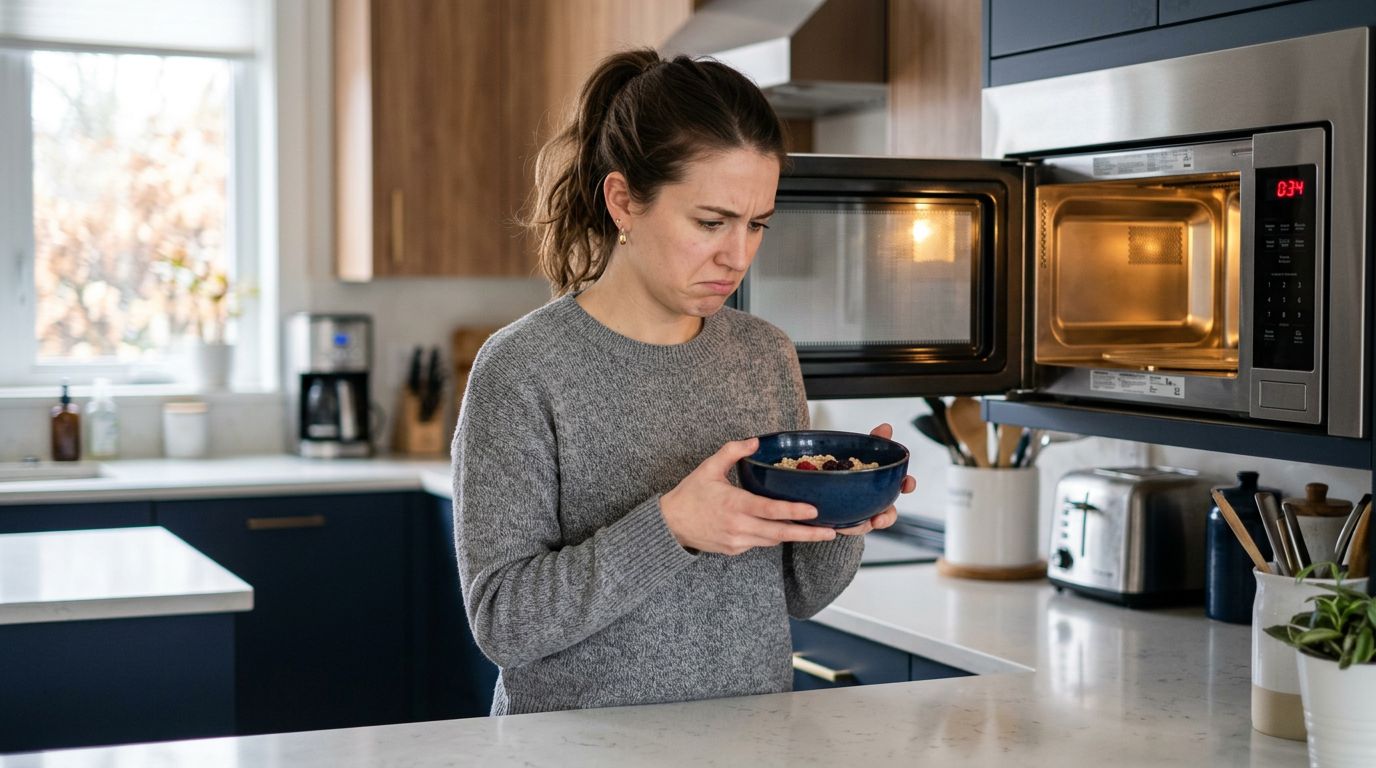 Start with the obvious before assuming the worst. We see this fairly often: someone convinced they need a new microwave when the power level was accidentally set to 10 percent, or demo mode was somehow activated. Takes thirty seconds to rule out.
Settings and simple fixes to check first
Before anything else, run through this list. These require no tools and no technical knowledge.
Power level
Most microwaves have five to ten power settings. If yours got bumped down to a very low setting say, 10 or 20 percent food will heat so slowly it might feel like nothing is happening at all. Check the power level display before you start worrying about components. Set it back to 100 percent, run a cup of water for 90 seconds, and see if it heats.
Control lock mode
Microwaves have a control lock function designed to prevent accidental starts during cleaning. When it’s active, some models display “LOC” or “L” on the panel. Whirlpool models, for instance, often show this code clearly. Check your owner’s manual for how to disable it on your specific unit it’s usually a button held for three to five seconds.
Demo mode
This one catches people off guard. Demo mode is designed for showroom floors it makes the microwave look fully operational (light on, turntable spinning, fan running) without actually activating the magnetron. If your microwave was recently moved, reset, or purchased secondhand, there’s a real chance it’s in demo mode. Again, the owner’s manual will tell you how to deactivate it.
Delay start
Some models allow you to set a timer that delays the start of a cooking cycle. If you hit start and nothing heated up, check whether delay start is engaged. It’s easy to accidentally activate.
Unplug and reset
Unplugging the microwave for 10 minutes and plugging it back in clears minor software glitches. It’s a simple step worth trying before anything else. One quick note: if you have a GE or KitchenAid model, check whether the unit has a lock function that resets independently some models require you to hold a specific button combination after power is restored.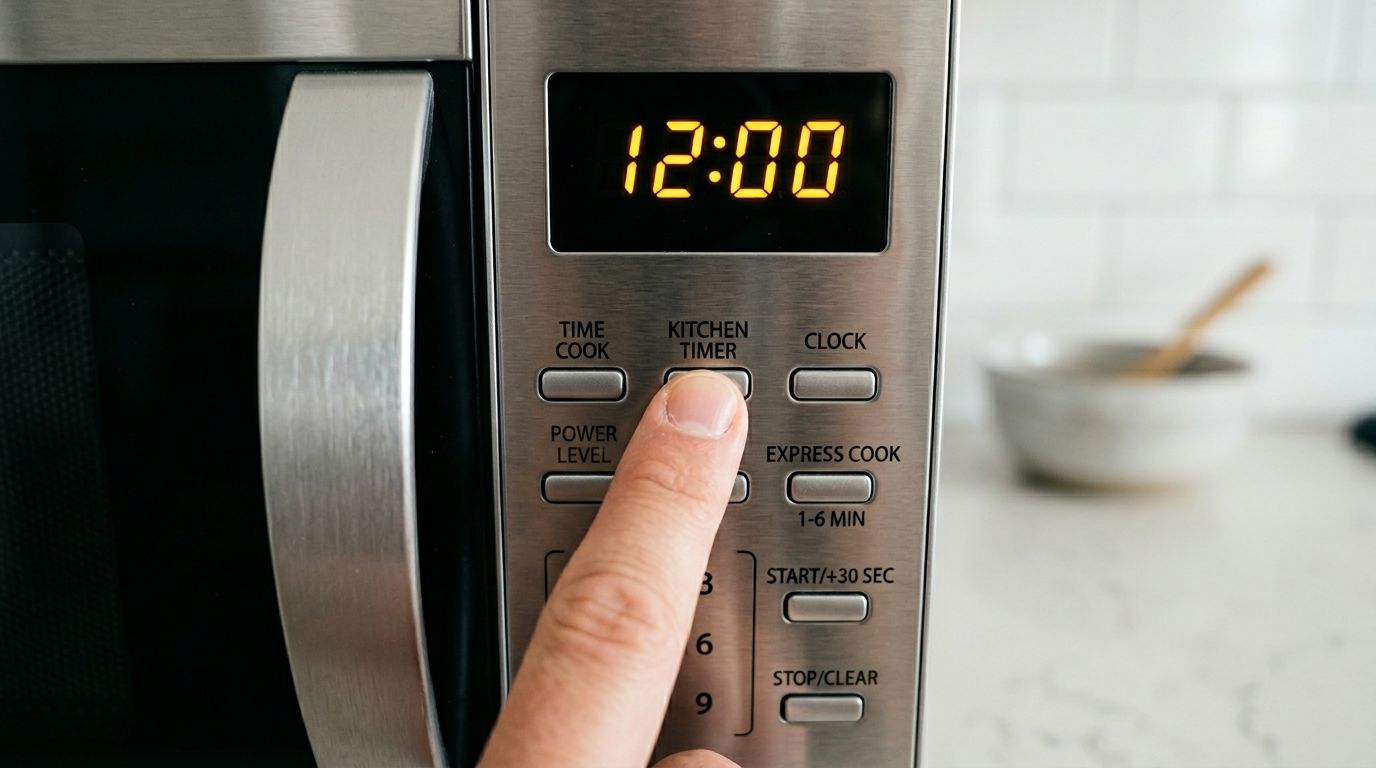
Mechanical causes that require a technician
If the settings all look fine and the microwave still isn’t producing any heat, you’re likely looking at a component failure. Here’s what’s usually involved.
Faulty door switches
This is the most common mechanical cause we see. Microwaves have two or three door interlock switches that signal to the control board that the door is securely closed. If even one of them fails, the magnetron won’t activate it’s a built-in safety feature.A clue: if the interior light doesn’t come on when you open the door, or if the turntable runs when it shouldn’t, a door switch may be the culprit. The switches themselves are inexpensive parts. Replacing them involves disassembling the control panel area, which is manageable for someone with electrical repair experience, but it does put you in proximity to components that need to be handled carefully.
Blown high-voltage fuse
There’s a thermal fuse inside most microwaves that’s designed to blow if the unit overheats or experiences a power surge. If this fuse goes, the magnetron gets no power. The fuse is housed in a casing near the magnetron, and while the part itself is cheap, accessing it means getting inside the machine which brings us to the safety conversation below.
Failed magnetron
The magnetron is the heart of the heating system. It generates the electromagnetic waves that excite water molecules in your food and produce heat. Magnetrons wear out over time, especially if the microwave has been run empty repeatedly or at high power with very little food inside. A failed magnetron means no heat, full stop.Replacing a magnetron is a legitimate repair option, but the part cost plus labor needs to be weighed against the age and replacement value of the unit. In our experience, this conversation is worth having before committing a technician can give you a diagnosis and an honest answer about whether repair makes financial sense.
Defective high-voltage diode
The diode converts power from the capacitor into the form the magnetron needs. If it burns out or fails, the magnetron won’t receive the electricity it needs to operate. A burned diode sometimes has a visible scorch mark or a smell, but not always. Testing it requires a multimeter and knowledge of how to safely discharge the capacitor first.
Damaged capacitor
The capacitor stores and releases high-voltage electricity to power the magnetron. It’s one of the most dangerous components in the machine. A failed capacitor can cause the microwave to stop heating and it can also retain a lethal electrical charge long after the unit is unplugged. This is not a part to poke at without proper training.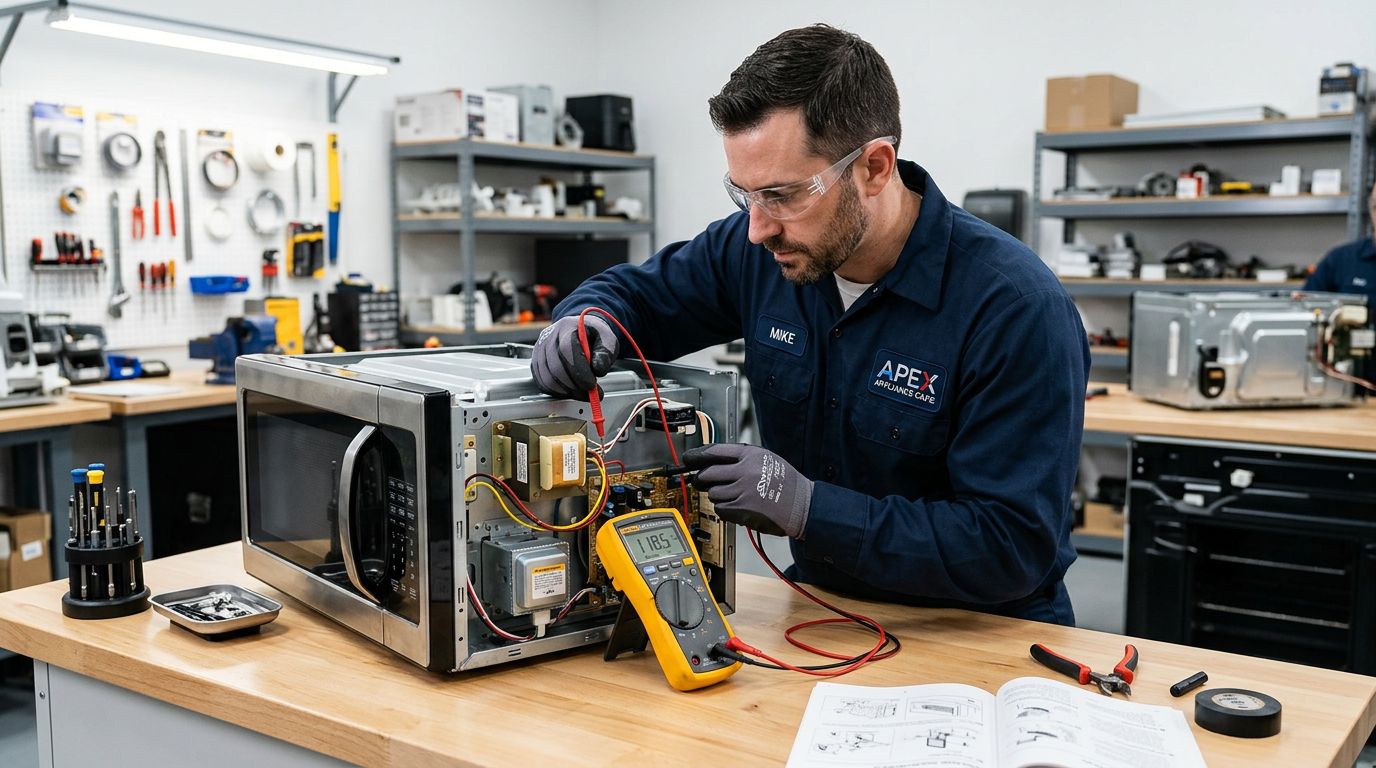
A word on microwave safety and why this isn’t like fixing a dryer
Let’s be direct about this, because it matters. Microwaves are different from most other appliances. A dryer heating element or a dishwasher door latch can typically be replaced by a careful homeowner with basic tools. The internal high-voltage components of a microwave are a different category of risk entirely.The capacitor inside a microwave can store thousands of volts of charge even after the unit is unplugged. That charge can be lethal if you contact it without first discharging it properly and discharging it properly is itself a procedure that requires specific knowledge and tools. On top of that, the magnetron contains beryllium oxide, a material that can cause permanent lung damage if it’s chipped or broken and the particles are inhaled.This isn’t fearmongering. It’s just the reality of how this particular appliance is built. The message isn’t “never repair a microwave.” It’s “don’t go past the control panel area without knowing exactly what you’re doing.”Checking door switches on some wall-mounted models, for instance, can sometimes be done from the front panel without going near the high-voltage components and that’s a more reasonable DIY territory for someone with electrical experience. But if the diagnosis points to the magnetron, capacitor, diode, or internal fuse, calling a qualified technician is the right move. Older homes in areas like Bridgeland or Inglewood, where built-in microwave-oven combos are common in renovated heritage kitchens, often have units that are heavy, awkward to remove, and worth repairing rather than replacing exactly the situation where a technician pays for themselves.
Repair or replace? Working through the math
This is the practical question that usually follows a diagnosis. Here’s how to think through it.Compact countertop microwaves often cost $100-$200 to replace. If a repair is going to run $150 in labor plus parts, the math doesn’t favor fixing it especially if the unit is already several years old. The same logic applies to a basic over-the-range model.Built-in microwaves and combination microwave-oven units are a different story. These units cost significantly more to replace, and often require new trim kits, cabinetry adjustments, and installation labor. A $200-$300 repair on a unit that would cost $800-$1,500 to replace is usually worth doing provided the repair fixes the actual problem and the rest of the unit is in good shape.Age matters too. A microwave that’s under five years old and has a failed door switch is almost always worth fixing. One that’s twelve years old with a dead magnetron is closer to a judgment call. We see a lot of calls from newer homes in communities like Mahogany where appliances were builder-grade and are hitting their typical lifespan right around the same time in those cases, understanding the full picture before spending money on repairs is smart.One general reference point: appliance manufacturers typically design microwaves with an expected lifespan of around nine years. That’s not a hard cutoff, but it’s a useful benchmark when you’re deciding whether to invest in a repair.
Frequently asked questions
These questions come up regularly when homeowners are trying to figure out what’s going on with a microwave that won’t heat. The answers below are meant to give you clear, practical direction.
Can I test my microwave to confirm it’s not heating?
Yes, and it’s straightforward. Place one cup of cold water in the microwave and run it at full power for 90 seconds. If the water is not noticeably warmer afterward, the microwave is not producing heat. This rules out the possibility that the food itself was just taking longer than expected. Make sure the power level is set to 100 percent before you run the test.
Is it safe to use a microwave that heats unevenly?
Uneven heating is actually normal microwave behavior to some degree. Microwaves create a standing wave pattern inside the cavity with fixed “hot spots” and “cold spots” the turntable exists specifically to move food through those hot spots so heating is more even. If your turntable has stopped working, that alone can explain why food is coming out unevenly heated on one side and cold on the other. Have the turntable motor checked before assuming a more serious problem.That said, if food is consistently coming out cold in the center with hot edges, or if heating times have noticeably increased, those are signs of a weakening magnetron and worth having looked at. The Health Canada guidance on microwave oven safety is also worth a quick read if you have concerns about microwave leakage or performance.
Why does my microwave turn on but not heat, with no error code?
This is actually very common, and it’s one of the more frustrating aspects of microwave troubleshooting. The low-voltage systems that power the display, light, fan, and turntable operate completely independently from the high-voltage circuit that powers the magnetron. If something in the high-voltage side fails the diode, the capacitor, the magnetron itself, or the thermal fuse the rest of the machine keeps running normally. There’s no sensor telling the control board that the heating circuit is down, so no error code appears. The machine looks fine. It just doesn’t heat.
How much does microwave repair typically cost in Calgary?
A service call to diagnose the problem typically runs $75-$100 before parts. Door switch replacement is generally on the lower end of the repair scale since the parts are inexpensive. Magnetron replacement is more involved and more expensive whether it makes sense depends heavily on the unit’s age and replacement cost. Get a diagnosis before agreeing to any repair, and a good technician will walk you through the options honestly.
What happens if I run my microwave with nothing inside?
Running a microwave empty is hard on the magnetron. With no food or liquid to absorb the microwave energy, the energy reflects back into the magnetron itself, causing it to overheat. Over time, this significantly shortens magnetron life. If you’ve done this repeatedly, it may be a contributing factor to why yours stopped heating. Going forward, if you need to run it for just a moment, put a mug of water inside to absorb the energy.
Wrapping up
A microwave that won’t heat is almost always caused by one of two things: a settings issue you can sort out in a minute, or a component failure in the high-voltage circuit that needs a professional diagnosis. The quick checks power level, control lock, demo mode, and a simple reset cost nothing and should always come first. If those don’t solve it, door switches are the next most common culprit and a good technician can test them quickly. From there, it becomes a question of what failed and whether repair makes financial sense for your specific unit.If you’re not sure where things stand, or you’d rather not navigate the safety considerations involved in microwave repair on your own, that’s what we’re here for. At Calgary Appliance Service Pros, we handle microwave repair Calgary homeowners need alongside a full range of appliance services including washer repair Calgary residents count on, dryer repair Calgary homes require through the winter, fridge repair, stove and oven repair, and more. Give us a call and we’ll help you figure out whether a repair is the right move, or whether it’s time to start fresh with something new.
