
Nobody wants to walk into their kitchen and find water pooling across the floor in front of the dishwasher. This guide walks you through every common source of a dishwasher leak, what to look for, and what you can realistically fix yourself.A leaking dishwasher is one of those problems that seems minor right up until it isn’t. Water sitting under your cabinets or soaking into your subfloor can cause real damage fast, and the average water damage claim from a home appliance leak runs into thousands of dollars. The good news? Most dishwasher leaks come from a handful of causes, and several of them are straightforward DIY fixes. At Calgary Appliance Service Pros, we field calls about dishwasher leaking water pretty regularly. Calgary’s hard water is tough on seals and internal components, and a lot of the homes here have dishwashers that have quietly been developing small problems for months before the puddle finally appears. The earlier you catch it, the cheaper and easier the fix.
Key takeaways
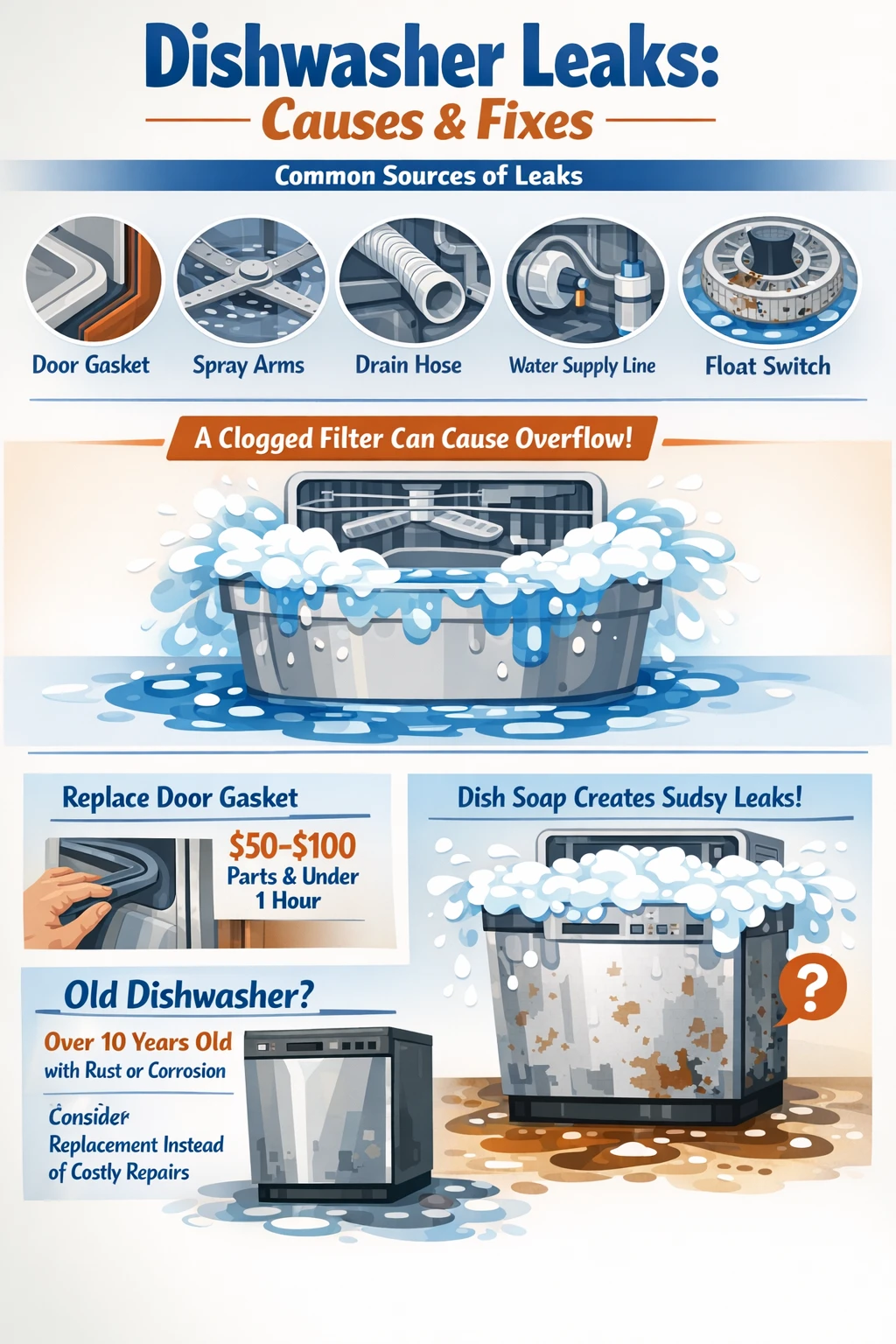
- Most dishwasher leaks come from one of six places: the door gasket, spray arms, drain hose, water supply line, float switch, or a clogged filter.
- A clogged filter is the most overlooked cause food debris builds up, water can’t drain, and eventually the tub overflows.
- Replacing a door gasket typically costs between $50 and $100 in parts, and most homeowners can do it themselves in under an hour.
- A faulty float switch costs around $20 to replace and is one of the easiest internal components to swap out.
- Using regular dish soap instead of dishwasher detergent can cause a suds overflow that looks exactly like a mechanical leak.
- If your dishwasher is over 10 years old and showing signs of rust or corrosion, repair costs may not be worth it compared to replacing the unit.
Where is the water actually coming from?
The most common sources of a dishwasher leak are the door gasket, the spray arms, and the drain or water supply connections underneath the unit. If water is appearing at the front of the machine along the bottom of the door, you’re most likely looking at a door seal problem or a spray arm issue. If it’s pooling under the cabinet near the plumbing, the problem is probably a hose connection. Figuring out which one you’re dealing with matters before you start pulling things apart. A lot of people assume it’s always the door seal and often they’re right but we’ve seen plenty of cases where a clogged spray arm was quietly redirecting water straight at the door seal, making it look like the seal had failed when it hadn’t. A quick visual inspection before you do anything else will save you from replacing the wrong part. Before you touch anything, disconnect power to the dishwasher at the breaker and turn off the water supply valve under the sink. Keep a few old towels nearby. Water will come out somewhere when you start poking around, and a slippery kitchen floor is the last thing you need. 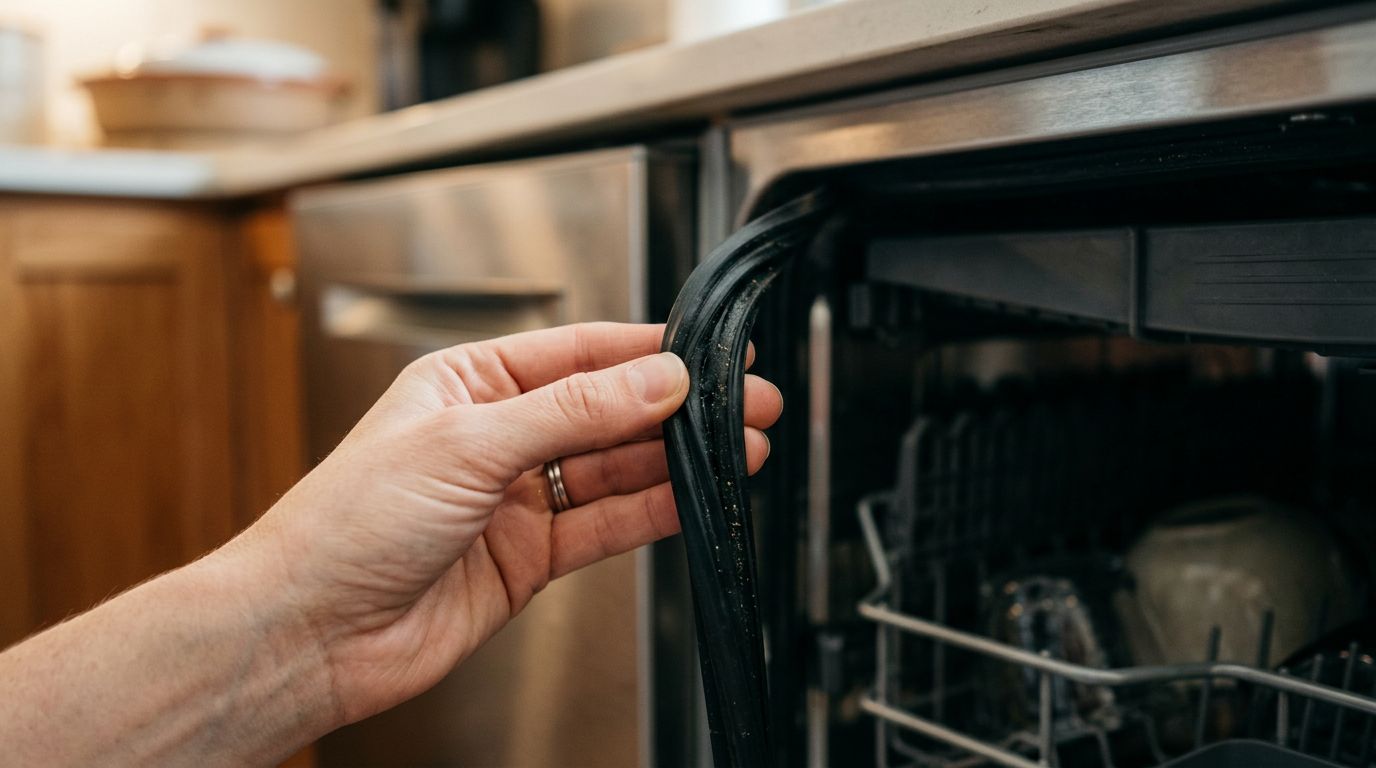
The door gasket: the most common culprit
The rubber gasket that runs around the inside perimeter of your dishwasher door does one job it creates a watertight seal every time the door closes. When it fails, water finds its way out along the bottom edge of the door, usually showing up as a thin stream or a slow drip during the wash cycle. Gaskets fail in a few ways. They dry out and crack, especially in older machines. They get coated in grease and food buildup that prevents them from seating properly. Sometimes they’re simply knocked out of their channel and need to be pressed back in. Pull the door open, run your fingers along the full length of the gasket, and look for anything that feels stiff, brittle, crumbling, or obviously out of place. If it’s dirty, clean it first. A toothbrush with warm soapy water works well for getting into the grooves. Some people have good results applying a thin layer of silicone grease after cleaning it keeps the rubber pliable and helps it seal more consistently. If the gasket has actual tears or sections that have completely stiffened up, cleaning won’t fix it. You’ll need a replacement, and the whole gasket has to go, not just the damaged section. Replacing it is genuinely manageable for most people. Open the door fully, peel the old gasket out of its track, clean the channel, then work the new gasket in starting from the center top and working your way around to the bottom corners. The corners need the most attention that’s where leaks reappear if the gasket isn’t seated all the way in. Also check the door latch while you’re at it. A loose or slightly bent latch means the door isn’t pulling the gasket tight against the tub. In older homes around neighbourhoods like Inglewood or Forest Lawn, where appliances often haven’t been touched since original installation, we sometimes find that door screws have worked themselves loose over the years. Tighten them up before declaring the latch broken.
Spray arms: the cause people don’t think of first
This one surprises a lot of homeowners. A damaged or clogged spray arm can cause a leak that looks like a door seal problem, which means people spend money on a new gasket and still have a wet floor. Here’s what happens. The spray arms rotate during a wash cycle because water pressure pushes them around. If an arm is clogged with food debris, hard water deposits, or small pieces of plastic, it stops rotating. A stationary spray arm just hammers the same spot over and over, creating a wave effect inside the tub. That wave sloshes water over the front lip of the tub and it drips out from the bottom of the door. 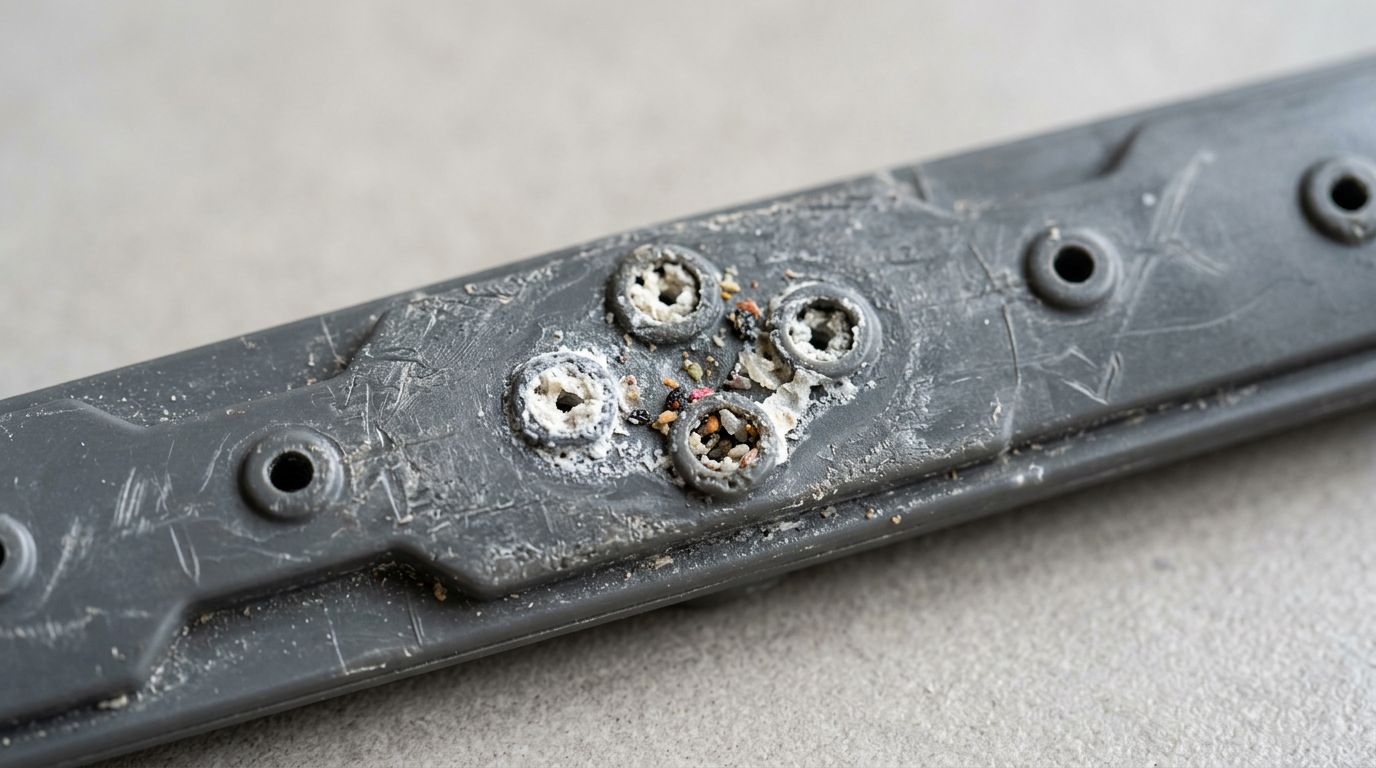 Check for this by removing the spray arms most just unclip or unscrew and holding them up to the light. You should be able to see through the jet holes. If several of them are blocked, that’s your problem. Rinse the arm under the sink, use a toothpick to clear individual holes, and reinstall it. If the arm is visibly cracked or split at the seams, replace it. A new spray arm typically costs around $20 and takes about five minutes to swap in. Calgary’s water is genuinely hard, and mineral buildup in spray arm jets is something we see a lot. Running a monthly cleaning cycle with a dishwasher cleaning product or citric acid helps slow that buildup down considerably.
Under the machine: hoses, filters, and the float switch
If the leak is coming from underneath rather than the door, you’re looking at the plumbing components. Remove the lower kickplate panel (two or four screws along the bottom front) and have a flashlight ready.
The drain hose
The drain hose runs from the pump to the drain under your sink. It’s corrugated plastic, and it cracks, kinks, and loosens at the clamps over time. Look for water trails or white mineral staining along the hose that tells you where water has been escaping. A loose clamp can often just be tightened with a flat-head screwdriver. A cracked hose needs to be replaced entirely, which runs about $50 to $100 for the part. 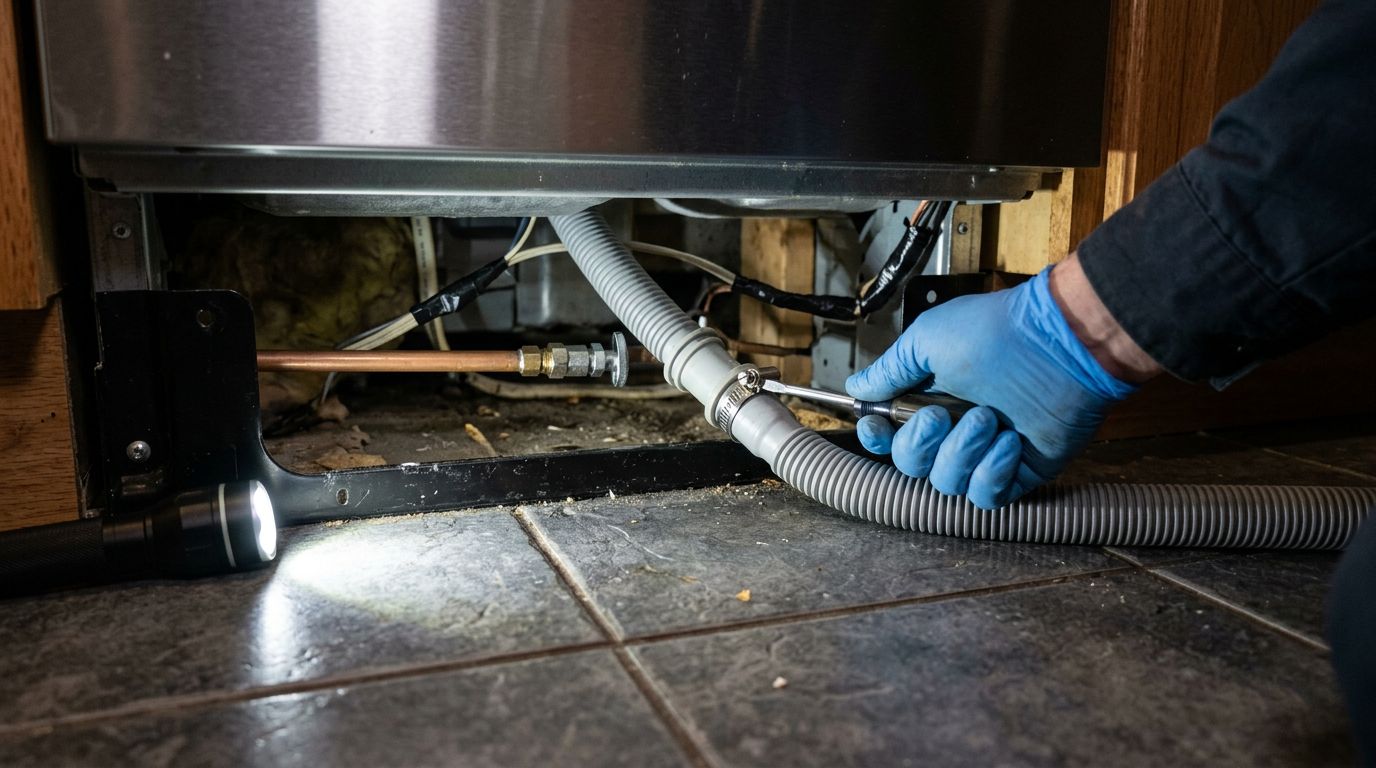 Check the routing of the drain hose while you’re under there. It should loop up to near the underside of the counter before dropping to the drain connection this high-loop prevents backflow from the sink. If someone installed the dishwasher without this loop, you can get standing water backing up into the tub, which eventually causes overflows and leaks.
The water supply line
The supply line connects your household water to the dishwasher at the front left corner of the unit, inside that kickplate panel. Check the fitting where the line connects. Hand tighten it if it feels loose, then use pliers for an additional quarter to half turn. Don’t overtighten you can crack a rubber gasket. If the line itself is cracked or the fitting continues to drip after tightening, shut off the water and replace that section.
The filter
This one gets overlooked constantly. Most modern dishwashers have a removable cylindrical filter at the bottom of the tub, usually with a mesh cover. If it’s clogged with food debris, water can’t drain properly. The tub fills, the water level rises, and eventually it overflows out the bottom of the door. Twist the filter out, rinse it under running water, scrub it with a soft brush, and reinstall it. If you can’t remember the last time this was done, there’s a reasonable chance the filter is part of your problem. Cleaning it monthly is good practice, and honestly in many of the homes we visit it’s clear the filter has never been cleaned at all.
The float switch
The float switch is a small plastic component in the bottom of the tub, near the filter. Its job is to signal when the tub is full. If it gets stuck in the down position, the machine reads the tub as empty and keeps filling, flooding the tub and pushing water out wherever it can find an opening. Test it by pressing it down and releasing it should pop back up freely and make a small clicking sound. If it doesn’t move, clean around it first, since debris can hold it down. If cleaning doesn’t fix it, a replacement float switch costs around $20 and is one of the simpler repairs to do yourself once you’ve removed the kickplate.
A few causes people don’t consider
Wrong detergent
Using regular dish soap or hand soap in a dishwasher causes a foam overflow that floods out of the machine quickly. It looks exactly like a mechanical failure and it isn’t one. Only use automatic dishwasher detergent the kind specifically designed for machine use. If someone accidentally used dish soap, run two or three rinse cycles without any detergent to clear the foam before trying a normal cycle.
The machine isn’t level
A dishwasher that’s even slightly tilted forward will pool water toward the door during a cycle. Over time that water finds its way out. Place a level across the top of the open door frame to check. The adjustable legs at the front can be raised or lowered to bring the machine square. This is one of those five-minute checks that people skip, and occasionally it’s the whole problem.
Large items blocking spray coverage
A wide cutting board or flat pan loaded in a way that deflects a spray arm’s jet directly onto the door seal can push water past the gasket during a cycle. If your leaks are inconsistent sometimes there, sometimes not think about what was loaded differently on the days it happened.
When to call a professional
Some repairs cross a line where DIY stops making sense. If you’ve checked the gasket, cleaned the filter, inspected the hoses, and tested the float switch, and water is still appearing, the leak may involve the pump seal or a component inside the motor assembly. A worn pump seal is one of the more common causes of leaks that only happen during the drain cycle, when the pump is running under pressure. Diagnosing and replacing internal pump components requires running the dishwasher with the covers off and electrical components exposed. That’s a genuine electrocution risk and not something to attempt without proper training. Dishwashers in areas like McKenzie Towne, where newer higher-density housing means appliances are stacked in tighter spaces, can also be awkward to pull out for inspection. If you need to slide the unit out to get a proper look at the underside, it’s worth having someone who does this regularly handle it. If the machine is over 10 years old and the repair cost is heading toward $300 or more, it’s worth having an honest conversation about whether a new unit makes more sense. Corrosion along the tub walls and grinding noises during operation are signs the machine is near end of life regardless of what’s leaking.
Frequently asked questions
These questions come up a lot when people are trying to figure out what’s going on with their machine. Most leaks turn out to be simpler than people expect, but a few situations are worth knowing about in advance.
Why is my dishwasher leaking only during certain parts of the cycle?
If the leak only happens during the drain cycle, the most likely cause is a worn pump seal or a loose drain hose connection that can’t handle the pressure when the pump runs. If it only happens during the wash cycle, the spray arms and door seal are more likely. Timing the leak to a specific cycle phase is actually useful diagnostic information it narrows down which components are under stress at that moment.
Can I use my dishwasher while it’s leaking?
No. Running a leaking dishwasher risks water damage to your flooring, subfloor, and the cabinets around the machine. Water near electrical components is also a safety concern. Turn off the water supply valve under the sink and leave the machine off until you’ve identified and fixed the problem.
How much does dishwasher leak repair typically cost?
It depends entirely on the cause. Cleaning a filter or reseating a gasket costs nothing. Replacing a gasket runs $50 to $100 in parts. A new spray arm is around $20. A float switch is about the same. A drain hose replacement is roughly $50 to $100. Professional repair for a pump seal or motor assembly issue will be more typically $150 to $300 or higher depending on parts and labour. If those estimates are approaching the cost of a new entry-level machine, get a proper diagnosis before committing to the repair.
Does hard water cause dishwasher leaks?
Not directly, but it’s a contributing factor. Hard water deposits build up in spray arm jets, causing them to clog and misdirect water. Mineral buildup also accelerates wear on rubber seals and gaskets, making them brittle faster than they would otherwise. Running a cleaning cycle monthly with a descaling product appropriate for your water type slows this process down.
My dishwasher has standing water in the bottom is that related to the leak?
Yes, it can be. Standing water in the bottom of the tub usually means the machine isn’t draining fully, which points to a clogged filter, a blocked or incorrectly routed drain hose, or a drain motor issue. A tub that doesn’t drain fully will overflow during the next cycle. Clean the filter first. If that doesn’t clear it, check the drain hose routing under the sink.
Wrapping up
Most dishwasher leaks come down to a small number of causes: a worn or dirty door gasket, a clogged spray arm redirecting water, a blocked filter preventing proper drainage, or a loose hose connection. Start with the simplest checks first clean the filter, inspect the gasket, look at the spray arms before pulling the machine out to investigate the plumbing connections. Getting the diagnosis right saves you time and money on parts. If you’ve worked through the checks above and the source of the leak still isn’t clear, or if you’d rather not spend a Saturday afternoon with a flashlight under your dishwasher, Calgary Appliance Service Pros handles dishwasher repair across Calgary and the surrounding area. We also handle washer repair, fridge repair, stove repair, and oven repair so if something else in the kitchen or laundry room is giving you trouble, we can usually sort that out in the same visit. Give us a call and we’ll help you figure out what’s actually going on and whether it’s worth fixing.
