
Your oven was set to 450°F for two hours and you could still hold your hand against the interior wall without flinching – that’s not a minor quirk, that’s a broken oven. This guide walks you through every likely cause, from the simple fixes you can handle in five minutes to the ones that need a professional set of hands.
Calgary winters put a lot of pressure on home cooking. When the temperatures drop and you’re relying on your oven more than ever, a heating problem stops feeling like an inconvenience and starts feeling like a crisis. At Calgary Appliance Service Pros, we hear from homeowners across the city dealing with exactly this – ovens that take forever to preheat, or barely warm up at all, and no clear idea where to start.
The good news is that most oven heating problems have a handful of common causes, and some of them are genuinely easy to check yourself before spending money on a service call. Older homes, which make up a big portion of Calgary’s housing stock, tell to have appliances that have been running for a decade or more. Parts wear out. That’s normal. What matters is knowing what you’re dealing with.
Key takeaways
- A heating element that doesn’t glow red when the oven is on is almost certainly failed and needs to be replaced – this is the most common cause of an electric oven not heating properly.
- Before anything else, check your home’s circuit breaker panel, since a tripped breaker is a two-second fix that’s easy to miss.
- A temperature sensor that’s been bumped out of its 90-degree angle position can cause wildly inaccurate readings without any visible damage to the part.
- Gas ovens that won’t heat often have a dirty or failing igniter – you should hear a clicking sound when the oven starts; silence or a weak glow signals a problem.
- Oven calibration can be adjusted on most electronic models by up to 35 degrees F in either direction, which is worth checking if your food consistently comes out under or overcooked.
- If a repair estimate approaches or exceeds the cost of a comparable replacement oven, replacement is usually the smarter financial call.
Why your oven stops heating – the short answer
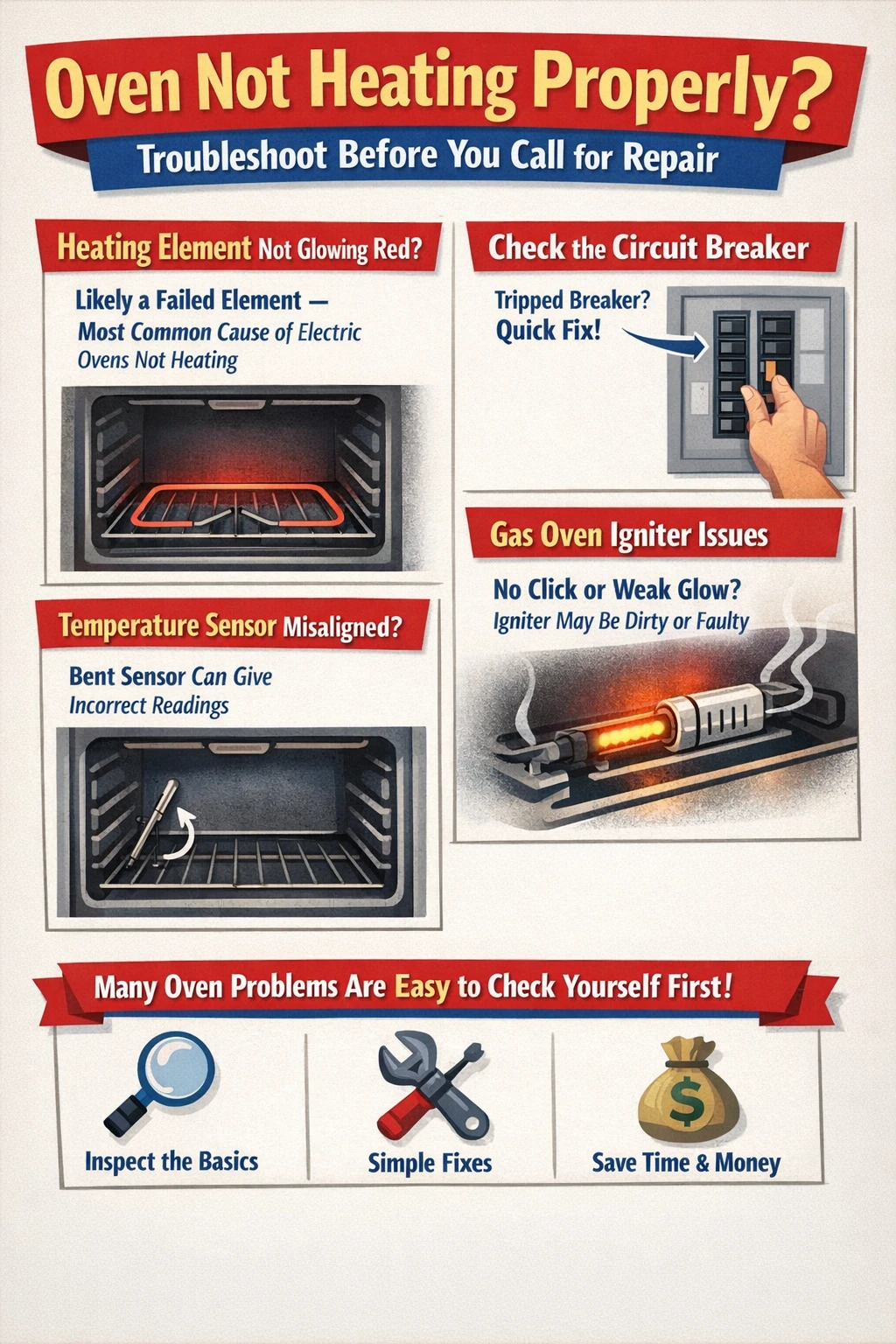
An oven not heating properly almost always comes down to one of four things: a failed heating element (electric ovens), a faulty igniter (gas ovens), a misbehaving temperature sensor, or a power supply issue. Those four causes cover the vast majority of cases we see. Everything else – calibration drift, door seal problems, a locked control panel – is real but less common.
The tricky part is that some of these failures look similar from the outside. An oven that gets warm but never reaches temperature could have a partially failed bake element, a sensor giving false readings, or even just a breaker that’s half-tripped and only delivering 110 volts instead of the full 240. Each one needs a slightly different fix. So rather than guessing, it pays to work through the possibilities in order, starting with the easiest checks.
In our experience, about half the calls we get turn out to have a straightforward explanation. The other half involve a failed component that needs replacing. Knowing which situation you’re in before calling anyone saves time and usually saves money too.
Start here: the easy checks first
Before pulling out the oven or buying any parts, spend a few minutes on the basics. You’d be surprised how often one of these is the actual problem.
Check the circuit breaker
Electric ovens run on a 240-volt circuit, which uses two breakers linked together. If one side trips, the oven may still turn on and show some signs of life – the clock works, the light comes on – but it only gets warm instead of hot. That’s because it’s only receiving 110 volts. Go to your breaker panel and look for a breaker that’s sitting in the middle position rather than fully on or fully off. Flip it fully off, then back on. 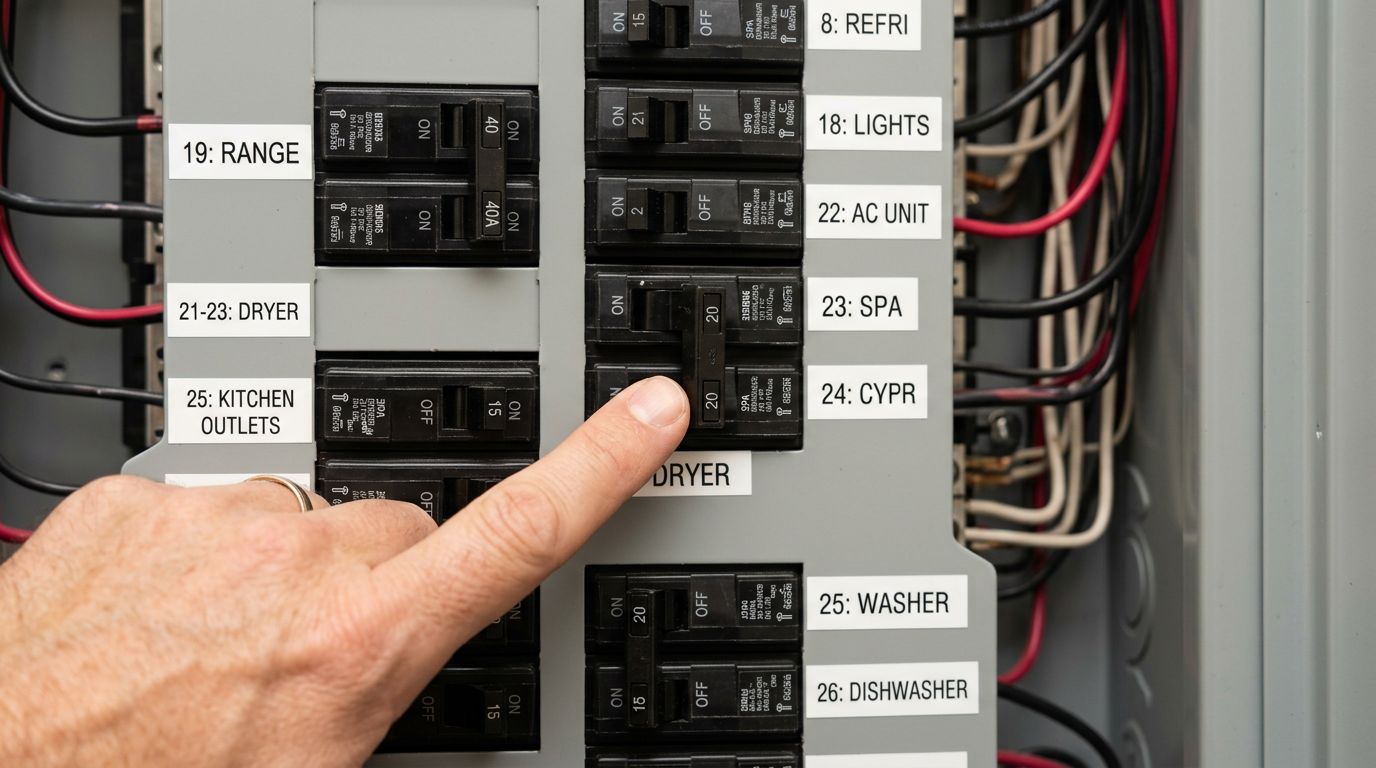
If it trips again immediately or repeatedly, stop. That’s an electrical problem that needs a licensed electrician, not a DIY fix.
Look at the power outlet and cord
Less common, but worth a quick look. A damaged outlet or a cord that’s worked itself loose can interrupt power to the oven. Discoloration around the outlet, a burning smell, or any visible damage to the cord are signs to call an electrician before touching anything else.
Check the oven door seal
An oven door that doesn’t close fully will bleed heat constantly, making it nearly impossible to reach or hold a set temperature. Run your fingers around the rubber gasket that lines the oven door. Feel for tears, gaps, or sections that have hardened and pulled away from the frame. Also check that your oven racks are pushed in all the way – a rack that sticks out even slightly can prevent the door from seating properly.
This one shows up more than you’d expect in homes around neighborhoods like Inglewood, where older appliances sometimes have seals that have never been replaced.
Make sure the control panel isn’t locked
Some oven models have a “control lock” or “demo mode” feature that disables heating functions while still letting the display work normally. If someone pressed the wrong combination of buttons, the oven might appear to be on without actually heating. Check your manual for how to disable control lock – on many models it’s holding a specific button for three seconds.
Electric oven not heating: heating element problems
Once you’ve ruled out the basics, the next place to look on an electric oven is the heating element. This is the most common reason an electric oven won’t heat up, and it’s one of the more straightforward repairs if you’re comfortable with basic tools.
Most electric ovens have two elements: the bake element at the bottom of the oven cavity, and the broil element at the top. When they’re working, they glow a steady orange-red. Turn your oven on to 400 degrees and watch the bake element. If it doesn’t glow at all, or only glows partially, that’s a strong indication the element has failed. 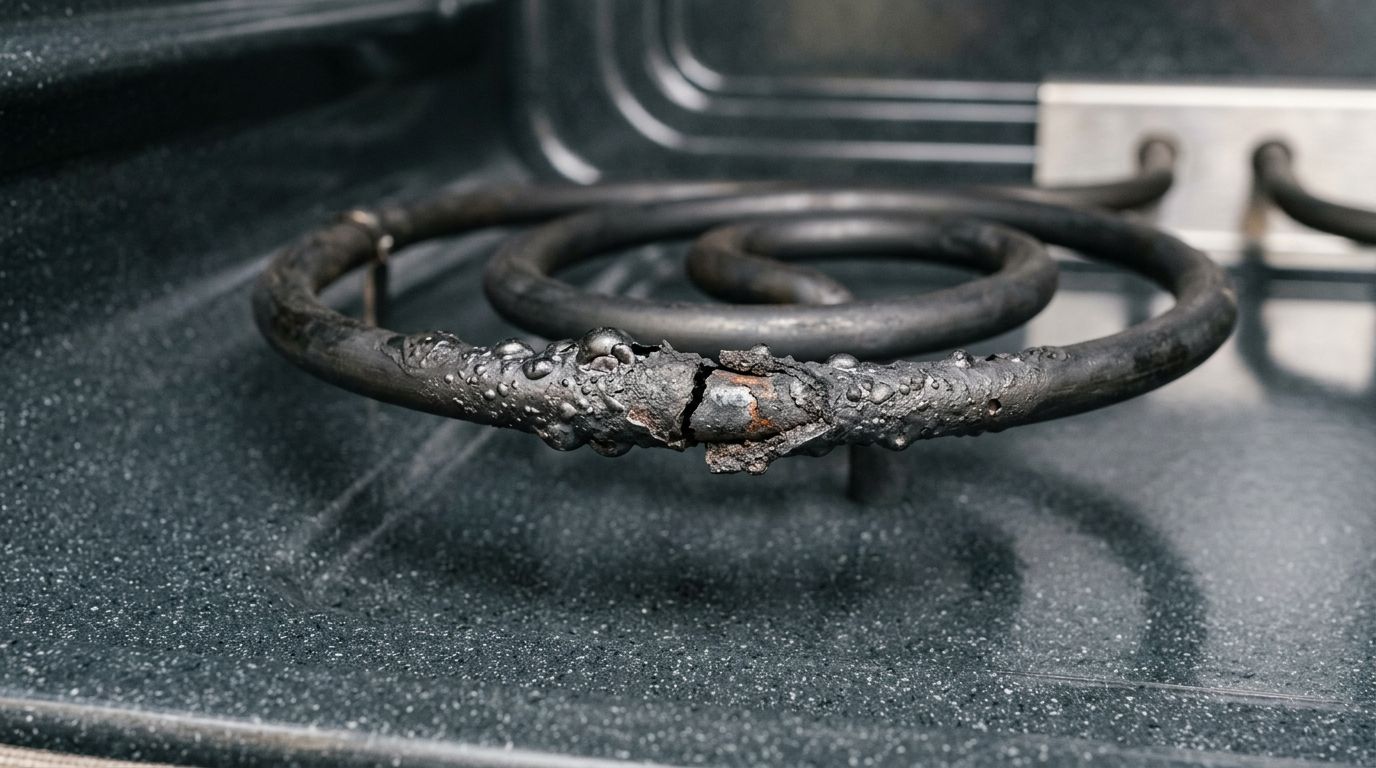
Visible damage makes the diagnosis even clearer. A failed element often shows blistering, bubbling, or actual cracks or ruptures in the outer surface. If you see that, the element is done – no testing needed. A healthy element should read somewhere in the range of 10 to 75 ohms on a multimeter. No resistance at all means it’s failed. If you don’t have a multimeter, physical inspection combined with the “does it glow” test is usually enough to make the call.
Replacement elements are available through appliance parts suppliers using your oven’s model number – usually found on a sticker inside the door frame or on the back of the unit. Sites like RepairClinic let you search by model number to find the right part. The replacement process on most models involves unscrewing the element from the back wall of the oven, pulling it forward carefully, and swapping the wire connections – but always disconnect power first, either by unplugging the unit or shutting off the breaker. One important detail: when pulling the element forward, don’t let the wires slip back into the hole in the oven wall. If they fall back, getting them out again becomes a much bigger job.
Gas oven temperature problems: the igniter
Gas ovens have a different set of failure points, and the igniter is usually the first thing to check when a gas oven won’t heat up or takes far too long to reach temperature.
When you turn on a gas oven, the igniter should glow bright orange within about 30 to 90 seconds, then the gas ignites and the burner lights. If the igniter glows but the gas never lights, the igniter is probably too weak to open the gas valve – even though it looks like it’s working. If you don’t see any glow at all, or you don’t hear the usual clicking before ignition, the igniter may be failed or just dirty. 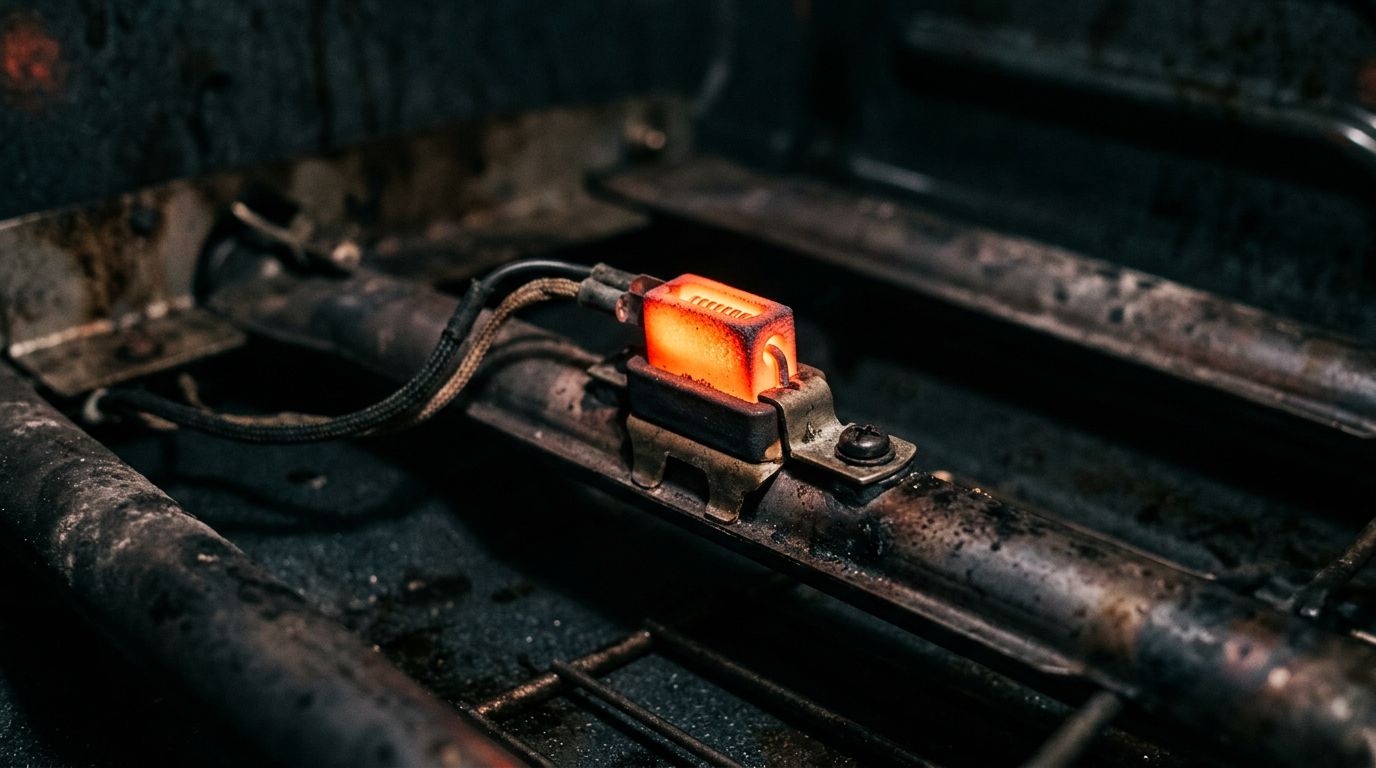
A dirty igniter can sometimes be cleaned carefully with a dry cloth or soft brush, following the instructions in your appliance manual. But a weak or failed igniter needs to be replaced. This is a job for a licensed technician in most cases, both for safety reasons and because accessing the igniter on some models requires disassembly that’s easy to get wrong.
One thing worth checking before assuming it’s the igniter: make sure the gas valve supplying the oven is actually open. The valve is usually located on the gas branch pipe where it comes through the wall or floor. It should be parallel with the pipe when open. If the range burners work fine but the oven doesn’t light, the gas supply is probably fine and you’re looking at the igniter or the oven’s internal gas valve.
If you smell gas at any point during troubleshooting, stop immediately. Don’t try to diagnose further. Leave the house and call your gas utility. ATCO Gas has guidance on what to do in a gas emergency in Alberta.
Temperature sensor and calibration issues
The temperature sensor is a thin tube, usually mounted at the back of the oven interior, that tells the control board what temperature the oven has actually reached. If this sensor is out of position or damaged, the oven either heats too much, not enough, or cuts out at the wrong time.
The sensor should sit at a 90-degree angle to the back wall, not touching the wall or any other surface. If it’s been bumped – maybe from moving the oven or reaching in during cooking – it can start giving false readings without showing any visible damage. Gently move it back into position and see if that solves the problem. An inexpensive oven thermometer placed inside the oven is one of the best ways to confirm whether the sensor is reading accurately. Set the oven to 350 degrees, wait 20 minutes, and compare the thermometer reading to the set temperature.
If the sensor is in the right position but your oven consistently runs 20 to 30 degrees off, calibration might be the fix. On most electronic ovens, you can adjust the calibration yourself. A common method is to press the BAKE and BROIL buttons simultaneously for two seconds until the display shows “SF,” then use the BAKE button and the plus or minus keys to shift the temperature up or down by as much as 35 degrees F. Press START to save the change. Check your owner’s manual for model-specific steps, since the button combination varies.
Manual ranges with a physical control knob usually have a small adjustment screw underneath the knob that can shift the calibration. Again, the owner’s manual is your guide here.
When to stop troubleshooting and call a professional
Some of this you can genuinely handle yourself. Checking the breaker, inspecting the door seal, verifying the gas valve, repositioning a sensor that’s slipped out of place – these are reasonable homeowner tasks. Replacing a bake element on a straightforward electric oven model is well within reach for someone comfortable with basic repairs, as long as the power is off.
But there are clear lines worth respecting. Anything involving the electrical wiring inside the oven rather than just the element connectors. Any gas line work. A situation where the breaker keeps tripping. A control board that appears burned or damaged. These all need a professional. Working inside a live appliance at 240 volts is not a “figure it out as you go” situation.
We see this fairly often in areas like McKenzie Towne, where newer homes with modern appliances sometimes have control board issues that mimic simpler problems. What looks like a sensor fault turns out to be a board fault, and the wrong diagnosis leads to replacing parts that were fine. A technician with diagnostic tools can tell the difference quickly.
The repair-versus-replace question is worth thinking about if you’re facing an expensive fix. If your oven is more than 10 to 15 years old and the repair cost is approaching half the price of a new unit, replacement usually makes more financial sense. Newer models also tend to be more energy-efficient and have better temperature consistency. That said, for a relatively young appliance with a single failed part, a repair is almost always the better call.
Frequently asked questions
These are the questions we hear most often when homeowners are dealing with an oven that won’t heat right. If your situation isn’t covered here, the troubleshooting steps above will get you started.
Why is my oven getting warm but not reaching the set temperature?
This is usually a sign that something is working but not working fully. The most likely culprits are a partially failed bake element, a circuit breaker that’s only delivering half the voltage, or a temperature sensor giving a false high reading that causes the oven to stop heating too soon. Start by checking the breaker, then look at whether the bake element glows fully and evenly. Use an oven thermometer to see what temperature the oven is actually reaching.
Can I replace the heating element myself?
Yes, on most electric ovens this is a manageable DIY repair. The process involves disconnecting power to the oven, unscrewing the element from the oven wall, pulling it carefully forward, and swapping the wire connectors to the new part. The main thing to watch for is not letting the wires fall back into the wall cavity when you pull the element forward. If that happens, you’ll need to pull the oven away from the wall and remove the back panel to retrieve them – which turns a 20-minute job into an afternoon. If you’re not confident with the wiring steps, calling a technician is perfectly reasonable.
My gas oven clicks but doesn’t light. What’s going on?
Clicking without ignition usually points to a weak or failed igniter, or occasionally to a clogged igniter with grease buildup. If the igniter glows but the burner still doesn’t light, the igniter is probably not drawing enough current to open the gas valve – it looks functional but isn’t doing its job. A gas oven that fails to ignite should be checked by a technician, both to diagnose the cause correctly and to handle any gas-related components safely.
How long should an oven take to preheat?
Most ovens take 12 to 15 minutes to reach 350 degrees F under normal conditions. Larger ovens or ovens with additional convection elements may take a bit longer. If your oven consistently takes 30 minutes or more to preheat, or never quite gets there, something is off – likely the heating element, a voltage issue, or the temperature sensor. Don’t line the bottom of the oven with foil either, since that restricts airflow and extends preheat times noticeably.
What should I do if I smell gas when trying to use my oven?
Stop immediately, don’t try to light the oven or any burners, and don’t turn any light switches on or off. Leave the house, leaving the door open behind you, and call your gas utility from outside or from a neighbor’s home. A gas smell indicates either a leak or unburned gas that has accumulated, and both situations require professional attention before you use the appliance again.
Wrapping up
An oven that won’t heat properly is almost always fixable – the question is whether it’s a five-minute fix or a repair job. Start with the breaker, the door seal, and the power supply before assuming a part has failed. If you have an electric oven, look at the bake element next. Gas oven? The igniter is your first stop. And if everything seems physically intact but the temperatures are consistently off, calibration is worth trying before spending money on parts.
If you’ve worked through these steps and still can’t identify the problem – or if what you’ve found involves wiring, gas lines, or components you’re not comfortable touching – that’s exactly where we come in. At Calgary Appliance Service Pros, we handle oven repair across Calgary and the surrounding area, along with dishwasher repair, fridge and freezer repair, washer and dryer repair, and more. Give us a call and we’ll help you figure out what’s actually going on and what it will take to fix it properly.
