
A washing machine that smells sour, leaves a grey film on clothes, or shows residue in the dispenser usually needs a proper clean of the drum, the door seal, the detergent drawer and the filter, not another heavy dose of everyday detergent. LG's front-loader tub-clean guide walks you through the Tub Clean cycle, and Samsung Canada's washer-clean page does the same for the Self Clean cycle on washers sold here.
Do those brand steps first, then wipe the seal and empty the filter. If a smell or leak remains, or the drum will not drain, washer repair in Calgary is the usual next step.
Key Takeaways
- LG describes a Tub Clean cycle for front loaders. Samsung Canada describes a Self Clean cycle. Use the cycle name in your manual, not a generic "tub wash" guess.
- Whirlpool's odor guide focuses on the interior, and also has you look at everyday habits that let residue build up.
- Frigidaire Canada's top-load care page covers how to clean that style of washer, including the dispensers.
- Calgary's water is hard. Scale and soap residue build faster here than in soft-water cities, so the drum and drawer need regular attention.
- Health Canada says never to mix bleach with other cleaning products, including vinegar or ammonia. Toxic gas can form.
Why washers in Calgary need a regular clean
Modern machines, especially front loaders, use less water than older top-load agitator models. Residue from detergent, fabric softener and lint stays behind in the drum, the folds of the door seal, the dispenser and the drain filter. Add Calgary's hard water, and that film forms faster. The City of Calgary water-quality page publishes hardness data for the treated supply, which is why a monthly look at the seal and drawer is worth it here even if the laundry still looks clean.
A sour smell, speckled clothes, a sticky dispenser or a filter full of lint are the usual signs. A puddle at the door is a different job: start with the guide on a washing machine leaking water. If the tub will not empty, use the article on a washer that is not draining properly.
Run the brand cleaning cycle first
Most late-model washers include a dedicated cleaning program. The name changes by brand, and the steps live in the manual for your exact model. The table below lists the cycle names the manufacturer pages use, so you can match them before you pour anything into the drum.
| Brand | Cleaning cycle or method named on the support page | Where the steps live |
|---|---|---|
| LG front loader | Tub Clean | LG front-loader tub-clean help |
| LG (tub-clean overview) | Tub Clean, plus wiping the gasket and drawer | LG washer tub-clean article |
| Samsung (Canada) | Self Clean | Samsung Canada washer-clean page |
| Whirlpool | Interior cleaning to remove odors | Whirlpool odor-removal guide |
| Frigidaire (Canada) | Care and cleaning for top-load models, including dispensers | Frigidaire Canada top-load care page |
Empty the drum before you start. Use only the cleaner the brand names, in the amount the page or manual gives. Don't load laundry on top of a cleaning cycle. When the program ends, leave the door ajar so the drum can dry. If your Samsung washer is showing a code instead of starting Self Clean, switch to the Samsung washer troubleshooting guide before you run another cycle.
Clean the door seal, dispenser and filter
The cycle cleans the tub. The smell often lives in three other places that a program cannot fully reach.
- Open the door and run a finger around the rubber seal. Front loaders collect water, lint and stray coins in those folds. Wipe them with a damp cloth, lift the lip, and dry the folds when you finish.
- Pull the detergent drawer all the way out, if your model lets you. Soak the parts, scrub the leftover detergent and softener, and rinse the housing inside the cabinet. Frigidaire Canada's top-load care page includes dispenser cleaning for that style of washer as well.
- Empty the drain filter. On many front loaders it sits behind a small toe-kick door at the front. Have a shallow tray ready, because a little water will come out. The separate guide on how to clean a washing machine filter covers that job in more detail, including what to do if the cap is stiff.
- If the machine still drains slowly after the filter is clear, check the exit hose for a kink or a clog. That is a different task, covered in the article on cleaning a washing machine exit hose.
What not to mix in the drum
Vinegar and baking soda show up in a lot of informal advice. They are not a substitute for the brand cleaning cycle, and they are unsafe if bleach is already in the machine or the drawer. Health Canada warns that mixing bleach with other cleaning products, including vinegar or ammonia, can release toxic gas. If you use bleach because your manual allows it for a particular cycle, don't add vinegar, an all-purpose cleaner or a second "homemade" mix in the same load.
Use the product the manufacturer names for Tub Clean, Self Clean or the Whirlpool interior-clean steps. If the manual is silent, stay with a cleaner labelled for washing-machine tubs and follow its directions, rather than improvising a blend.
Habits that keep the smell from coming back
Whirlpool's odor guide is as much about habits as it is about a one-time wash. These are the checks that prevent the film from returning between cleaning cycles:
- Take laundry out when the cycle ends, so wet clothes don't sit in a closed drum.
- Leave the door and the detergent drawer slightly open between loads so the interior can dry.
- Measure detergent. Extra soap in hard water leaves more residue, not cleaner clothes.
- Wipe the seal after a wash if you can see grit or leftover water in the folds.
- Run the brand cleaning cycle on the schedule in your manual, and clean the filter on a regular cadence as well.
When cleaning is not enough
A cleaning cycle will not fix a pump that has failed, a badly clogged hose, a torn door boot or a control that will not start Tub Clean or Self Clean. Call for service if you notice:
- The smell returns right after a full clean of the drum, seal, drawer and filter.
- The tub still will not drain, or an error code remains after you empty the filter.
- Water leaks from the door, the drawer or the front kick plate.
- The cleaning cycle will not start, or the machine stops mid-cycle.
If those checks point to a repair, book washer repair in Calgary. We charge a $100 diagnostic, credited toward labour if you go ahead. Warranty is 3 months on parts and labour. Technicians reach Airdrie, Chestermere, Cochrane, Okotoks and Calgary, often arriving the same or next day.
Washing machine cleaning questions
Can I clean my washing machine with vinegar and baking soda? Don't mix vinegar with bleach, and don't treat a homemade mix as a replacement for the brand cycle. Health Canada says bleach mixed with other cleaners, including vinegar, can release toxic gas. Use the cleaner and cycle your manufacturer describes.
Why does my front-load washer still smell after I clean it? The tub cycle may have run, but the door seal, the dispenser or the drain filter often still holds residue. Wipe the seal folds, soak the drawer and empty the filter, then leave the door ajar so the drum can dry.
How often should I run Tub Clean or Self Clean? Follow the interval in your model's manual. LG and Samsung Canada document the cycles themselves; your manual gives the schedule for your machine. In Calgary, hard water is a reason not to skip that schedule.
Do I need a technician just to clean the washer? No. The brand cleaning cycle, the seal, the drawer and the filter are owner jobs. Call if a leak, a drain fault or a code remains after those steps, or if the cleaning cycle will not start.
To book a visit, use the online form or call 587-816-2400.
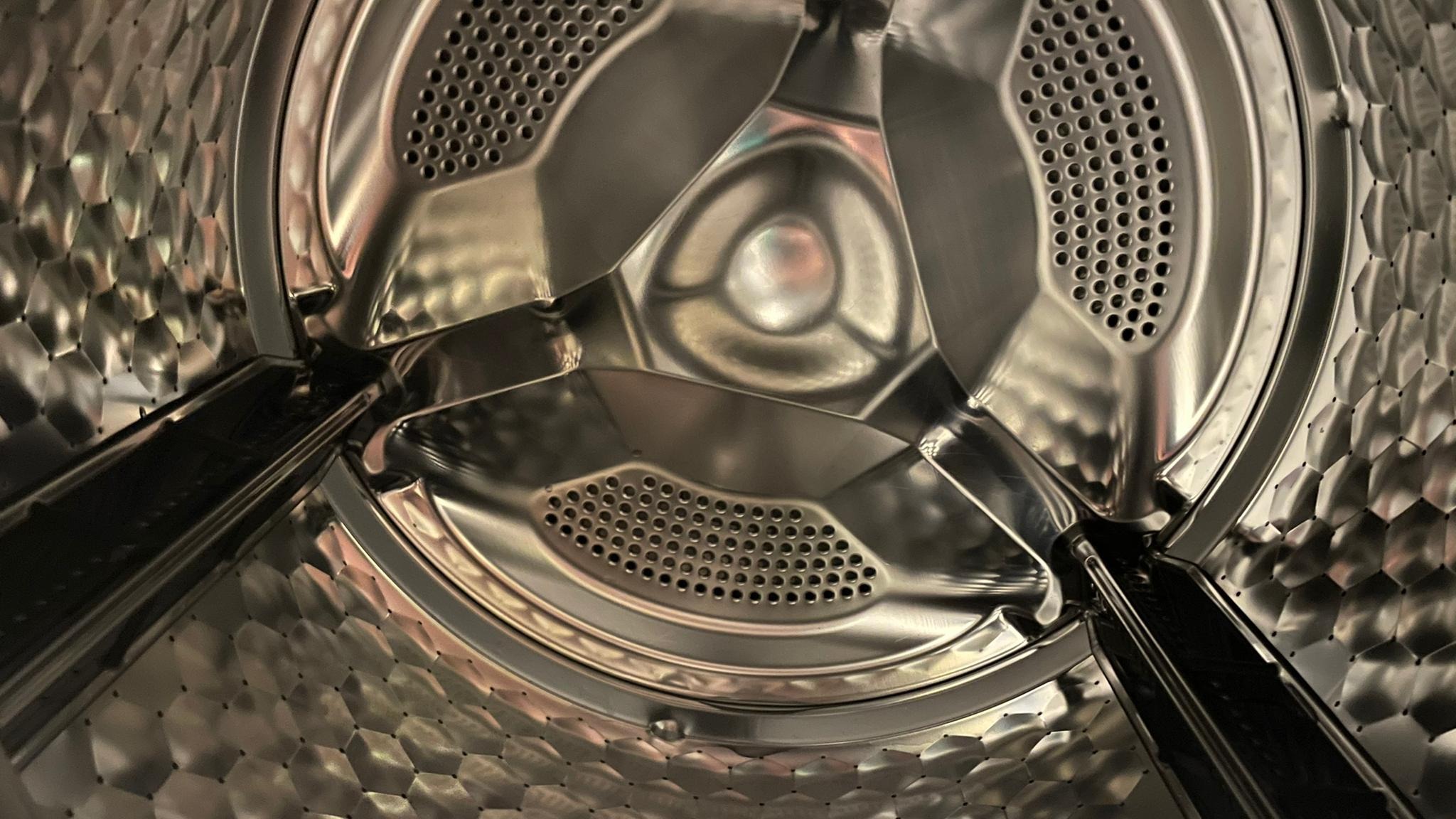
In-body photo: Waschmaschine Trommel by Fheinimann96fh, CC BY-SA 4.0. Cropped to 16:9. This is an adaptation of the original under CC BY-SA 4.0.