
Nobody wants to come home to a soaking wet laundry room floor, and figuring out where that water is coming from can feel like a real puzzle. This guide walks you through the most common sources of a washing machine leaking water, what you can fix yourself, and when it makes sense to call in a professional.
A leaking washer is one of those problems that can range from a two-minute fix to a sign that something serious is going on inside the machine. Water on the floor always demands attention, though, because left alone even a slow drip can cause real damage to flooring and subfloor. At Calgary Appliance Service Pros, we see washing machine water leaks regularly, and the good news is that many of them come down to a handful of predictable causes. Calgary’s older housing stock, especially homes in neighbourhoods like Inglewood and Killarney, means plenty of machines that have been running hard for years, and wear-and-tear leaks are just part of the picture.
Understanding what you’re looking at before you call anyone (or before you start pulling panels off) can save you time and money. So let’s take a look at the most likely culprits and walk through this step by step.
Key takeaways
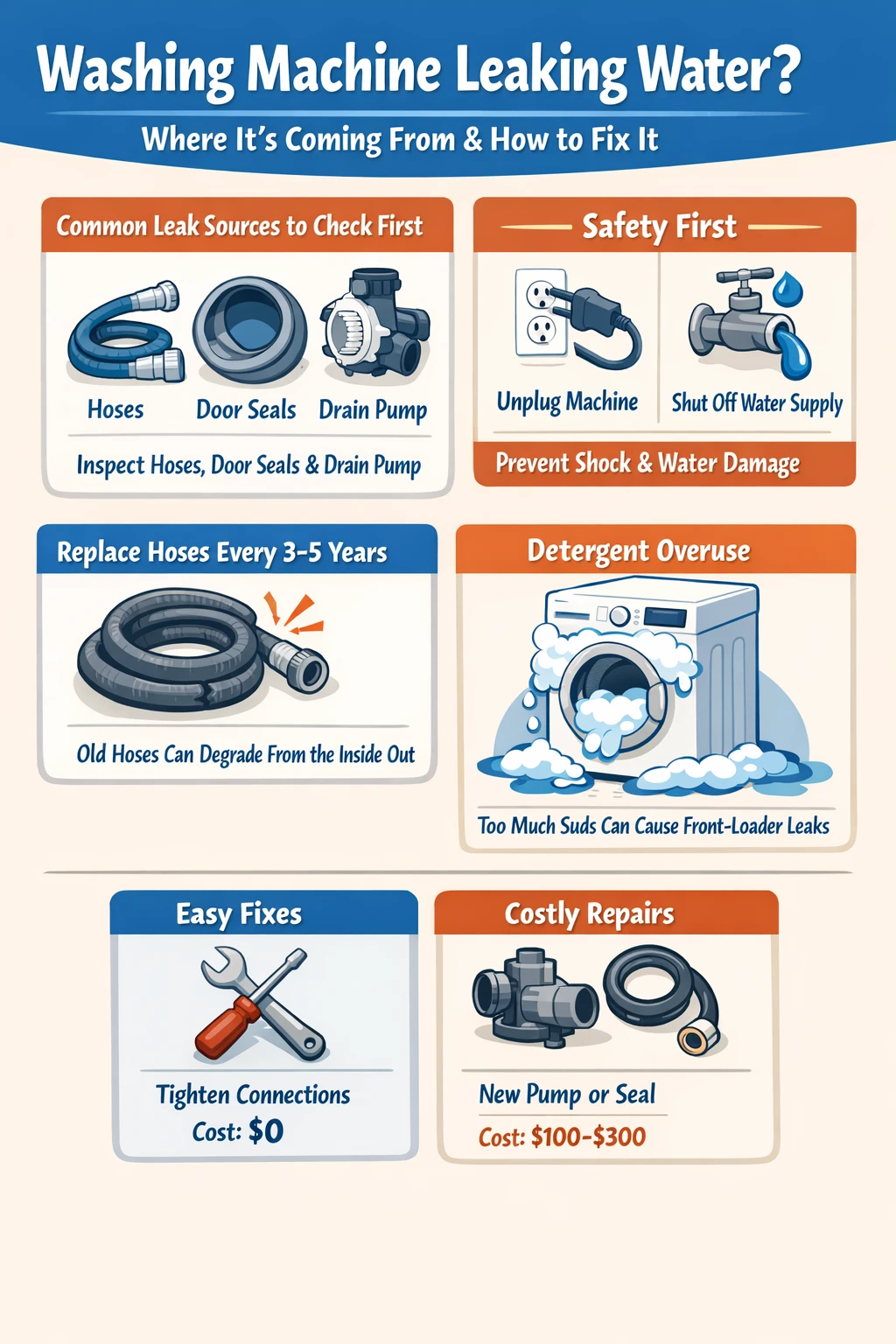
- Most washing machine leaks come from hoses, door seals, or the drain pump, and checking these first will solve the problem the majority of the time.
- Before troubleshooting anything, unplug the machine and shut off both hot and cold water supply valves to protect yourself from electrical shock and avoid making the mess worse.
- Washing machine hoses should be replaced every three to five years, even if they look fine on the outside, as rubber degrades from the inside out.
- Using too much detergent, or the wrong type of detergent, is one of the most overlooked causes of front load washer leaking, as excess suds back up through the overflow system and end up on your floor.
- Minor fixes like tightening a hose connection or adjusting leveling feet cost nothing; mid-range repairs like a pump or seal replacement typically run $100 to $300.
- If water appears inside the machine when it’s not running, or the leak keeps coming back after you’ve tried basic fixes, that’s a sign you need a professional diagnosis before the problem compounds.
Where is the water actually coming from?
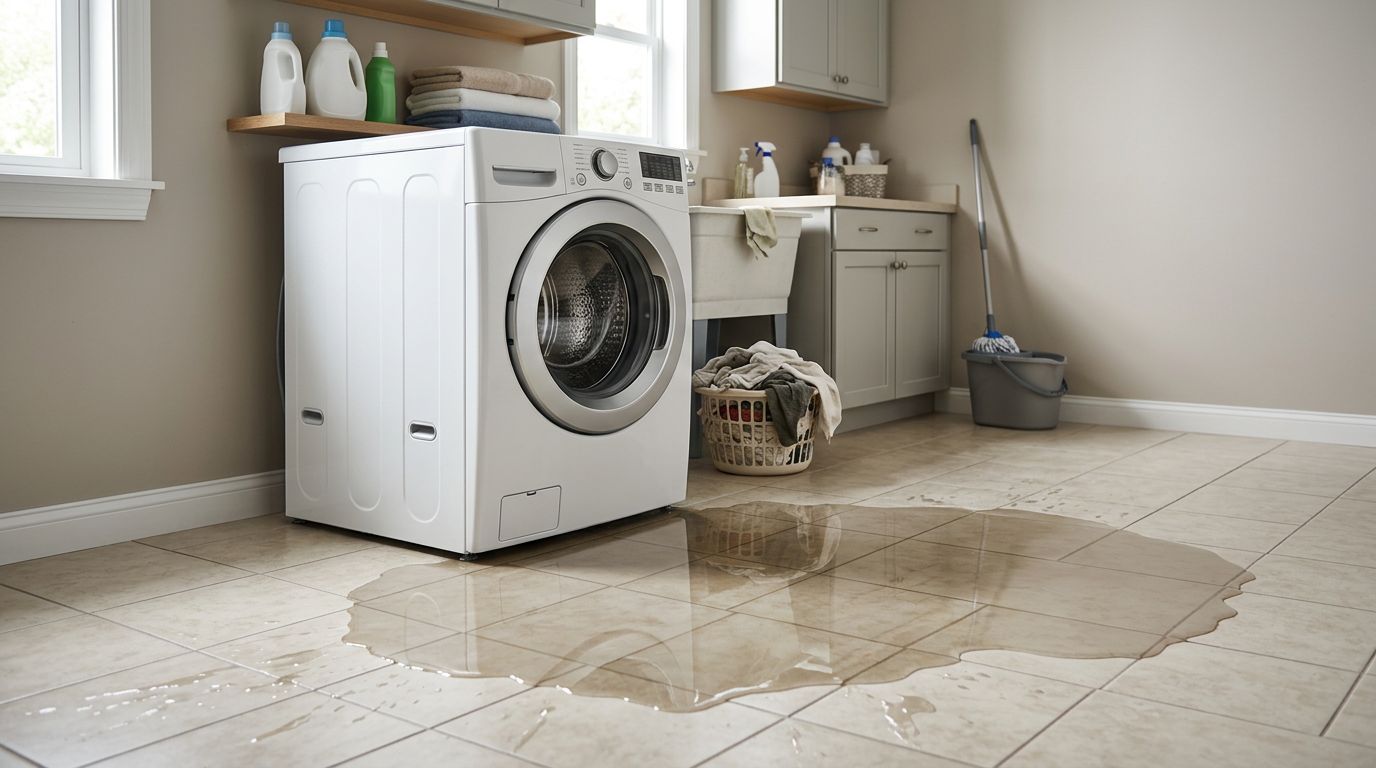
The most common sources of a washing machine leaking water are the fill and drain hoses at the back, the door gasket on front-load models, and the drain pump at the bottom of the machine. That covers the vast majority of leaks we see. Narrow it down by timing, as water appearing during the fill cycle, during washing, during spin, or when the machine is draining tells you a lot.
Here’s a simple first step: wipe everything dry, run a normal cycle, and watch. Don’t go anywhere. Sit with it. You’re looking for where the water first appears, not where it ends up. Water travels, and a leak at the back can pool at the front, making it look like it’s coming from somewhere it isn’t. The same goes for leaks higher up in the machine, as water runs down and collects at the lowest point, which is usually under the drum.
In our experience, the leak point is almost never where the puddle is. That’s the first thing to keep in mind when you’re doing your detective work.
Hose problems: the most common culprit
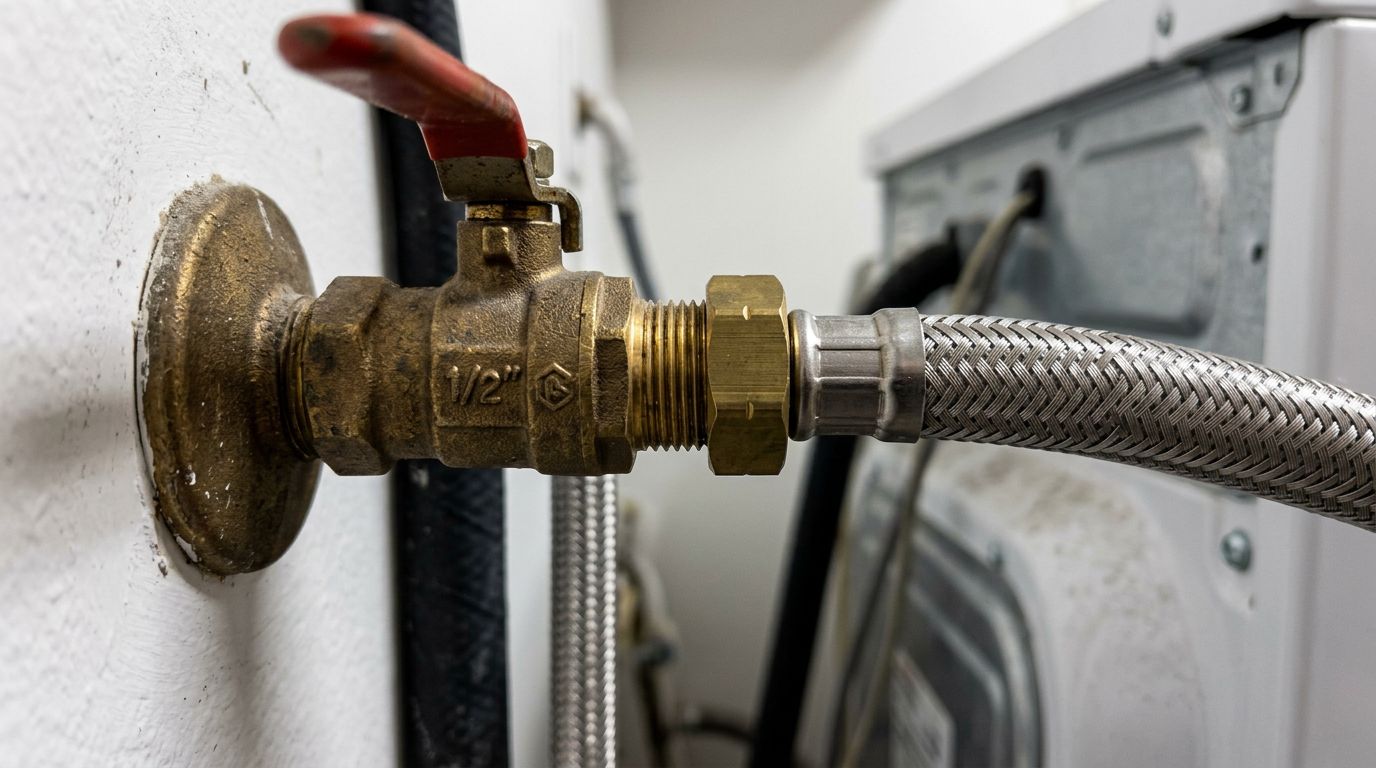
If you had to bet on a single cause for a washing machine water leak, bet on the hoses. The fill hoses at the back of the machine supply hot and cold water to the drum, and the drain hose carries the dirty water out. Any of these can cause a significant leak if they’re loose, cracked, kinked, or clogged.
Pull the machine away from the wall and look at both fill hoses where they connect to the wall faucets and where they connect to the back of the washer. Look for moisture, mineral buildup, or any sign of corrosion around the fittings. While you’re there, check the small rubber washers inside each hose fitting. These are cheap, they wear out, and a worn washer will let water drip slowly down the back of the machine and onto the floor. Replacing them is a five-minute job. Turn the water off, unscrew the hose, swap in a new washer, reattach, done.
The drain hose is worth a close look too. It can develop small cracks or pinholes that aren’t obvious until water is actively flowing through it. A kinked drain hose will cause water to back up and overflow somewhere it shouldn’t. If the drain hose isn’t seated properly in the standpipe at the wall, it can pull loose during the drain cycle and dump water onto the floor behind the machine. Check that the connection is snug and the hose isn’t bent at a sharp angle.
Stainless steel braided hoses are a solid upgrade if your machine still has the original rubber fill hoses. They’re more resistant to cracking and bursting, and given that a blown hose can put a lot of water on the floor fast, the upgrade is worth it. You can find guidance on washing machine hose maintenance through resources like the U.S. Department of Energy’s home appliance guidance pages, which cover general appliance upkeep basics.
Front load washer door seal and gasket issues
Front-load washers rely on a large rubber gasket around the door opening to keep water inside the drum during the wash cycle. This is one of the first things to check if you have a front-loader and you’re seeing water at the front of the machine.
Open the door and run your hand around the gasket. Look for tears, cracks, or areas where the rubber has hardened and pulled away from the drum. Even a small tear is enough to let water work its way out during the cycle. If the gasket is intact but the door doesn’t seem to be closing flush, check the door hinges, as they can loosen over time and cause the door to sit slightly out of alignment, which breaks the seal.
Detergent buildup is a surprisingly common contributor here. Residue and mold accumulate in the folds of the gasket and prevent it from seating properly against the door. Cleaning the gasket regularly with a mild mildew cleaner or a solution of white vinegar and water can keep it sealing the way it should. If the gasket is torn, it needs to be replaced, which is a professional repair but a straightforward one.
One more thing worth checking: are you using HE (high-efficiency) detergent? Front-load washers require it. Using regular detergent generates far too many suds, which can overwhelm the overflow system and push water out through the door seal or the detergent drawer. Too much detergent is one of the most common causes of front load washer leaking that we run into, and the fix literally costs nothing.
Drain pump and bottom leaks
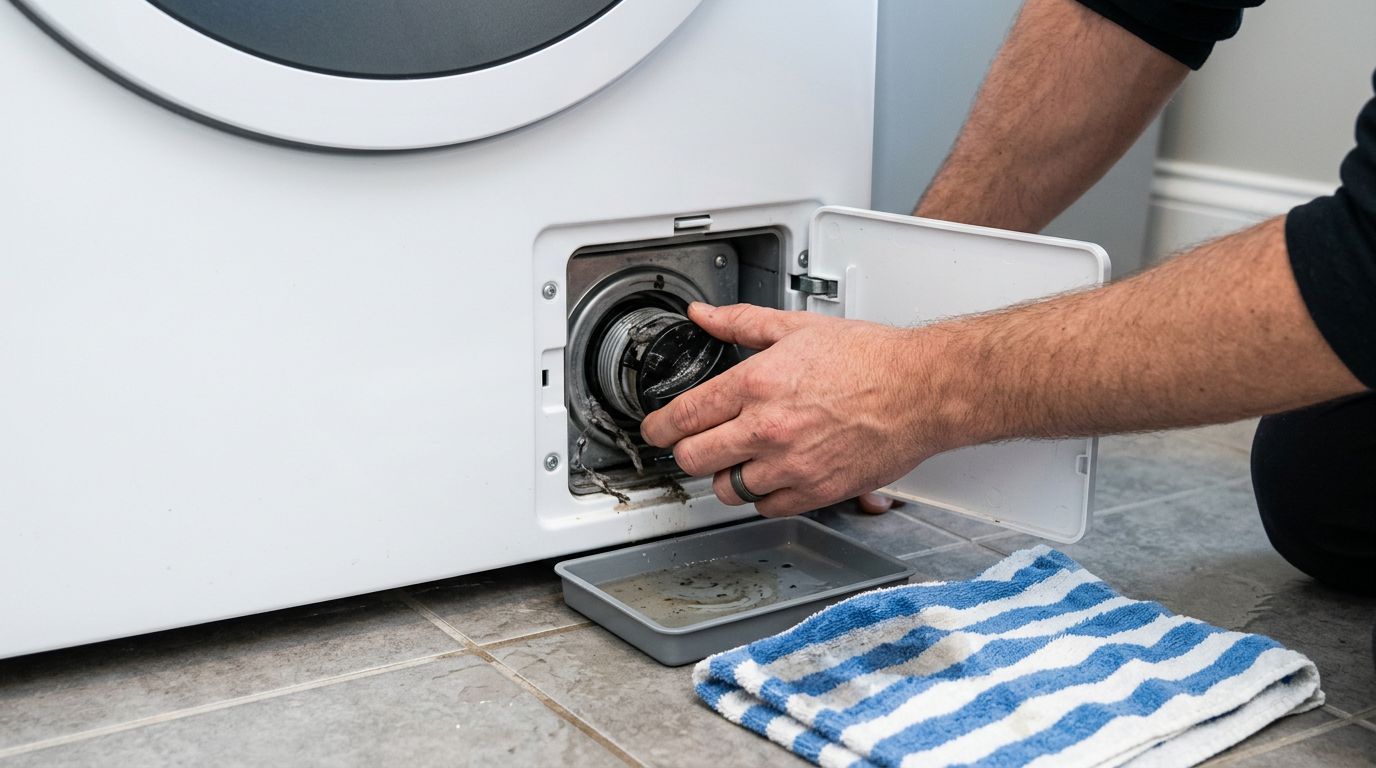
Water pooling directly under the machine, especially during or after the drain cycle, often points to the drain pump. The pump is what moves water out of the tub at the end of the cycle. If the pump housing is cracked, if a clamp is loose, or if the pump itself has failed, water will leak from the bottom of the machine.
On front-load washers, there’s also a drain pump filter that catches debris before it reaches the pump, such as coins, buttons, and small bits of fabric. LG, for example, recommends cleaning this filter monthly, and for good reason. A clogged filter builds pressure in the drain system and can push water out from under the machine. Locating the filter on your specific model is usually straightforward: it’s typically behind a small access panel on the lower front of the machine. Have a shallow pan and a rag ready before you open it, as even a “drained” machine will have some residual water in there. If you see an OE error code on an LG washer, that’s a signal to check the filter first. LG’s support documentation has a clear walkthrough for this process.
A clogged home drain pipe can also mimic a pump problem. If the standpipe in the wall isn’t draining fast enough, water backs up and spills out at the connection point. This is worth ruling out, so pour some water down the drain pipe and see how quickly it clears. If it’s slow, the problem may be in the plumbing, not the washer. We get calls about this fairly often, especially in the West Springs area where some homes have longer drain runs to the main stack.
Tub seals, water pumps, and internal issues
A washing machine actually has two tubs: an inner perforated drum where the clothes go, and an outer tub that holds the water. Between them sits a tub seal, and when that seal fails, water migrates where it shouldn’t. This is less common than hose or gasket failures, but it happens, especially on older machines or ones that have been run hard.
You’ll typically see a slow, persistent leak from the bottom of the machine that doesn’t seem to track with any particular cycle phase. The water just appears. It may look like it’s pooling dead center under the drum. This is the kind of thing that’s worth confirming with a technician before you start spending money on parts, because tub seal replacement requires significant disassembly and isn’t a casual afternoon project.
The water pump itself can also crack or develop worn connections. If you can see water dripping from the pump area when the machine is running, the pump should be replaced. Handy homeowners can tackle this with the right parts and a good model-specific video guide, but if there’s any uncertainty about what you’re looking at, professional help is the right call. Replacing a pump incorrectly can cause more damage to the tub or connecting hoses.
The water level switch is another internal component worth knowing about. It controls how much water enters the machine during the fill cycle. If it fails, the washer can overfill and leak from the bottom, the door, or even the detergent drawer. Testing the switch properly requires tools and some electrical knowledge, so this one generally belongs in a technician’s hands. Whirlpool’s support documentation covers how this component functions if you want to understand the system better before calling someone.
Quick checks before you do anything else
Some leaks have nothing to do with broken components. Before assuming something is wrong with the machine itself, run through these:
- Is the machine level? An unlevel washer can vibrate hard during the spin cycle, loosen connections, and cause water to slosh past seals. Check it with a bubble level front-to-back and side-to-side. Adjust the leveling feet at the base of the machine until it sits flat. This is worth rechecking periodically because floors shift over time.
- Are you overloading it? Too much laundry throws the drum off balance, causes excess vibration, and can force water past the door seal or over the top of the tub on a top-loader. Smaller loads are easier on the machine.
- Is the machine moving during the cycle? It sounds basic, but a washer that’s walking across the floor can pull hoses loose. Put a level on it. Make sure all four feet are making firm contact with the floor.
- Could the water be from somewhere else? A nearby utility sink, a slow floor drain backing up, or even condensation from a water heater can create puddles near the washer that have nothing to do with the machine. Confirm the leak by drying everything and running a cycle while you watch.
Frequently asked questions
These are the questions that come up most often when we’re talking through a washer leak with a homeowner. Hopefully they fill in any gaps from the sections above.
Can I keep using my washing machine if it’s leaking?
No, and this is worth taking seriously. Water near electrical components is a genuine safety risk, including the possibility of a short circuit or electrical shock. There’s also the floor damage to consider, as a slow leak that runs under a subfloor for a few weeks can cause rot and mold that costs far more to fix than the washer repair ever would. Identify the source and stop using the machine until it’s fixed, or at least until you’re confident the leak is something minor like a loose hose connection that you’ve already tightened.
How much does washing machine leak repair typically cost?
It depends on the cause. Basic fixes like tightening a hose connection, replacing rubber washers, or cleaning a clogged filter cost nothing or close to it. Mid-range repairs such as a drain pump, a door gasket, or a water level switch typically run somewhere in the $100 to $300 range depending on the part and the labour involved. More involved repairs like tub seal replacement or a transmission issue can push to $300 or more, and at that point the age of the machine factors into whether repair or replacement makes more sense financially.
Why is my washing machine leaking when it’s not running?
If you’re seeing water in or around the machine when it’s completely off, the washer inlet valve is the most likely explanation. This valve controls water flow into the tub and can develop a slow drip when it fails, even with the machine off. You’ll typically find it at the back of the machine where the fill hoses connect. If you see cracks, corrosion, or any sign of moisture around it, the valve should be replaced. This isn’t a difficult repair for someone comfortable working with appliances, but shut off the water supply before disconnecting anything.
What does it mean if my washing machine leaks only during the spin cycle?
A leak that shows up specifically during spin is often a leveling issue, as the machine is vibrating so hard that water is being thrown where it shouldn’t go. Check the leveling feet first. If the machine is level and the leak persists, the tub cover gasket (on top-load machines) or the door gasket may be failing. A clogged drain hose or pump can also cause backup issues that surface during the high-speed spin portion of the cycle. Run a cycle and watch closely to see where the water first appears.
Should I try to fix it myself or call a technician?
Honestly, it depends on what you find. Loose hose connections, clogged filters, leveling adjustments, and detergent-related overflow are all reasonable DIY territory. Anything involving internal components such as pumps, tub seals, water level switches, or the transmission is generally better handled by a professional. The real risk with DIY appliance repair isn’t the repair itself; it’s misdiagnosing the problem, spending money on parts that don’t fix the issue, and potentially making things harder to repair properly later. If you’re not sure what you’re looking at after the basic checks, a professional diagnosis is money well spent.
Wrapping up
Most washing machine leaks come down to a handful of causes: worn hoses, a dirty or torn door gasket, a clogged drain filter, too much detergent, or a pump that’s seen better days. Start with the simple stuff, watch a full cycle before drawing conclusions, and don’t use the machine until you know it’s safe. If the leak keeps coming back or you’re dealing with something internal, getting a professional to diagnose it properly from the start is almost always cheaper than a series of educated guesses. At Calgary Appliance Service Pros, we handle washer repair Calgary homeowners call us about every week, across the city and the surrounding area. If your machine is giving you trouble and you’d rather not pull it apart yourself, give us a call and we’ll help you figure out the right path forward.
