
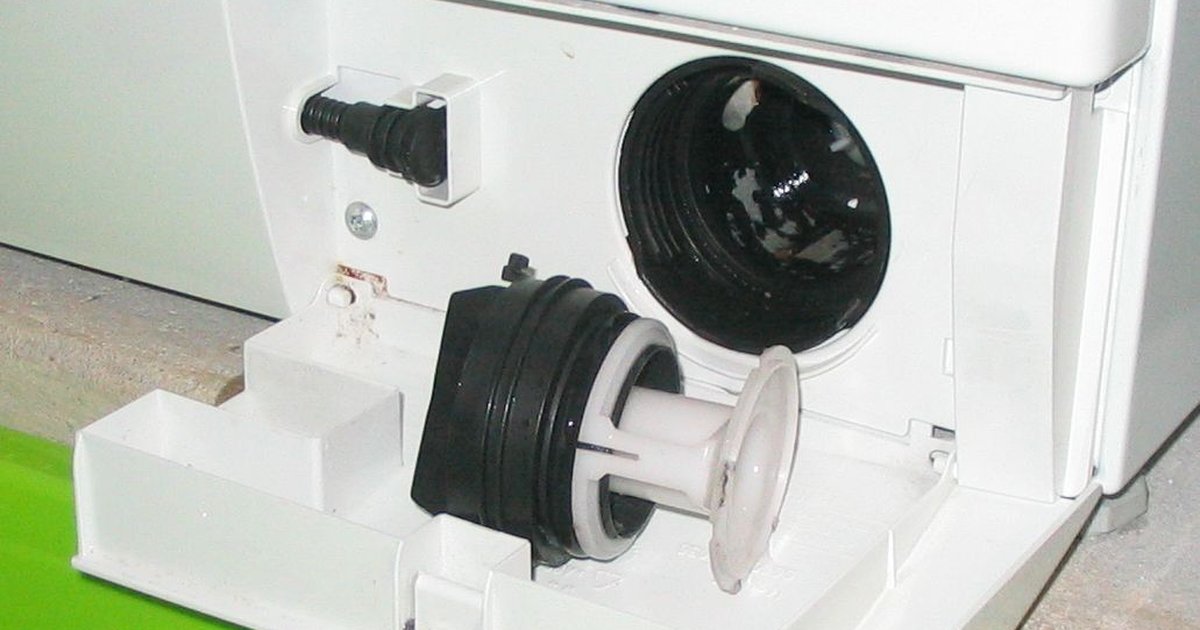
Here’s how to clean washing machine filter parts on most front-load washers: unplug the machine, drain the leftover water through the small emergency hose, unscrew the pump filter, pick out the lint and debris, rinse it and screw it back in. It takes about 15 minutes, most of it waiting for water to drain.
Top-load washers are different. Many have no filter you can reach, and the ones that do usually have a lint filter inside the drum. If the washer still won’t drain with a clean filter, our technicians handle washer repair in Calgary.
Key Takeaways
- Samsung advises cleaning the pump filter 5 to 6 times a year. Whirlpool says every few months, or sooner if lint builds up.
- LG warns that water left in the washer “may be hot and can cause burns.” Let a hot cycle cool down first.
- Samsung says not every top-load washer has a lint filter. Check your manual before you go looking.
- Calgary’s tap water measured 134 to 290 mg/L hardness in 2024, so the inlet hose screens are worth checking too.
How to clean washing machine filter parts on a front loader
On a front loader, the filter you clean is the drain pump filter. The drain pump filter is a screw-in plastic basket that catches whatever comes out of pockets before it reaches the pump. Samsung lists coins, hairpins and lint as the usual finds.
Where is the washing machine filter on a front loader?
Look low on the front of the cabinet, just above the floor, for a small door or a kick panel, usually left or right of centre. Behind it is a round cap about the size of a jar lid. That cap is the filter. It unscrews counterclockwise and pulls out with the basket that holds the debris. Most LG and Samsung front loaders also have a thin emergency drain hose clipped beside it for draining the water first.
- LG: LG’s help library puts the access panel at the lower front, on the left on some models and on the right on others. LG says the filter “is only present on LG frontload washers and combo units.”
- Samsung: the pump filter is behind a cover at the bottom front. Samsung says to press in the top corners to unlock it, or pry it open with a coin or key.
- Whirlpool and Maytag: Maytag’s product help says the pump filter is “typically located at the front bottom of the washer” and can be cleaned “on some models.” Whirlpool gives the same guidance.
- Westinghouse: Westinghouse calls it the drain pump door, at the bottom front.
If you can’t find a door on your model, check the user manual before you start prying at panels.
What you need
Two old towels, a shallow pan or baking dish, an old toothbrush and a coin or flat screwdriver for the access door. LG suggests a shallow pan, and a bucket usually won’t fit under the filter. Expect more water than you think. Candy’s manuals say to empty the drum first, so run a drain or spin cycle first if water is still sitting in it.
Step by step
- Unplug the washer. The Samsung, Whirlpool, Bosch and Westinghouse guides all start with this. If you just ran a hot wash, wait for it to cool, because LG warns the remaining water can burn.
- Open the access door and lay a towel on the floor under it.
- Drain the water. Pull out the small emergency drain hose, hold its end in the pan and remove the cap. Empty the pan and repeat until the flow stops. On machines without a hose, loosen the cap a little at a time and let the water run out of the housing into the pan and towels.
- Remove the filter. Turn it counterclockwise and pull it out slowly. A little more water will follow.
- Rinse it. Pull off hair and lint by hand, then scrub it under running water with the toothbrush. Samsung suggests warm water. You don’t need detergent.
- Clean the housing. Wipe out the filter housing with a cloth and look inside with a flashlight. Bosch says to check for foreign objects and try turning the pump impeller by hand. If it won’t turn freely, something is jammed in the pump.
- Refit and check. Screw the filter back in clockwise until it stops, push the cap back on the drain hose and clip the hose in place. Run a short rinse and spin and look for drips at the door. A filter that isn’t fully tightened will leak, which is why Westinghouse tells owners to tighten it correctly. On Calgary service calls, our technicians have traced a leak under a Samsung front loader to exactly this: a drain filter plug that was slightly loose.
If the filter cap won’t unscrew, don’t use pliers. Plastic caps crack, and a cracked cap leaks every wash. A stuck cap can mean lint has packed the threads of the housing, and that’s a job for washer repair.
Is there a filter on a top load washing machine?
Sometimes. On a top loader, how to clean washing machine filter parts comes down to the model: some have a lint filter, many don’t. Samsung says “not every Top Load Washing Machine has a lint filter,” and the user manual is the place to check. Sears Home Services notes that many top loaders don’t have one.
Where a top loader does have one, it’s usually a lint filter. A lint filter is a mesh pouch or plastic case that catches fluff from the wash water, clipped to the wall of the drum or, on some older machines, built into the centre agitator. Some Samsung top loaders have two cases, one at the front of the drum and one at the back, and its Magic Filter models put it low in the drum with a cleaning light. Sears lists the usual spots on other brands as under or inside the agitator, along the top rim of the drum, or in the drain hose. To clean it, follow Samsung’s top-load steps:
- Press down on the top of the filter case and lift it out.
- Open the cover and clean the mesh under running water with a brush.
- Let it dry, close it and push it back until it clicks.
Many top loaders have none at all. LG says its filter is “not available on top load washers,” and Electrolux says that on its top loaders without one, “the drain filter is coupled with the outlet pump and is cleaned automatically.” Sears adds that these machines rely on a bigger drain opening and a stronger pump instead. A high-efficiency (HE) label won’t tell you either way, so go by the manual for your model.
If your top loader has no lint filter, the pump has to pass everything itself. Shake out pockets and use a mesh bag for small items such as socks and baby clothes. If water is left in the tub after a cycle, start with the drain hose (see our guide to washer drain hose cleaning) before assuming the pump has failed.
Don’t forget the inlet hose filter screens
Most washers have a second set of filters you never see. Inlet filter screens are small mesh screens where the hot and cold supply hoses connect to the back of the machine. They stop grit and scale from reaching the water valve. Westinghouse’s care guide says to clean them from time to time if your water is very hard.
That applies in Calgary. The City’s water quality data lists hardness of 134 to 290 mg/L for 2024, highest in winter, and higher in the south of the city, which gets most of its water from the Elbow River through the Glenmore plant.
To clean the screens, unplug the washer, turn off both taps, unscrew the hoses at the back of the washer with a towel underneath, and scrub the screens with a stiff brush. Screw the hoses back on firmly and open the taps slowly while you watch for drips. A washer that fills slowly on one temperature often has a blocked screen on that side.
How often to clean the filter, and other maintenance tips
Samsung recommends cleaning the pump filter 5 to 6 times a year. Whirlpool says every few months, or as needed depending on use and how much lint builds up. A household with pets, kids or lots of towels and fleece should clean it at the short end of that range. For example, weekly loads of pet bedding or fleece blankets fill the filter faster than loads of mostly cotton. These maintenance tips make the job quicker:
- Do it right after a cold or warm cycle, when the drum is empty and the water in the pump isn’t hot.
- Check clothes pockets for coins, tissues and hair ties. These are what end up trapped in the pump housing.
- Clean it at the first sign of slow draining, a musty smell or clothes coming out wetter than usual. Don’t wait for an error code.
- Keep the towels and shallow pan in the laundry room so the job takes 15 minutes, not an evening.
How to tell if the washer filter or drain pump is clogged
LG says to check the filter “if you notice a slow drain, or display shows an OE Error Code.” Westinghouse adds three more signs: the washer won’t drain, the drum won’t turn, or the pump makes an unusual noise. Our technicians sometimes find the pump itself is fine and only the trap is full. On one Samsung, eight years of build-up in the filter housing was the whole drainage problem, and cleaning it out fixed the washer.
Once the filter is out, try turning the pump impeller with a finger. The pump impeller is the small plastic fan inside the drain pump that pushes water out. Westinghouse says that if it won’t turn, something is jammed in the pump and it needs a service call. If it spins freely and the washer still won’t drain, check the drain hose next.
Washer filter questions
Should you clean the washer filter? Yes. LG lists a clogged drain pump filter as a common reason a front loader won’t drain. Samsung adds that regular cleaning helps keep laundry free of odours and bacteria.
Why is my washing machine filter always full of water? The filter sits at the lowest point of the drain path, so some water stays in the housing after every cycle. That’s normal, which is why Samsung and Westinghouse tell you to drain it first. If the drum still holds water after a spin, the washer isn’t draining and the filter may be blocked.
Where is the filter on an LG top-load washer? There isn’t one. LG fits drain pump filters only to its front-load washers and washer-dryer combos.
What is the best way to clean a washing machine filter? On almost any front loader, how to clean washing machine filter parts is the same short routine: unplug the machine, drain the water into a shallow pan, remove the filter, rinse it under warm running water with a soft brush and check that the pump impeller turns before you refit it. Soaking and harsh cleaners aren’t needed.
Why does my washing machine keep saying clean filter? On many machines it’s a routine reminder. Samsung says the indicator light on its Magic Filter “alerts you when it’s ready to be cleaned.” Check your manual for how to clear the reminder after cleaning. If the message or a drain error comes back right after cleaning, the washer is still draining slowly. Check the drain hose for kinks and clogs and make sure the impeller turns. If both are fine, the pump or a sensor may need a look. Our guide to a washing machine not spinning or draining covers the next checks.
How do I clean the filter on my Candy washing machine? Candy’s front-loader instruction manuals explain how to clean washing machine filter parts the same way. The filter is at the bottom front behind a flap, and Candy’s manuals say to unplug the machine, empty the water first, put a cloth underneath, turn it counterclockwise to remove it, clean it and turn it clockwise to refit. Candy gives the same 5-to-6-times-a-year figure as Samsung.
How do I clean the filter on my Westinghouse washing machine? Westinghouse’s front-load care guide puts the drain pump door at the bottom front. Put a container under it, release the drainage duct to let the water out, unscrew the filter counterclockwise, remove fluff and objects, check the impeller turns, rinse it under a tap and screw it back into the housing tightly.
How do I clean the filter in my top-loading washing machine? Do top loaders have a filter to clean? Some do and some don’t. Look for a lint filter case on the drum wall or a lint trap in the agitator, lift it out, rinse the mesh and let it dry before you put it back. If your manual lists nothing user-cleanable, there’s nothing to remove, and drain problems point to the hose or pump instead.
Photo: Kleinteilfalle oder Fremdkörperfalle einer Waschmaschine by 1-1111, CC BY-SA 3.0. Cropped and resized; this adaptation is licensed CC BY-SA 3.0.