
If the dryer runs, the drum feels warm, and the clothes still come out damp, the heater is probably working. The usual cause is airflow: a packed lint filter, a restricted exhaust vent, or a condenser that can no longer shed moisture. Samsung's clothes-not-dry guide sends you down that path once you can feel any warmth in the drum, and the NFPA dryer and washer safety tips put a clear lint filter and outdoor exhaust at the top of the list.
Work through the checks below before you assume a sensor or a heating part has failed. If the vent is clear and loads still stay wet, dryer repair in Calgary is the usual next step.
Key Takeaways
- Warm drum, damp clothes: start with the lint filter, then the exhaust vent or the condenser before you look at a heating part.
- A cold drum is a no-heat problem. Use the dryer not heating guide instead.
- Samsung's vent blockage test can flag a clog with results such as CLg, Cg, C80 or C90, and a clear duct with 0 or End.
- The NFPA safety tips treat lint and exhaust maintenance as fire prevention, not only faster drying.
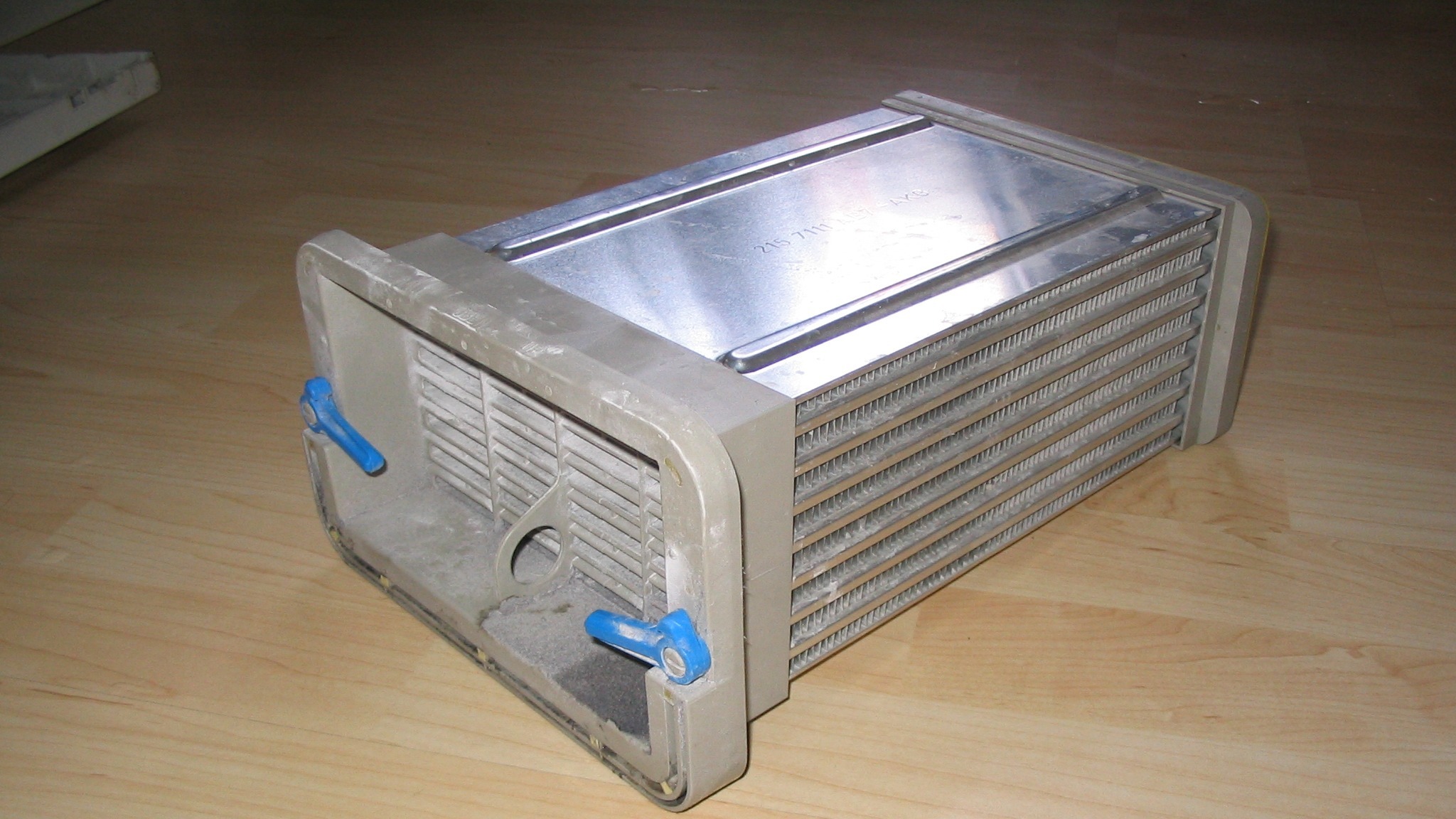
- On a condenser or heat-pump dryer, a clogged heat exchanger (the part in the photo) will leave loads wet even when the machine feels warm.
First, decide whether the dryer is actually heating
Start a regular cycle, wait about 30 seconds, and feel the drum. Samsung says that if you feel any heat, you shouldn't follow the "does not heat at all" steps. That's the fork:
- No warmth at all: go to dryer not heating, or the Samsung-specific page if you have that brand.
- Any warmth, but the load stays damp: stay on this page and clean the air path.
Lint filter, exhaust vent and condenser
Work in this order. Each step is an owner job, and each one is a common reason a warm dryer still fails to finish a load.
- Clean the lint filter before the next load. If the mesh looks filmed over, wash it with mild soap, rinse it and let it dry completely. Details are in how to clean a dryer lint trap.
- Check the exhaust hose and the wall cap. Look for kinks, crushed pipe, a flap that won't open, and lint at the outside hood. The full walk-through is in how to clean a dryer vent. Long or hidden runs are easier as a dryer vent cleaning visit.
- If you have a condenser or heat-pump dryer, there is often no outdoor duct. Moisture is collected on a heat exchanger like the one in the photo. Pull the condenser out as your manual describes, and clean the lint off the fins and the screen. A packed exchanger will leave the load wet even though the cabinet feels warm.
The NFPA safety tips also tell you not to run a dryer without a lint screen in place, and to keep the exhaust clear and vented outdoors on a vented model. That advice is about fire risk as much as dry times.
Cycle settings and load size
A warm dryer can still fail a load if the program is too light for the fabric, or if the drum is packed so air can't move. Samsung notes that some settings, including Eco Dry, run part of the cycle without heat, and that certain loads simply take longer. Don't mix a heavy load of towels with a low-heat eco program and expect the same result as a regular cycle.
ENERGY STAR's clothes dryer page is useful when you're comparing how much energy a dryer uses, including moisture-sensing cycles that shut off when the load is actually dry. If your machine has a sensor dry setting, use it rather than a short timed cycle that can stop early.
| What you notice | Likely air-path issue | First step |
|---|---|---|
| The filter is matted after every load | Normal lint, or a film on the mesh | Clean or wash the lint filter |
| The outside vent barely puffs, or lint is piled at the hood | A restricted exhaust | Clean the duct, or book vent cleaning |
| A condenser dryer, no outside vent, and a warm but wet load | A clogged heat exchanger | Remove and clean the condenser as the manual describes |
| Samsung vent test shows CLg, Cg, C80 or C90 | A clog the machine detected | Clear the vent, then retest. 0 or End means the duct is clear |
| The drum is packed tight | Air can't move through the load | Split the load and use a regular or sensor cycle |
When a warm, wet load still needs a technician
If the filter, vent or condenser is clean and loads still come out damp, the fault may be a moisture sensor, a blower, a thermostat or a failing heat-pump circuit. Those aren't owner parts. Book dryer repair in Calgary. We charge a $100 diagnostic, credited toward labour if you go ahead. Warranty is 3 months on parts and labour. Technicians reach Airdrie, Chestermere, Cochrane, Okotoks and Calgary, often arriving the same or next day.
Dryer not drying questions
Why are my clothes still damp if the dryer feels hot? Heat without airflow can't carry the moisture out. Clean the lint filter and the vent, or the condenser on an unvented machine, before you replace a heating part.
How often should I clean the lint filter? Before every load. The NFPA tips are unambiguous on that point.
My Samsung dryer shows CLg. Is that a heating failure? No. Samsung lists CLg, Cg, C80 and C90 as a detected clog in the vent blockage test. Clear the duct and run the test again.
Does a moisture-sensing cycle fix a blocked vent? No. A sensor can only stop the cycle when it thinks the load is dry. If the air can't leave the cabinet, the load can still come out damp, or the cycle can run much longer than it should. Clean the air path first, then use a sensor or regular cycle rather than a very short timed one.
To book a visit, use the online form or call 587-816-2400.
In-body photo: Kondensator Waeschetrockner by 1-1111, CC BY 3.0. Cropped to 16:9. This is an adaptation of the original under CC BY 3.0.