
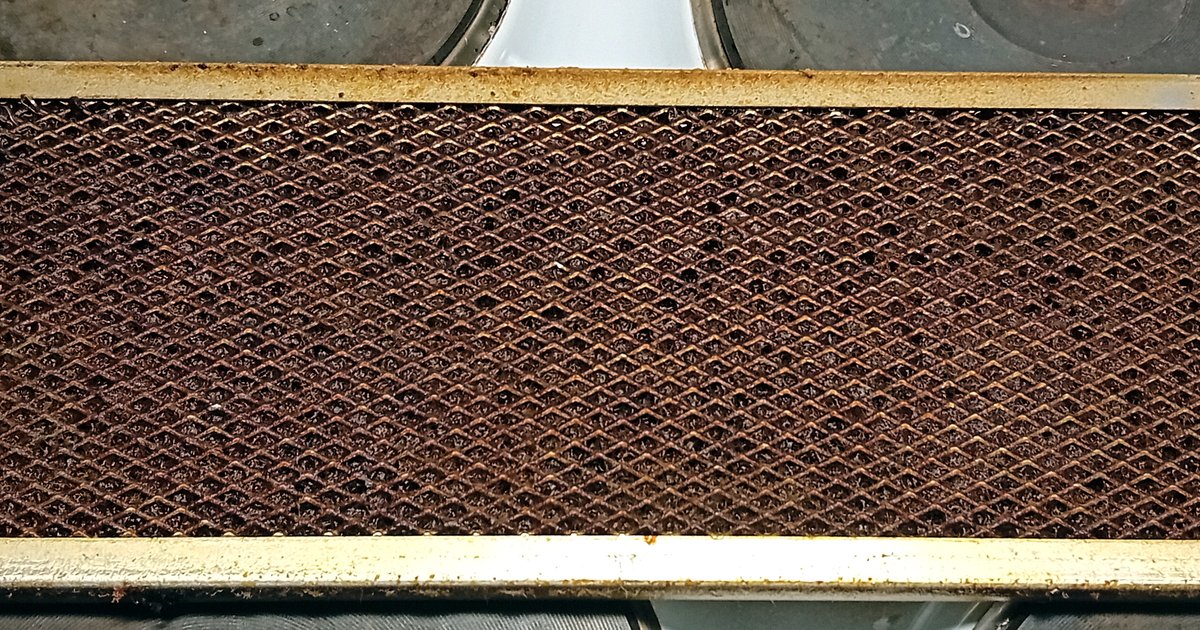
To learn how to clean range hood filter grease off mesh or baffle filters, start with the method GE and Bosch give: take the filters out, soak them in hot water with dish soap, scrub them with a brush, rinse, and let them dry completely before you put them back.
Charcoal filters can't be cleaned or washed, so you replace them on a schedule instead. If the filters are clean and the fan still struggles, grinds or won't start, that's a job for hood fan repair.
Key Takeaways
- Bosch says to soak grease filters in hot, soapy water for 10 minutes, scrub with a brush, rinse and dry thoroughly.
- GE and Broan both say metal filters can go in the dishwasher, but it may discolour them.
- Charcoal (carbon) filters cannot be cleaned. Bosch says to replace them every 3 to 4 months, Broan every 3 to 6 months.
- GE says not to use ammonia or ammonia products on the filter.
Know which range hood filter you have
A grease filter is the metal screen or panel on the underside of the hood that catches airborne grease before it reaches the fan. Most kitchen range hoods use one of three filter types, and the cleaning method depends on which one is in yours.
- Aluminum mesh filters are layers of fine metal screen, found on many standard hoods and over-the-range microwaves.
- Baffle filters are rows of angled stainless steel channels, used on professional-style hoods. Broan says they tolerate heavy grease longer and should be cleaned with soap and water "whenever the surfaces become unsightly."
- Charcoal filters (also called carbon filters) are used on non-ducted hoods, which recirculate air back into the kitchen instead of venting it outside.
How to clean range hood filters in 4 steps
Here's how to clean range hood filter mesh and baffles, following Bosch's hood cleaning guide and GE Appliances' instructions for metal grease filters. Turn the hood fan off before you start.
1. Remove the filters
Most filters slide or unclip from the underside of the range hood. Bosch tells you to check your owner's manual for the removal steps. Latches vary by model.
2. Soak greasy range hood filters in hot, soapy water
Fill the sink with hot water and a squirt of dish soap. Bosch says to soak the filters for 10 minutes. GE says to soak them and then swish them around in the hot water and detergent.
For heavy buildup, Bosch suggests a degreaser. A degreaser is a stronger cleaner made to break down cooked-on oil. Many online guides add baking soda to the water, but none of the manufacturer pages we checked call for it. They call for hot water and dish soap.
3. Scrub with a soft brush
Bosch says to scrub with a cleaning brush. GE says light brushing helps remove embedded soil and dust. Use a soft brush so you don't bend the mesh.
4. Rinse and dry completely
Rinse with clean water. Both brands say to let the filters dry completely before putting them back. Shake out the water, then stand them on a towel or wipe the frame with a cloth.
Can you put range hood filters in the dishwasher?
Usually, yes. Broan says to clean all-metal filters in the dishwasher using a non-phosphate detergent. GE says dishwasher cleaning "is acceptable, but it may discolor the filter." Whirlpool says most grease filters on its over-the-range microwaves can go in the dishwasher, and to check the owner's manual first.
Broan explains that discolouration comes from phosphate detergents or local water conditions. It doesn't affect how the filter works, but it isn't covered by the warranty. To avoid it, Broan says to wash the filters separately in the sink with a mild detergent.
How often to clean or replace the filters
The answer depends on how much you cook, and the brands don't agree on one number.
| Brand | Mesh or baffle filters | Charcoal filters |
|---|---|---|
| Broan | Wash mesh about every month, more often for frying or wok cooking | Replace every 3 to 6 months |
| Whirlpool | Clean monthly, or when the filter indicator comes on | Replace about every 6 months |
| GE | About every six months for normal day-to-day use, or as needed | Not covered on GE's filter page |
| Bosch | No interval given on its cleaning page | Replace every 3 to 4 months, depending on use |
If you cook every day, monthly is a sensible default. Clean the filter sooner if the mesh looks dark or feels sticky. If the hood can't keep up with your cooking even with clean filters, it may be too small. Our guide to range hood CFM and sizing explains how to check.
Range hood filter cleaning questions
What is the best way to clean a range hood filter? Soak it in hot water with dish soap, scrub it with a brush, rinse and dry it fully. Bosch gives a 10-minute soak, and GE adds swishing and light brushing.
Can range hood filters be washed? Metal mesh and baffle filters can be washed by hand, and most can go in the dishwasher. Bosch, Broan and Whirlpool all say charcoal filters can't be cleaned.
What should you use to clean oven hood filters? Hot water and dish soap handle most grease. Bosch mentions a degreaser for stubborn residue. Skip ammonia, which GE says not to use on the filter.
How do you clean a metal mesh cooker hood filter? Follow the four steps above. Swish the filter in the soapy water so it flushes through the layers of mesh, and brush gently so you don't dent the screen.
How do you clean metal mesh air filters? If it's the grease filter in a kitchen hood or over-the-range microwave, use the same soak, scrub and rinse. For any other appliance, check that unit's manual.
Can cooker hood filters go in the dishwasher? Most metal ones can. Use a non-phosphate detergent, as Broan recommends, and know that the dishwasher may discolour the metal.
When clean filters don't fix the problem
If the filters are clean and the hood still won't clear smoke, read our guide to weak range hood suction. Grease that gets past the filters ends up on the fan and inside the housing. On older hoods that rattle and barely pull air, our technicians have found that a full teardown and degrease of the fan and housing brings back quiet, proper suction. A fan that hums or grinds but won't turn is a different problem, usually a seized motor. For either one, book range hood repair in Calgary. Built-up grease can also feed a cooktop fire, so read our kitchen fire safety tips.
Photo: Long-uncleaned kitchen hood filter by Veikk0.ma, CC BY-SA 4.0. Cropped.