
These oven fire safety tips come from the Calgary Fire Department, the NFPA and an oven maker’s manual. If an oven fire starts, turn the oven off and keep the door closed.
The Calgary Fire Department says cooking is the number one cause of residential fires in Calgary. If your oven has a fault that could start one, such as scorched wiring or a door that won’t close, book oven repair in Calgary before you use it again.
Key Takeaways
- Oven fire: turn off the heat, keep the door closed, and never use water or flour.
- Pan fire: slide a lid over the pan and turn off the burner.
- The NFPA calls unattended cooking “by far the leading factor” in cooking fires.
What to do if an oven fire starts
Calgary Fire says to “turn off the heat and keep the door closed to prevent flames from burning you and your clothing.”
The LG LSE3090ST range manual agrees. If the fire continues, it says to use baking soda or a fire extinguisher, never water or flour. A grease fire is one burning in cooking oil or fat, and LG warns that “water can cause a grease fire to spread.”
If the fire doesn’t go out, or you aren’t sure you can handle it, the NFPA says to get out, close the door behind you and call 911 once you’re outside.
For a grease fire on the stovetop, Calgary Fire says to slide a tight-fitting lid over the pan with an oven mitt on, then turn off the heat and exhaust fan. Don’t move the pan. For a microwave fire, keep the door closed, turn it off, unplug it, get out and call 911.
The city asks you to have a microwave serviced before using it again after a fire. Give an oven the same care and book oven repair first.
Oven fire safety tips to prevent kitchen fires
- Stay with your cooking. If you leave the kitchen, turn off the stove and take the pot off the burner.
- Clean the oven and stovetop of food and grease once they’ve cooled.
- Don’t line the oven bottom with foil. LG warns of “a risk of electric shock or fire.”
- Keep oven mitts, potholders and wooden utensils away from the stovetop, and store nothing flammable in the oven drawer (the storage or warming drawer under the oven).
- Use the back burners and turn pot handles inward.
- Keep kids and pets one metre from the stove.
- Fry in a temperature-controlled fryer or skillet with a 200 °C maximum.
- Keep a lid and dry oven mitts nearby while cooking.
Tips 1, 2 and 4 to 8 come from Calgary Fire. Grease on the door is easier to remove before it bakes on, and our guide to cleaning the inside, outside and between the oven glass shows how. If your oven runs hot or won’t hold its temperature, try our troubleshooting steps for bake element failure and temperature faults. Before opening any panel, read our appliance safety tips, which also cover dryer and kitchen fire safety.
What we see on Calgary jobs
Our technicians see element wiring that has burnt at the connector, where the wire joins the element terminal at the back of the oven. When that happens, the element usually stops heating. We rewire it with new ceramic connectors, and the element itself often doesn’t need replacing. If you smell burning plastic from the back of the oven or a bake or broil element suddenly quits, turn the oven off at the breaker and have it checked.
In spring 2026 we also installed the manufacturer’s bake-burner recall kit on a number of Frigidaire gas ranges, and each oven preheated and held temperature afterwards. If you own a gas range, check the manufacturer’s website for open recalls on your model number.
Kitchen fire safety questions
What is the most common appliance to catch fire in a house? Usually the stove. In the NFPA’s Home Cooking Fires report (US, 2017 to 2021), ranges or cooktops were involved in 53 percent of reported home cooking fires.
What are 5 fire safety rules in cooking? Stay with your food, keep the stovetop clean, keep flammable items away, keep kids back, and keep a lid nearby.
What are 10 kitchen safety rules? The eight tips above, plus two more from Calgary Fire: unplug small appliances when not in use, and don’t use one with a damaged cord.
What are the 5 C’s in food safety? Health Canada’s safe recipe style guide uses four areas: clean, separate, cook and chill.
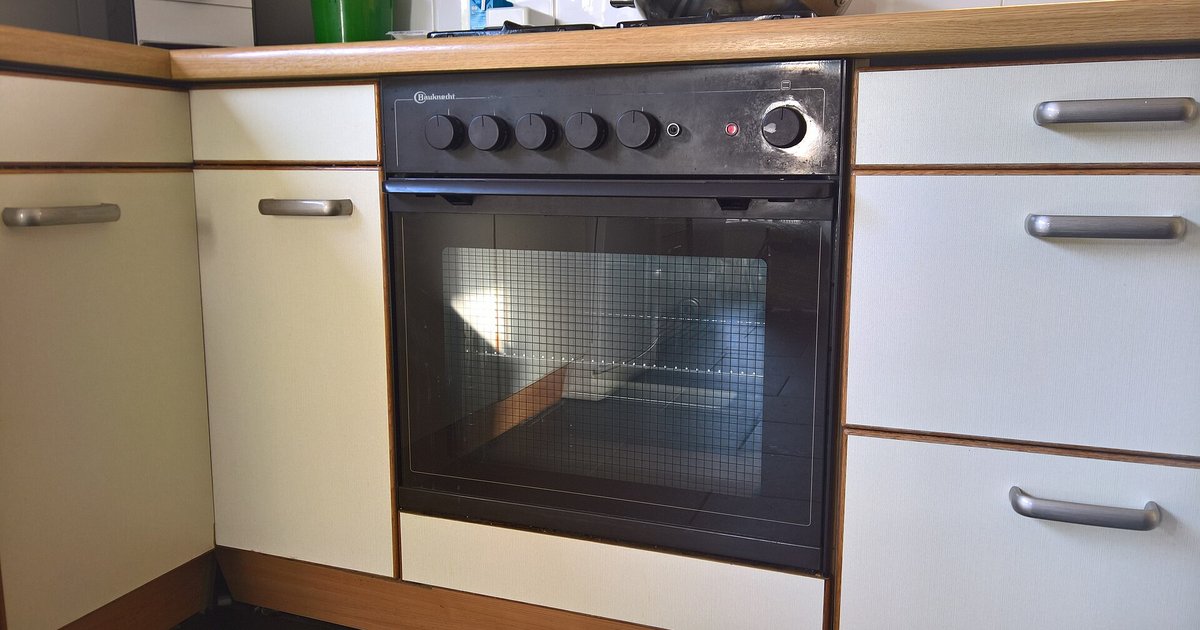
Photo: Bauknecht kitchen oven (brown) by Donald Trung, CC BY-SA 4.0. Cropped.