
Choosing between a countertop vs over the range microwave depends on your counter space, the hood you already have, and how much you’re willing to spend on installation. A countertop microwave plugs in and works anywhere with a sturdy surface and an outlet. An over-the-range (OTR) microwave hangs above the cooktop, frees the counter and doubles as a vent hood, but it costs more to install and moves less air than most range hoods.
Whirlpool Canada says OTR microwaves are best for light to moderate cooking, not cooking that needs heavy-duty ventilation. If your cooking is the heavy kind, pair a real range hood with a countertop microwave. If counter space is the bigger problem, an OTR model is a reasonable trade. Our technicians service both, from countertop units to over-the-range and built-in microwave repair across Calgary.
Key Takeaways
- GE says most over-the-range models need about 30 inches of vertical clearance between the cooktop and the upper cabinets, so measure before you shop.
- KitchenAid says OTR microwaves typically provide up to 200 CFM Motor Class, with select models reaching 500. Whirlpool Canada says OTRs suit light to moderate cooking.
- Recirculating OTRs use a charcoal filter that Whirlpool Canada recommends changing every 6 months.
- Panasonic recommends 2 to 6 inches of space around the sides and rear of a countertop microwave, and no extension cords.
Countertop vs over the range microwave: side-by-side comparison
This table puts the countertop vs over the range microwave decision side by side. Built-in microwaves are included because they’re the usual third option in a kitchen remodel.
| Factor | Countertop | Over-the-range (OTR) | Built-in |
|---|---|---|---|
| Installation | None. Plug it in. | Installed between the cabinets above the range. Ducted venting usually needs a pro. | Set into cabinetry or a wall, often with a trim kit sold separately. |
| Counter space | Takes up counter space | Frees the counter | Frees the counter |
| Ventilation | None for the cooktop | Built-in fan, vented outside or recirculated through a charcoal filter | None for the cooktop. Needs clearance around its own edges. |
| Height | Counter height | Above the cooktop, which can be hard to reach for shorter users | Usually eye level |
| Size to check | Footprint plus 2 to 6 inches of clearance on the sides and rear | Sized for a standard 30-inch range (GE’s JVM3160 is 29.875 inches wide), plus about 30 inches above the cooktop | The cabinet opening and trim kit size |
| Cost | GE calls it the simplest and most affordable option | Unit plus installation | GE says it costs more because of custom installation |
| Moving house | Comes with you | Stays with the kitchen | Stays with the kitchen |
Over-the-range microwave pros and cons: venting, fit and height
Whirlpool Canada describes an OTR microwave, which it also calls a microwave hood combination, as a microwave installed above a range or cooktop that “combines the functions of a traditional microwave and a ventilation system to remove smoke, steam, and odours from cooking.” KitchenAid adds that many OTR models have built-in lighting for the cooktop below.
Venting: ducted outside or recirculated
An OTR microwave can vent two ways. With external (ducted) venting, the fan pushes air through ductwork to the outside. With recirculating venting, the air passes through a grease filter and a charcoal filter and comes back into the kitchen. A charcoal filter is a pad of activated carbon that absorbs cooking odours, and it has to be replaced rather than washed.
GE Appliances says recirculating vents are “ductless and easier to install but may be less effective at removing heat, smoke, and odors,” while external vents clear the air better but “usually need professional installation.” KitchenAid adds that OTR models are typically factory set to recirculate, and only some can be converted to external venting, so check the owner’s manual.
Filters need regular attention. KitchenAid says grease filters should be cleaned monthly and the charcoal filter replaced every six months, and Whirlpool Canada gives the same six-month figure for charcoal filters. If the fan still seems weak with clean filters, see our range hood not pulling air guide.
How much air can OTR microwaves move?
CFM is cubic feet per minute, the measure of how much air a fan moves. KitchenAid says over-the-range microwaves “can typically provide up to 200 CFM Motor Class,” and that select KitchenAid models reach up to 500 CFM Motor Class.
Whirlpool Canada’s current lineup includes 300 CFM and 400 CFM motor classes and a low-profile model with a 450 CFM motor and dual fans. Both brands footnote that performance varies with installation, so treat the rated figure as a best case.
If you are swapping a range hood for an OTR microwave, Whirlpool Canada says to make sure it provides 300 to 400 CFM, proper clearance and ducting. It also says that “as a general rule, OTR microwaves are best suited for light to moderate cooking rather than cooking that requires heavy-duty ventilation.” KitchenAid agrees that standard range hoods generally vent more powerfully than OTR microwaves.
Installation, fit and clearance
Whirlpool says OTR microwaves install between the cabinets above your range, and AJ Madison notes that the standard range is 30 inches wide. GE’s 1.6 cu. ft. JVM3160, for example, measures 29.875 inches wide, 16.125 inches high and about 15.6 inches deep. GE also says most OTR models need about 30 inches of vertical clearance between the cooktop and upper cabinets, and to confirm the measurements for your kitchen.
GE sorts its OTR models into medium (1.0 to 1.5 cu. ft.) and larger (1.6 cu. ft. and up). Low-profile models are slimmer still: Whirlpool Canada says its low-profile design fits in the same space as an under-cabinet hood.
Repairs differ too. On Calgary service calls, our technicians find that most OTR repairs mean taking the microwave off its wall plate and reinstalling it above the range afterwards, which a countertop unit never needs.
Height is the biggest drawback. KitchenAid notes that OTR microwaves “may be hard to access for shorter users or those with physical impairments,” and that some people find them in the way of bulky or tall cookware.
Countertop microwave pros and cons
GE calls countertop microwaves “the simplest and most affordable option, requiring no installation.” Whirlpool points out that they are easy to move around the kitchen as your needs change. If you rent or plan to move, a countertop unit goes with you.
On the downside, a countertop microwave uses counter space and does nothing for cooking smoke and steam, so you still need a range hood over the stove. It’s also the type where replacing can beat repairing. For an inexpensive countertop unit, parts and labour can cost more than a new one, and our technicians will tell you when that’s the case.
Where a countertop microwave fits best
Panasonic’s placement guide gives a short checklist:
- Leave 2 to 6 inches of space on the sides and rear, which is what it says most manufacturers recommend.
- Use a sturdy, level surface.
- Plug it into a grounded outlet, not an extension cord or power strip.
- Keep it away from heat sources such as the stovetop or oven.
So give it some distance from the range rather than tucking it right against the cooktop. Stacking it on another appliance has its own problems, which we explain in can you put a microwave on top of a fridge.
Power and capacity
AJ Madison’s buying guide says the National Kitchen and Bath Association recommends 750 to 1,200 watts for effective cooking, and that most microwave recipes call for at least 800 watts. It puts microwave sizes at 0.5 cu. ft. for compact models up to 2.2 cu. ft. for extra large, and says you’ll need a large capacity to fit a 9 x 13 inch baking dish.
Check the interior capacity against your largest dish, and the outside dimensions against your counter and the cabinets above it, before you buy.
Built-in microwaves, low-profile and combination designs
- Built-in microwaves are set into cabinetry or a wall, usually at eye level. GE says they cost more because of custom installation, and AJ Madison notes they install with an optional trim kit, sold separately, and need space around the edges for ventilation. A trim kit is a metal frame that closes the gap between the microwave and the cabinet opening.
- Flush OTR models sit flush with the upper cabinets for a built-in look while still venting the cooktop, according to Whirlpool Canada.
- Drawer (under-counter) microwaves slide out of the lower cabinets at waist height. Whirlpool says they tend to cost more than countertop and built-in models.
- Convection microwaves add a heating element so you can bake and roast as well as reheat. Whirlpool also sells wall oven and microwave combinations, with the microwave on top and the oven below. For a built-in example that combines both in one cavity, see our guide to the Bosch speed oven.
Which is better for your kitchen? Common questions
Which is better, a countertop or over the range microwave?
In the countertop vs over the range microwave debate, neither wins outright. Pick an OTR model if counter space is tight, you have about 30 inches between the cooktop and the upper cabinets, and your cooking is light to moderate. Pick a countertop microwave if you have room on the counter, you rent, your cooking needs heavy-duty ventilation, you cook with gas, or you want to keep a dedicated range hood.
Hauslane, which sells range hoods, goes further and says that if you have a gas range or cook regularly, an OTR microwave is “probably not a good choice.”
What over-the-range microwave has a high CFM?
Of the brands we checked, KitchenAid says select models reach up to 500 CFM Motor Class. Whirlpool Canada lists its Smart Low Profile Microwave Hood Combination (YWMML5530RZ), with a 450 CFM motor, as its most powerful ventilation. Note that KitchenAid’s typical figure of up to 200 CFM falls short of the 300 to 400 CFM Whirlpool Canada suggests when replacing a hood. Compare the rated CFM on the spec sheet, and remember that both brands say performance varies with installation.
Which is the best countertop microwave oven?
We don’t rank brands, but look for at least 800 watts, enough capacity for your largest dish, an interior you can clean easily, and a footprint that leaves room for airflow where you plan to put it.
What is the best countertop microwave in Canada?
Use the same checklist, and buy from a brand that sells and services in Canada, so you can get parts and warranty repair here.
What are 5 disadvantages of using a microwave oven?
The U.S. FDA’s microwave oven page points to these:
- Water heated alone in a clean cup can become super-heated and erupt when you move it or add something to it.
- Some plastic containers can melt from the heat of the food inside them.
- Metal pans and foil reflect microwaves, which can cause uneven cooking and damage the oven.
- Most injuries are heat burns from hot containers, overheated food or exploding liquids.
- A damaged door, hinge, latch or seal can let microwave energy leak, so the FDA says to stop using an oven that doesn’t close firmly.
Why are people getting rid of their microwave?
We couldn’t find reliable data showing that they are. If radiation or nutrition is the worry, the FDA says it believes ovens that meet its standard and are used as directed are safe, that microwave cooking doesn’t reduce nutrition more than other methods, and that food may keep more vitamins because it cooks faster and without added water.
For cleaning either type, the FDA suggests water and a mild detergent, with no scouring pads or steel wool. Our guide shows how to steam-clean a microwave and look after its filters.
Once you’ve settled the countertop vs over the range microwave question, upkeep is simple: clean the filters on schedule and watch the door seals. If your microwave runs but won’t heat, start with our guide to a microwave not heating food, or book microwave repair in Calgary. For an OTR fan or light that has stopped working, see range hood repair.
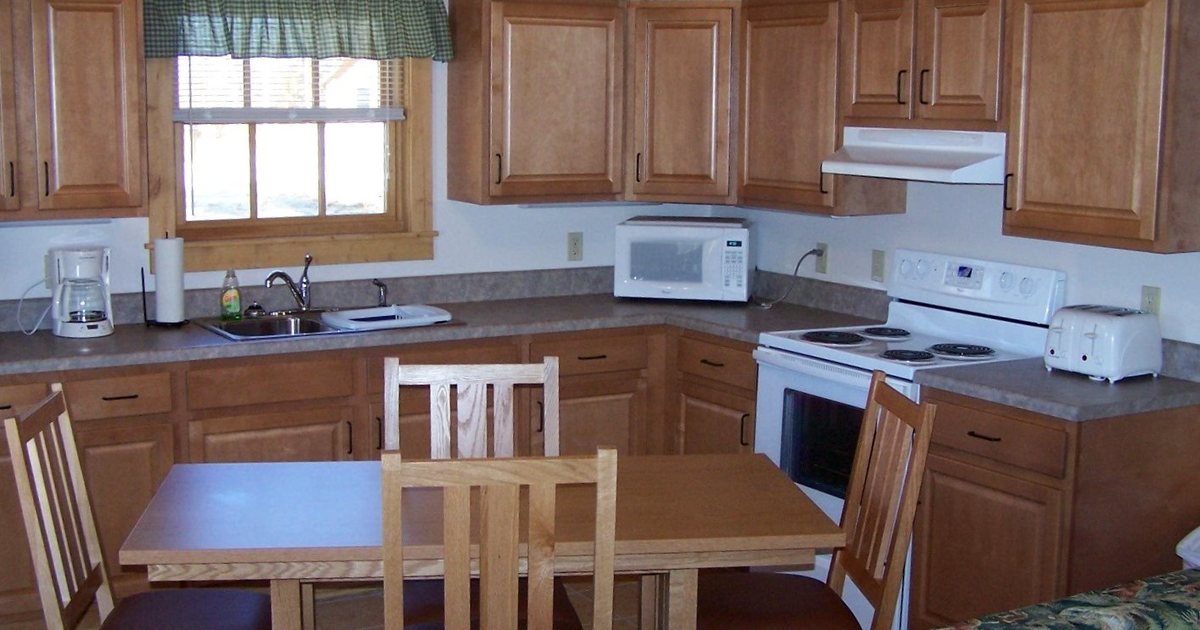
Photo: NT typical 2 bedroom kitchen area by Virginia State Parks staff, CC BY 2.0. Cropped.