
Your fridge has been humming away non-stop, and now you’re wondering if something’s seriously wrong or if it’s just doing its job. This guide breaks down exactly what a constantly running compressor means, what’s normal versus what needs attention, and when it’s time to call in a pro.
Calgary winters are brutal, and summers can get surprisingly warm and both extremes put real demands on your kitchen appliances. A refrigerator that never seems to shut off is one of those things that starts as background noise and quickly becomes a source of genuine worry. Is it burning through electricity? Is the food safe? Is something about to fail?
At Calgary Appliance Service Pros, we get these calls regularly. The honest answer is that sometimes a constantly running compressor is completely normal, and sometimes it’s a sign that something needs fixing. Knowing the difference saves you from an unnecessary service call on one end, and a spoiled fridge full of groceries on the other.
Key takeaways
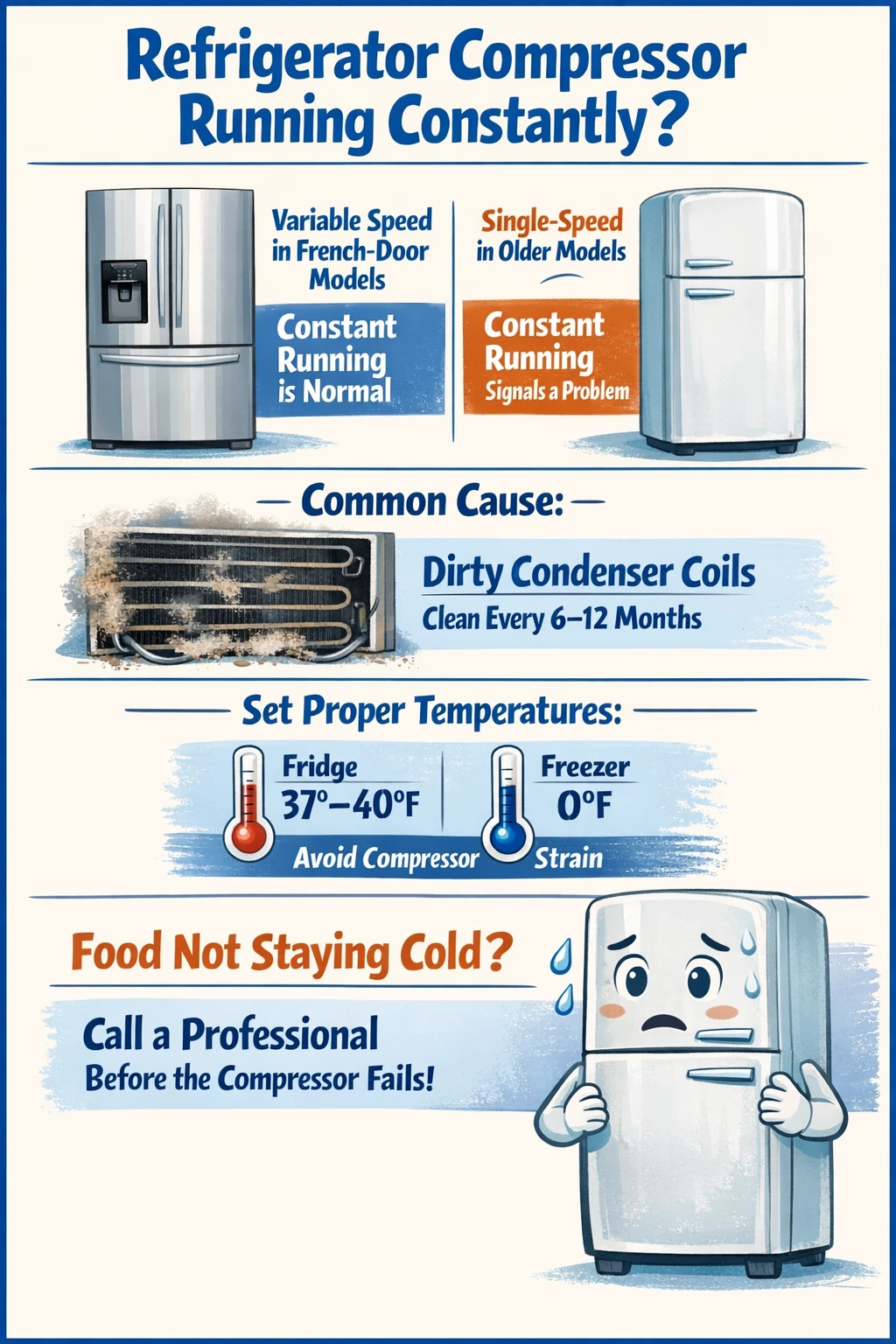
- Variable speed compressors found in most French-door and multi-door refrigerators are designed to run nearly 100% of the time, except during the defrost cycle this is normal and by design.
- Single-speed compressors in top-freezer and side-by-side models should cycle on and off; running constantly with those units usually signals a problem.
- Dirty condenser coils are one of the most common fixable causes coils should be cleaned every 6 to 12 months, or more often in homes with pets.
- Recommended temperature settings are 37-40°F (about 3-4°C) for the fridge and 0°F (-18°C) for the freezer; running colder than needed increases run time without improving food safety.
- A worn or damaged door gasket lets warm air in constantly, forcing the compressor to keep working to recover a simple inspection can confirm or rule this out.
- If your fridge is running non-stop and the food isn’t staying properly cold, that combination is a clear signal to get a professional diagnosis before the compressor fails entirely.
What it actually means when your compressor runs constantly

The short answer: it depends entirely on what type of compressor your fridge has. If you have a newer French-door or multi-door model, a compressor that runs almost all the time is normal. These units use variable speed compressors, which are built to run continuously at varying speeds rather than cycling on and off. The logic is straightforward it takes more energy to stop and restart than to keep idling at a low speed. Manufacturers like LG have confirmed this is expected behavior for their French-door models.
Single-speed compressors, which are common in older top-freezer and side-by-side models, work differently. They cycle on, bring the temperature down, then shut off until the temperature rises again. If you have one of these and it’s running without any breaks, that’s worth investigating. The thermostat is supposed to signal the compressor to rest and if it never does, something in that chain isn’t working the way it should.
One thing worth knowing: the control board on most modern refrigerators is programmed to trigger a defrost cycle roughly every 12 hours of compressor run time. During that cycle, the compressor pauses for about 20-25 minutes to melt frost off the evaporator coil. If yours never seems to pause at all not even briefly that’s a meaningful clue that something may be off with the defrost system or the control board itself.
Common reasons a fridge compressor won’t stop running
Once you’ve ruled out normal variable-speed operation, there are a handful of causes that come up again and again. Most of them are on the simpler end. A few require professional help.
Dirty condenser coils
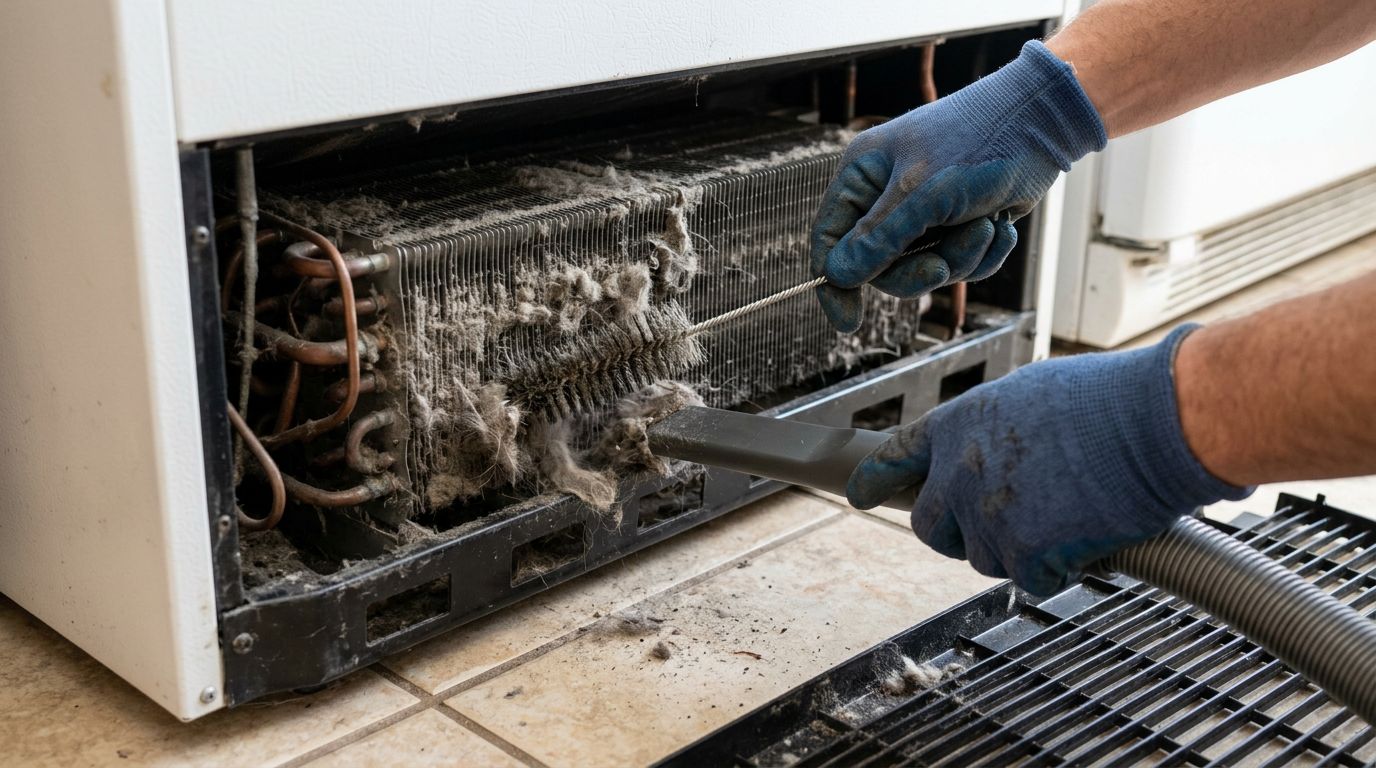
This is probably the most common fixable culprit. The condenser coils release heat from the refrigerant as part of the cooling cycle. When they’re coated in dust, pet hair, and kitchen grime, that heat can’t escape efficiently so the compressor keeps running to compensate. In older homes around communities like Brentwood or Capitol Hill, where dust tends to accumulate faster in older builds, we see this more than you’d expect.
Cleaning them isn’t complicated. Most condenser coils are located behind a rear panel or under the fridge behind a toe grille. Unplug the fridge, locate the coils using your owner’s manual, work through them gently with an appliance brush, then vacuum up the debris. That’s it. Do this every six to twelve months more often if you have dogs or cats.
Door gasket problems
The rubber seal around your fridge door does more work than people realize. If it’s torn, dried out, or just not making a clean seal, warm air is sneaking in constantly. The fridge senses the rising temperature and runs to keep up. It never fully wins because the warm air never stops coming in.
Test it with a dollar bill: close the door on it and pull. There should be noticeable resistance. If it slides out easily, the gasket isn’t sealing properly. A dirty gasket can often be cleaned with a damp cloth and some mild soap. A cracked or brittle one needs to be replaced and replacement gaskets are widely available for most brands.
Temperature settings that are too low
Setting the fridge colder than necessary doesn’t make food safer or cooler faster. It just makes the compressor run longer. If someone bumped the controls or you’re in the habit of running cold, check your settings. The fridge section should sit around 37-40°F. The freezer at 0°F. Colder than that is unnecessary for most households and adds wear on the compressor over time.
After adjusting the settings, give it a full 24 hours before judging. Temperatures take time to stabilize, especially if the fridge was recently restocked.
Defrost system failures
If frost is building up on the back wall of your freezer, or the fan noise changes and then quiets down on its own, the defrost system may be struggling. When frost builds up on the evaporator coil, airflow is restricted throughout the whole fridge. The compressor runs harder to compensate, and temperatures get uneven. You might notice the fridge section warming up while the freezer still seems cold or vice versa.
Defrost system issues can involve the defrost heater, the defrost thermostat, or the control board timing the defrost cycles. Diagnosing which one is the problem usually requires testing components directly. This is one of those repairs where having the right tools matters. The U.S. Department of Energy’s guidance on refrigerator efficiency is a useful reference for understanding how defrost cycles affect overall energy use.
Low refrigerant
This one comes up less often than people think, but it does happen. If there’s a refrigerant leak, the system can’t absorb enough heat from inside the fridge so the compressor just keeps running, trying to reach a temperature it can never quite hit. Signs that point toward a refrigerant issue include the compressor running constantly alongside food that’s not staying cold enough, and frost forming on only part of the evaporator coil rather than across the full surface.
Refrigerant work isn’t a DIY job. It requires specialized equipment and handling knowledge. If you suspect a leak, this is a call for a technician.
When it’s probably fine and when it isn’t
Not every constantly running compressor is a red flag. If you just loaded up the fridge after a big grocery run, expect it to run hard for a few hours while everything cools down. Same after a power outage, or after someone left the door ajar for a while. These are normal recovery situations.
It’s also worth considering where the fridge is located. A fridge in a garage or a poorly insulated kitchen alcove works harder because the surrounding air is warmer. This is especially relevant during Calgary’s warmer months when kitchen temperatures can climb. The fridge isn’t broken it’s just fighting a tougher environment.
The situations that genuinely need attention look like this: the compressor runs non-stop for more than 24 hours without any pause, food isn’t staying as cold as it should, you’re hearing new or louder noises, or the compressor is running hot to the touch. Any one of those on its own is worth investigating. All of them together means don’t wait.
What you can check before calling a technician
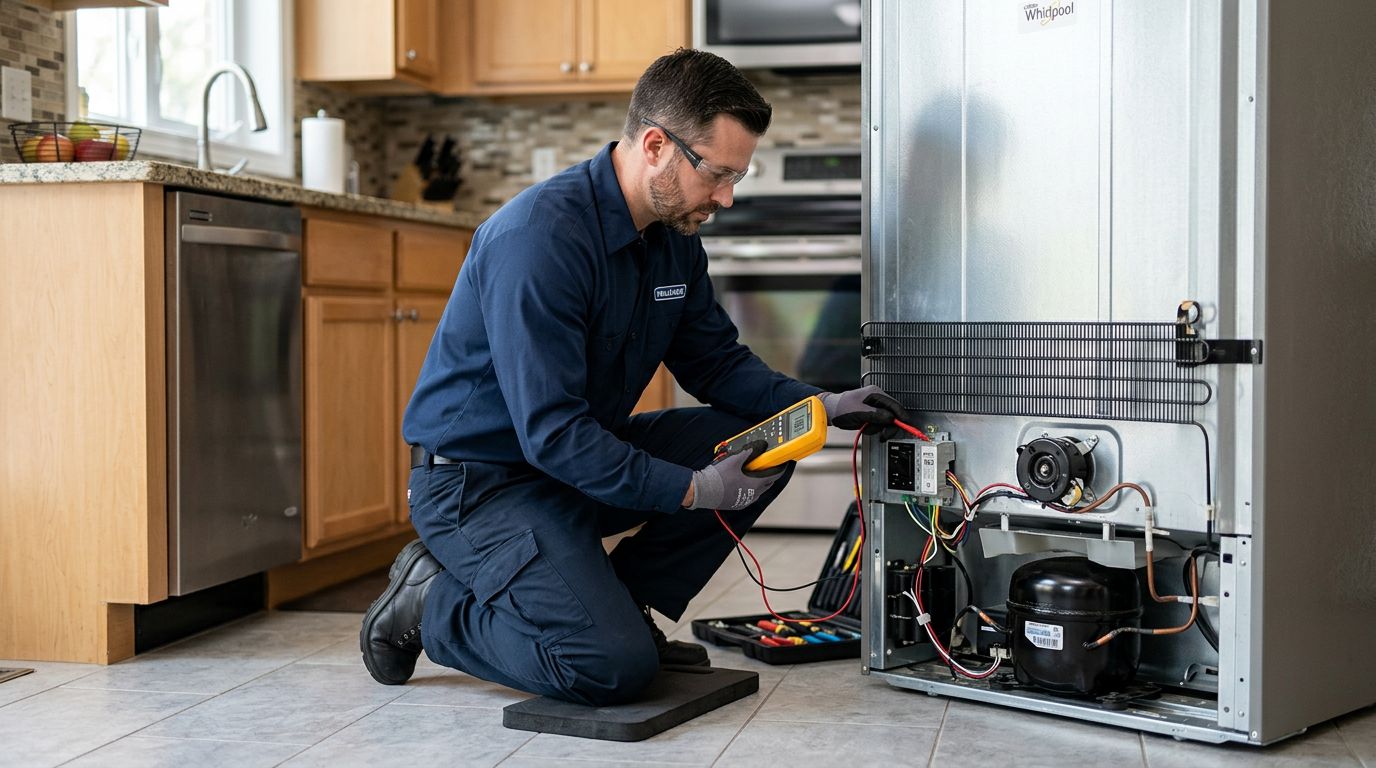
Before picking up the phone, run through this short list. It takes maybe fifteen minutes and rules out the most common causes.
Check whether the coils are accessible and visibly dirty. Look at the door gaskets on all doors, including the freezer. Confirm the temperature settings are reasonable. Make sure there’s adequate clearance around the fridge at least an inch on each side and a bit at the top for ventilation. If the fridge was recently moved or just delivered, give it 24 to 48 hours to settle before worrying.
If none of those surface checks turn up anything obvious, and the fridge is still running without breaks while struggling to maintain temperature, you’re looking at an internal component issue. That might be a faulty thermistor, a failing fan motor, a defrost system problem, or a control board issue. The Health Canada cold storage guidelines are a good reference for food safety temperatures if you’re uncertain whether your fridge is keeping food safe during this period.
Frequently asked questions
These are the questions we hear most often when homeowners are trying to figure out whether their fridge situation is a quick fix or something bigger.
Is it normal for a new refrigerator to run more than my old one?
Yes, and this surprises a lot of people. Modern refrigerators with variable speed compressors are designed to run longer and more frequently than older single-speed models. That’s not a defect it’s how they achieve better energy efficiency. A new French-door fridge running almost constantly is almost certainly operating normally. Give it a few days to settle in and reach stable temperatures before deciding there’s a problem.
Why is my fridge compressor always on after I opened it a lot today?
Every time the door opens, warm room air enters and the temperature inside rises. The compressor runs to bring it back down. If you’ve been cooking, loading groceries, or the door got left open for a stretch, expect longer run cycles for a while afterward. It’s the same reason a fridge works harder in summer than in winter the temperature differential between inside and outside is bigger.
Can I fix a constantly running fridge myself?
Some of it, yes. Cleaning the condenser coils, replacing a door gasket, and adjusting temperature settings are all reasonable DIY tasks for most homeowners. Anything involving refrigerant, control boards, or internal electrical components is a different story. Those repairs benefit from proper diagnosis before parts are ordered, and getting it wrong can cost more than the original service call would have. Honestly, if the simple checks don’t solve it, the diagnostic step alone is usually worth paying for.
How much does it cost to repair a refrigerator compressor?
It varies quite a bit depending on what’s actually wrong. A coil cleaning or gasket replacement is relatively inexpensive. A control board replacement runs higher. An actual compressor replacement is the most expensive scenario, and on older or lower-cost fridges, it’s worth having an honest conversation about whether repair or replacement makes more sense. In our experience, most refrigerator compressor issues don’t turn out to be compressor replacement situations they’re more often coils, gaskets, or defrost components.
Does cold weather in Calgary affect how my fridge runs?
It can, especially if the fridge is in an unheated garage or near an exterior wall. Most refrigerators are designed to operate in ambient temperatures between about 13°C and 43°C. Below that range, the fridge can actually have trouble maintaining proper freezer temperatures because the surrounding air is already cold. Condensation and frost issues can also become more frequent in cold, humid conditions. For fridges located in main living areas, Calgary’s cold winters rarely cause problems directly but drafts near the fridge’s condenser can affect performance.
Wrapping up
A compressor that runs constantly is either completely normal or a clear signal that something needs attention and the difference usually comes down to what type of fridge you have and whether the food inside is staying cold. Start with the simple checks: coils, gaskets, temperature settings, and door seals. A lot of these calls have a straightforward fix. If yours doesn’t, or if the fridge is running hard while the food isn’t staying cold, that’s when it’s time to get someone in to take a proper look. At Calgary Appliance Service Pros, we handle fridge compressor issues and appliance repairs across Calgary and surrounding areas, including neighborhoods like Tuscany and Killarney. If you’re not sure what you’re dealing with, give us a call we’ll help you figure out whether this is a quick fix or something that needs more attention before it turns into a bigger problem.
