
Your washing machine stops mid-cycle, clothes come out soaking wet, and water sits in the drum going nowhere. Nobody wants to deal with that on laundry day. This guide walks you through the most common reasons a washing machine not spinning or draining properly, and what you can check yourself before calling anyone. Calgary winters are hard on everything, including the appliances that keep household routines running. When a washer breaks down, it tends to happen at the worst possible time. Mid-week, with a full hamper waiting. At Calgary Appliance Service Pros, we hear from homeowners across the city who’ve already tried a few things and still can’t figure out why their machine quit. More often than not, the fix is simpler than they expected. That said, some repairs genuinely do need a trained hand, and knowing the difference can save you time and money.
Key takeaways
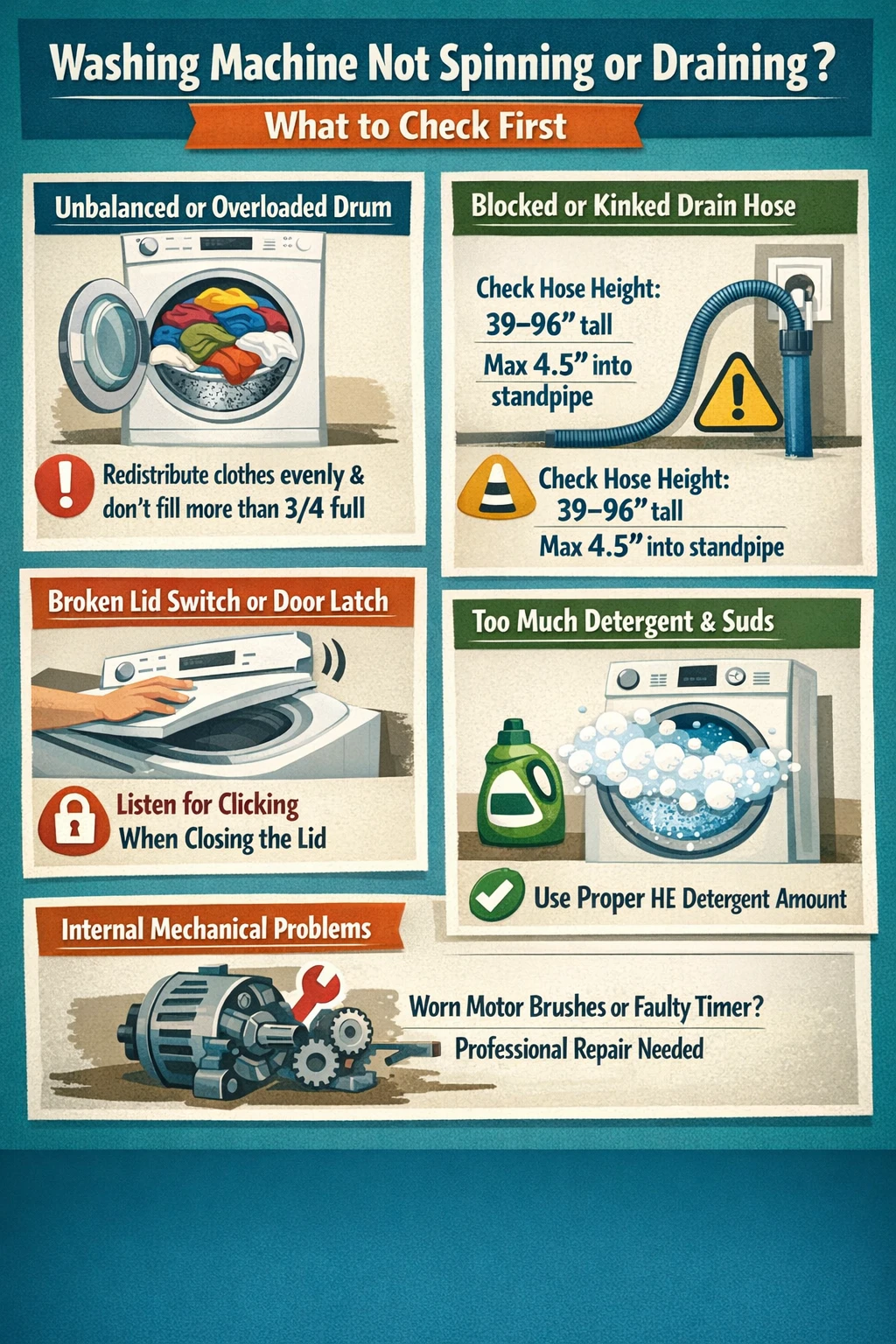
- An unbalanced or overloaded drum is one of the most common reasons a washer stops spinning. Redistributing the load often fixes it immediately.
- A blocked or kinked drain hose will prevent the machine from draining, which also stops the spin cycle from starting or completing.
- The lid switch or door latch is a safety feature. If it fails to engage, most machines will refuse to spin at all.
- Using too much detergent, or the wrong type in a high-efficiency machine, can create excess suds that interfere with both draining and spinning.
- A drain hose should be inserted no more than 4.5 inches into the standpipe, and the standpipe height should fall between 39 and 96 inches. Incorrect installation is a frequent overlooked cause.
- If basic checks don’t resolve the issue, worn motor brushes or a faulty timer are likely culprits that require professional diagnosis.
Why your washing machine isn’t spinning or draining
Most of the time, a washing machine not spinning comes down to one of a handful of causes: an unbalanced load, a drainage problem, a door latch that isn’t engaging, or a settings issue. If your clothes come out soaked but the machine ran through the full cycle, the spin either didn’t complete or ran too slowly. If there’s standing water in the drum, the drain is the first thing to investigate. Start with the obvious before assuming the worst. We see a surprising number of service calls where the real issue was a cycle set to ‘delicate’ by mistake, or a single heavy blanket spinning alone and throwing the machine off balance. These are five-minute fixes. The more frustrating cases involve a drain pump clogged with coins or lint, a lid switch that stopped clicking, or a drain hose that got kinked behind the machine when it was pushed back against the wall. One thing worth knowing: a washer that won’t drain will usually refuse to spin. The two problems travel together. So if you see standing water, start with the drain, not the motor.
Check the load first
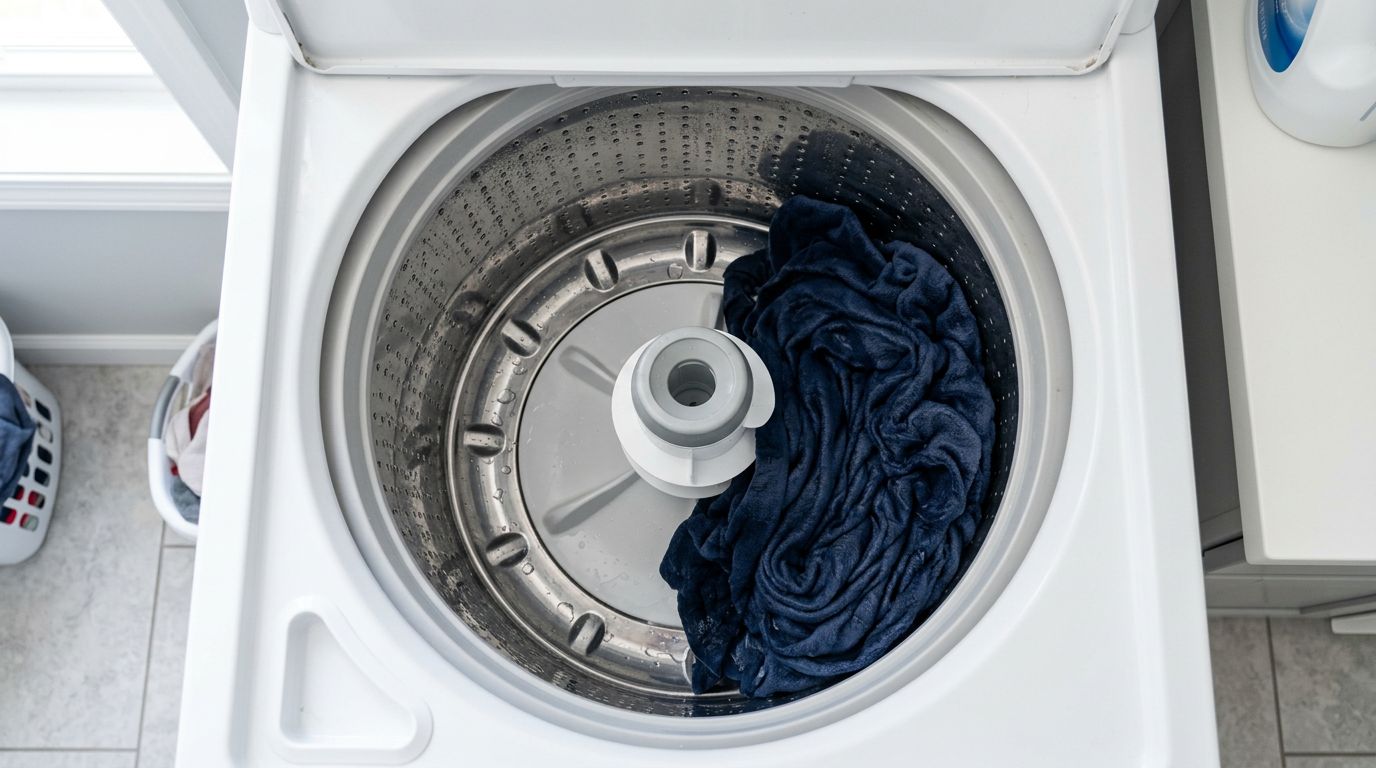 Before pulling the machine away from the wall or calling for help, open the lid and look at what’s inside. A single heavy item, a duvet, a bath mat, a winter jacket, can shift to one side during the cycle and throw the drum off balance. Most modern washers have sensors that detect this and stop the spin to protect the machine. It’s not a malfunction; it’s the machine doing its job. Redistribute the load evenly around the drum. If you’re washing one large item, add a few smaller pieces to balance it out. Then run a spin-only cycle and see what happens. This solves the problem more often than you’d expect. Overloading is a separate but related issue. When the drum is packed too tightly, clothes can’t move freely and the machine struggles to reach full spin speed. As a general rule, fill the drum no more than three-quarters. For heavy fabrics like towels or denim, go even lighter. The machine will clean better and last longer.
Inspect the drain hose and pump filter
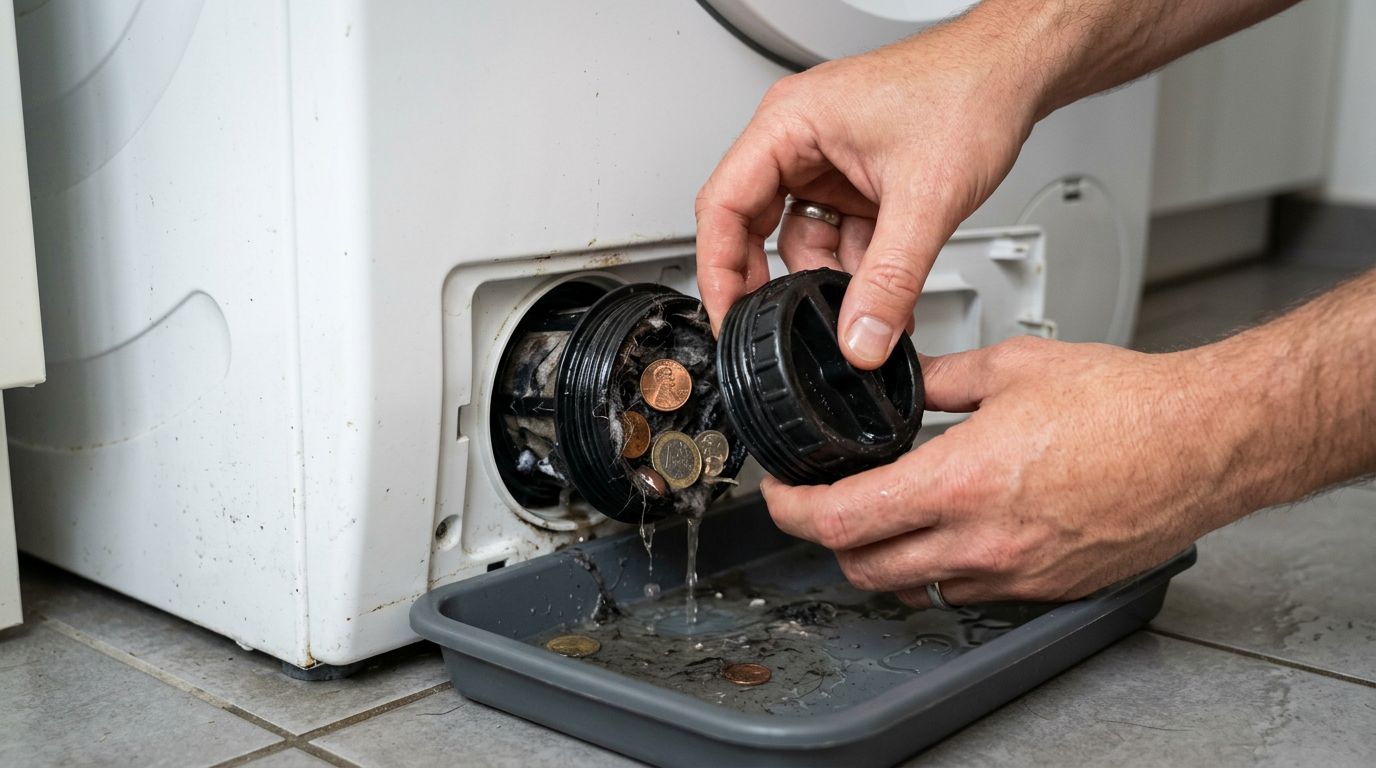 Standing water in the drum almost always means something is blocking drainage. The drain hose runs from the back of the machine to your standpipe or utility sink. It’s worth pulling the machine out a few inches to check whether the hose is kinked or crushed against the wall. This happens constantly, and it’s an easy fix. If the hose looks fine, check how it’s installed. It should sit 39 to 96 inches high at the standpipe, and be inserted no more than 4.5 inches into the pipe. Too deep, and water siphons back into the machine. This installation mistake is something we run into regularly, especially in older homes in areas like Ramsay and Forest Lawn where utility rooms haven’t been updated in decades. Front-load washers have a drain pump filter, usually behind a small access panel near the bottom front of the machine. This filter catches lint, coins, hairpins, and other debris before they reach the pump. Check your owner’s manual for the location and cleaning procedure. It varies by brand. Clearing a blocked filter is a genuinely simple job, though be ready with a shallow pan and some towels because water will come out when you open it. For top-load washers, the pump is harder to access and usually means pulling the machine apart, which is better left to a technician.
What to do if the hose is clogged
Unplug the machine first. Pull it away from the wall, disconnect the drain hose at both ends, and run water through it or use a straightened wire hanger to clear any blockage. Reconnect it carefully, making sure there are no sharp bends. Plug the machine back in and run a drain-and-spin cycle to test it. If you want to understand how drain systems work in more detail, the U.S. Department of Energy’s appliance guidance covers maintenance basics for common household machines.
Check the lid switch or door latch
This one catches a lot of people off guard. Both top-load and front-load washers have a safety mechanism that prevents spinning unless the lid or door is fully closed and latched. On top-loaders, it’s usually a small plastic switch that clicks when the lid presses down onto it. On front-loaders, it’s a door latch with an electronic sensor. If the lid switch is broken, the machine will fill and agitate normally but stop before the spin cycle. The clicking sound when you close the lid is your confirmation that the switch is working. No click usually means a broken switch. On some machines, a small plastic tab on the lid breaks off, so the switch never gets depressed even when the lid looks closed. Replacing a lid switch is a fairly low-cost repair, typically under $50 for the part. Whether it’s a DIY job depends on the model. Some are straightforward; others require significant disassembly. If you’re comfortable looking up a repair video for your specific model, it’s worth attempting. If not, this is one of those repairs where a technician can usually have it done in under an hour.
Look at your settings and detergent
Honestly, this is one of those situations that looks like a mechanical problem but turns out to be a settings issue. Delicate, hand-wash, and gentle cycles use low spin speeds by design. Clothes will come out noticeably wetter than they would on a normal or heavy-duty cycle. That’s not a malfunction; that’s the cycle doing what it’s supposed to. If you’re seeing this regularly, check whether someone changed the default settings or whether the wrong cycle is being selected for heavier loads. Running a separate spin cycle after the wash can remove the extra moisture without putting delicate items through a high-speed spin. Too much detergent is another underestimated problem. Excess suds can actually prevent the drum from spinning properly because the machine detects the foam and keeps trying to rinse it away. High-efficiency (HE) washers are especially sensitive to this. If your machine is HE-rated, you need to use HE detergent, and probably less of it than you think, particularly in Calgary where water hardness varies by neighbourhood. Use the markings on the detergent cap and follow the packaging instructions.
When it’s the motor, belt, or timer
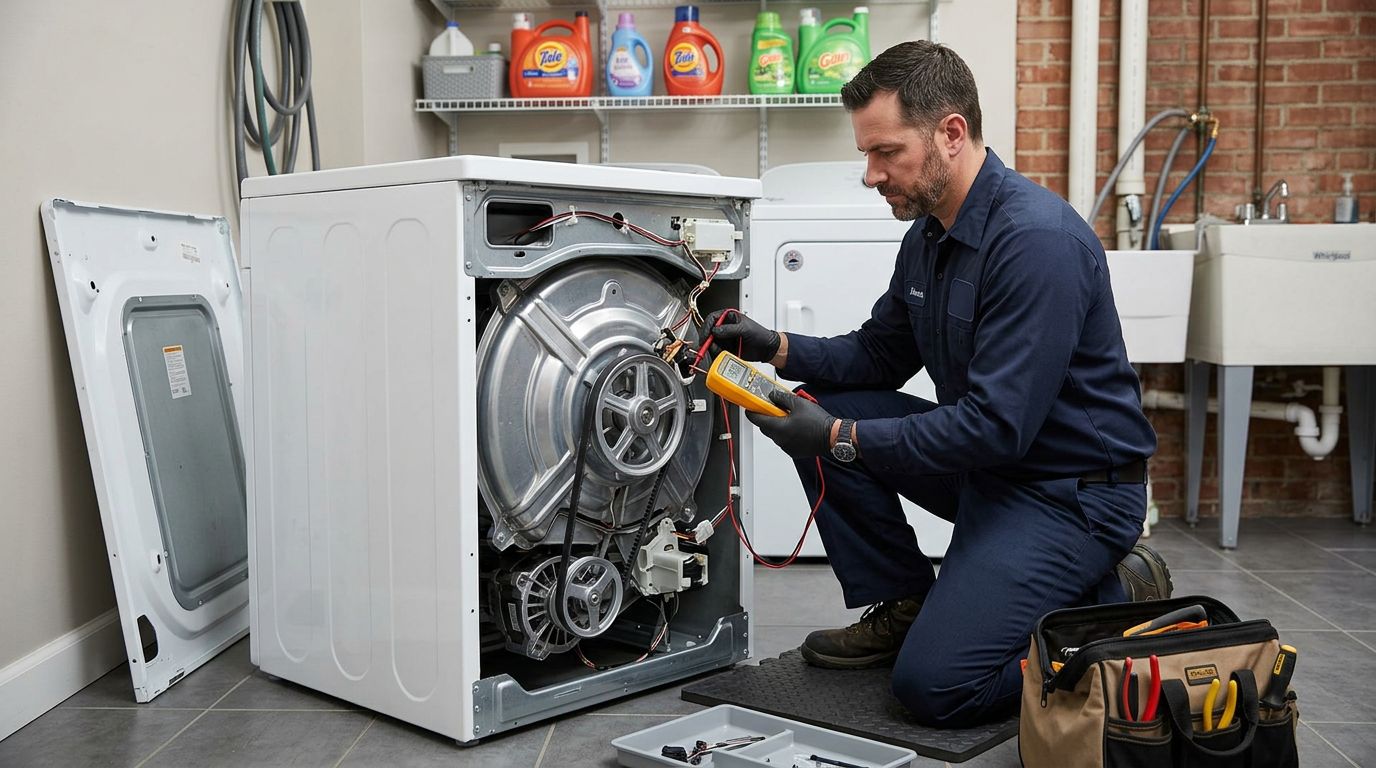 If you’ve worked through the checks above and nothing has solved it, the problem is likely internal. Three components come up most often at this stage. Motor brushes are carbon contacts that connect the drum to the motor. They wear down over time, and when they do, the machine will fill, agitate, and drain normally. But the drum simply won’t spin. This is a common failure point in older machines. New brushes are inexpensive, but installing them involves taking the machine apart and working near electrical components. Get a professional to handle it. The drive belt connects the motor to the drum on many top-load and some front-load machines. If it snaps or slips off, the drum won’t turn. You may hear the motor running but the drum stays still. The belt itself is cheap; the labour to replace it is the main cost. The timer controls which cycle runs when. A faulty timer can cause the machine to skip the spin cycle entirely, or get stuck at a particular stage. Testing a timer properly requires a multimeter and some technical knowledge, so this is firmly in professional repair territory. We see a fair bit of this kind of work from homeowners in McKenzie Towne, where the housing stock includes many machines that are 10 to 15 years old and starting to show wear. Parts availability is generally good for major brands like LG, Samsung, Whirlpool, and Maytag. Whether repairing an older machine makes financial sense depends on its age and overall condition. A good rule of thumb: if the repair costs more than half the price of a comparable new machine, replacement is worth considering. For LG washers specifically, the manufacturer’s support and troubleshooting documentation walks through error codes and diagnostic steps that can help narrow down the issue before calling for service.
Frequently asked questions
These questions come up regularly when homeowners are trying to figure out what’s gone wrong with their washer. If your situation isn’t covered here, a quick call to an appliance technician can usually get you pointed in the right direction without committing to a full service visit.
Why does my washing machine fill and drain fine but still won’t spin?
If water is coming in and going out normally, the drain and fill valves are not your problem. The most likely causes are a broken lid switch or door latch, a failing motor or motor brushes, a snapped drive belt, or a faulty timer. The lid switch is the easiest to check yourself. Close the lid and listen for a click. If you don’t hear one, that’s likely your issue. If the lid switch seems fine, the problem is internal and will need a technician to diagnose properly.
Can an unbalanced load really stop a washing machine from spinning?
Yes, and it happens more often than people realize. Modern washers have sensors that monitor drum movement during the spin cycle. If the load shifts unevenly, the machine slows down or stops spinning to prevent the drum from banging against the cabinet. The fix is simple: open the lid, redistribute the laundry evenly, and restart the spin cycle. If the machine keeps detecting an imbalance, try removing one or two items and running the cycle again with a smaller load.
My washer spins but clothes are still very wet. What’s wrong?
A few things can cause this. The most common is a cycle setting that uses a low spin speed by design. Delicate and hand-wash cycles spin slowly on purpose to protect fabrics. If you’re using one of those cycles for heavier items, try switching to a normal or heavy-duty cycle. Another possibility is excess suds from too much detergent, which reduces spin efficiency. If neither of those applies, the drain may be partially blocked, meaning water isn’t clearing the drum completely before the spin starts.
How do I know if the drain pump needs replacing?
If you’ve cleared the filter and checked the hose for kinks and blockages, but the machine still won’t drain, the pump itself may be failing. Signs include a humming noise during the drain cycle with no water movement, or the machine stopping mid-cycle with water still in the drum. A technician can test the pump directly. Consumer Reports has useful guidance on when appliance repair makes more sense than replacement, which can help you decide whether to fix or replace an older machine.
Is it safe to try opening up the machine myself?
Basic checks like clearing the drain filter, inspecting the hose, redistributing a load, and checking the lid latch are safe for most homeowners to do. Anything that involves opening the cabinet, working near the motor, or handling electrical components is a different matter. Washing machines carry real electrical hazards, and working on them without the right training and experience is risky. If you’re not confident in what you’re doing, stop and call a professional.
Wrapping up
Most cases of a washing machine not spinning come down to a handful of fixable things: an unbalanced or overloaded load, a blocked drain hose or pump filter, an unengaged lid latch, or a settings mismatch. Run through those checks first and you’ll resolve the problem a good portion of the time without spending anything. When the issue is deeper, worn motor brushes, a broken drive belt, a bad timer, that’s when it makes sense to bring in someone who can diagnose it correctly and fix it right the first time. At Calgary Appliance Service Pros, we handle washer repair Calgary homeowners call us about regularly, along with dryer repair Calgary, dishwasher repair, stove and oven repair, and fridge and freezer service across the city and surrounding areas. If you’ve worked through the basics and your machine still isn’t cooperating, give us a call. We’ll help you figure out whether it’s worth repairing, what the fix involves, and what it’s likely to cost, before any work gets done.
